Why Florida Is America’s Lightning Capital
True Stories | Florida Unwritten
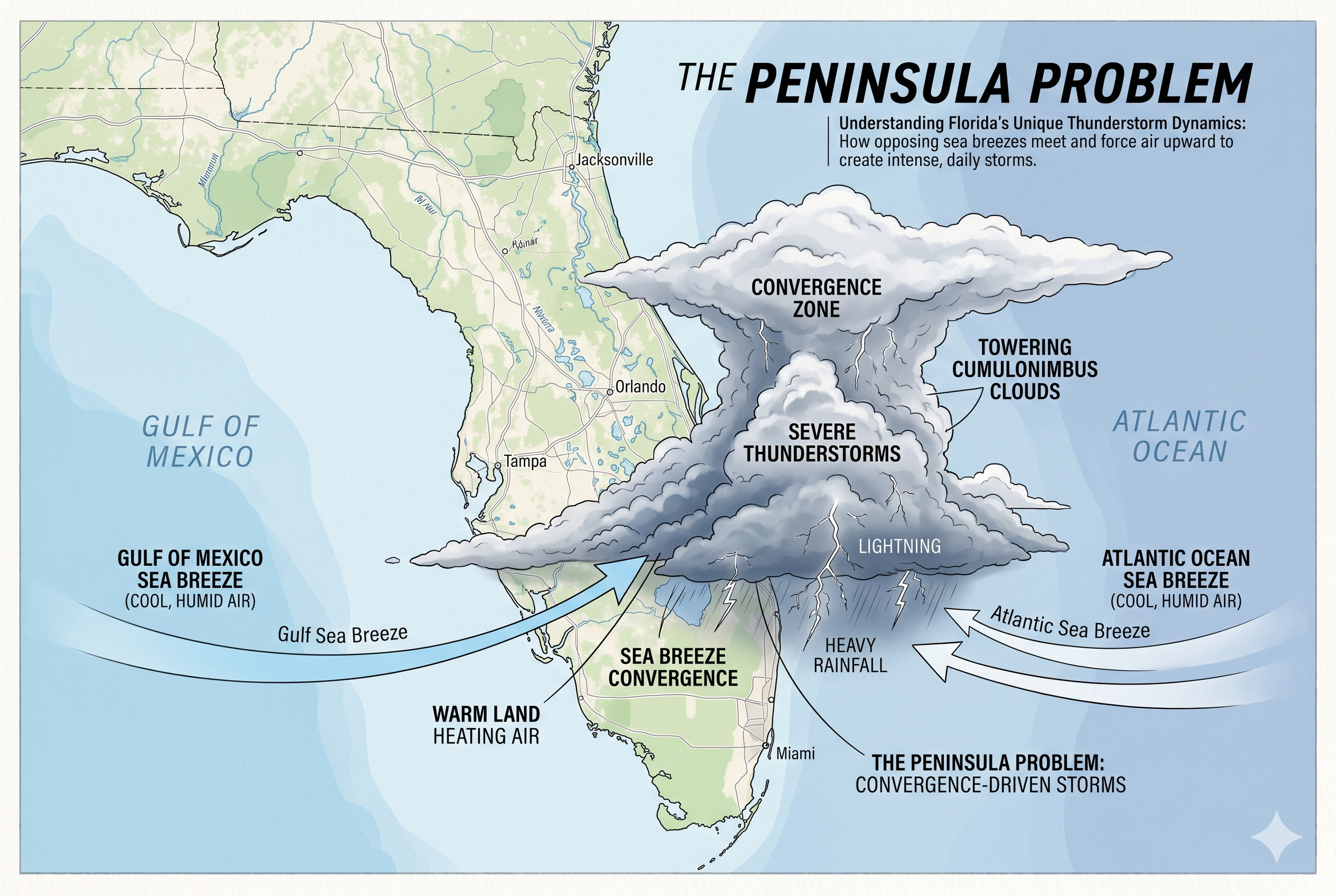
Illustrated-style weather visualization of Florida
The Sound of Distance
If you live in Florida long enough, you learn the sound of distance.
Not miles. Seconds.
One Mississippi.
Two Mississippi.
Three.
By four, you’re already eyeing the door. By five, you’re wondering if those afternoon plans were ever meant to survive.
That’s how lightning introduces itself here. Not as a surprise—but as a schedule.
Florida Doesn’t Get Lightning… It Makes It
Florida didn’t stumble into the title of Lightning Capital.
It built it.
Not with intention—but with ingredients. Heat that rises early and stays late. Air so full of moisture it feels borrowed from the ocean. A shape that pulls weather inward like a funnel.
By mid-afternoon, the sky usually has something to say.
And it says it loudly.
The Peninsula Problem (Water Has a Say in This)
Florida sticks out into warm water like it’s asking for attention.
Atlantic on one side. Gulf on the other. Both warm. Both are generous with moisture.
As the land heats faster than the water, air begins to rise over the peninsula, pulling breezes in from both directions.
They don’t pass quietly.
They meet.
And when they meet, they push upward—carrying heat, moisture, and just enough instability to build something towering.
Clouds climb.
The sky darkens.
And somewhere inside all that vertical ambition, lightning starts taking shape.
When the Wind Disagrees
Locals don’t talk about “converging sea breezes.”
They just notice when the air feels crowded.
A shift in direction.
A stillness that isn’t really still.
That moment when the sky looks taller than usual.
What’s actually happening is simple in spirit, even if the science gets fancy.
Wind from the east. Wind from the west.
Neither one is willing to yield.
So the only direction left… is up.
And Florida storms are nothing if not vertical.
Flat Land, Tall Attitude
Most places have something to interrupt a storm.
Mountains. Hills. Terrain that says, “break it up a little.”
Florida has none of that.
It’s wide open.
Storms here don’t get redirected. They organize. They spread.
They linger just long enough to make an impression.
That’s why lightning in Florida doesn’t feel like a single dramatic moment.
It feels like a sequence.
Flash.
Pause.
Crack.
Repeat.
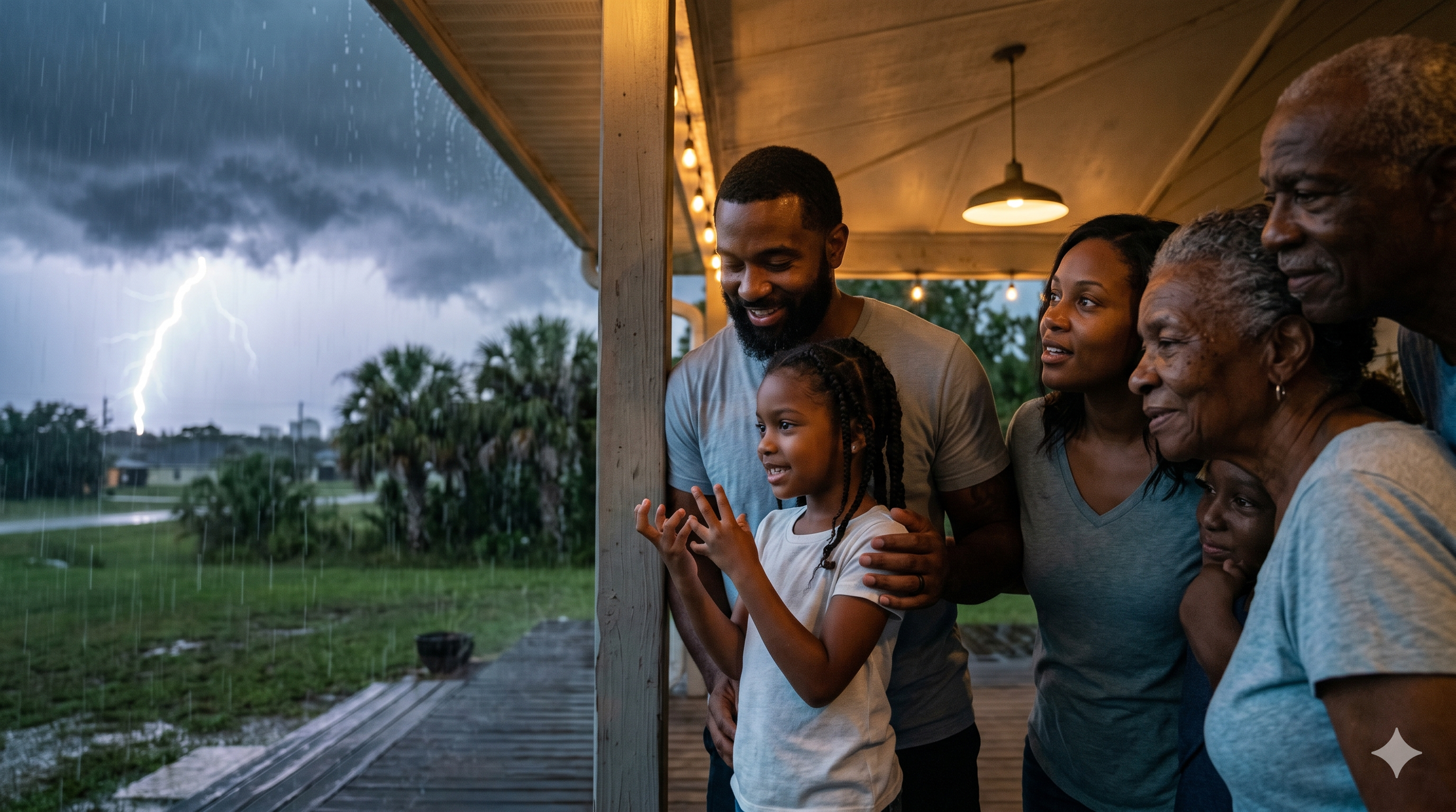
lightning flash illuminating their faces while a child silently counts seconds on their fingers
Lightning Alley (Where the Sky Gets Busy)
Lightning doesn’t fall evenly across the state.
There’s a stretch through Central Florida—running through places like Orlando—where the numbers stack higher than almost anywhere else in the country.
Locals gave it a name that stuck: Lightning Alley.
But it doesn’t stop there.
The Tampa Bay area knows the rhythm well. Surrounded by water, fed by those same colliding breezes, it gets its share—and then some.
Other pockets light up too. Southwest coast. Northeast corners.
Different places. Same pattern.
Geography meets routine. Every afternoon.
⚡ What’s Happening Inside the Clouds
Inside those towering clouds, things get… busy.
Air rushes upward, carrying water droplets and ice particles into a kind of quiet collision course. They bump, spin, and separate charges like a storm doing its own bookkeeping.
Positive rises. Negative settles.
And eventually, the imbalance becomes too much to ignore.
Lightning is what happens when the sky corrects itself.
Some flashes stay hidden inside the clouds. Others stretch between them.
And some reach down—fast, precise, and completely uninterested in what you were doing at the time.
SHARE THIS
Enjoying Florida Unwritten?
Forward this to a friend or share it—
That’s how these stories keep moving.
The Countdown Everyone Knows
Nobody teaches you how to count the gap.
You just learn.
Flash.
Then count.
The longer the delay, the farther away it is. Shorter gap, closer strike.
Simple math. High stakes.
And in Florida, it’s not a question of if you’ll use it.
It’s how often.
Summer Belongs to the Storms
From June through September, the pattern locks in.
Mornings feel harmless enough. Bright. Hot. A little too optimistic.
By afternoon, the clouds begin their slow climb.
Then the storm arrives—fast, loud, efficient.
And by evening?
Gone.
Leaving behind wet pavement, dripping trees, and a sky that looks like it didn’t just put on a show.
It’s a rhythm you stop questioning.
Morning. Storm. Reset.
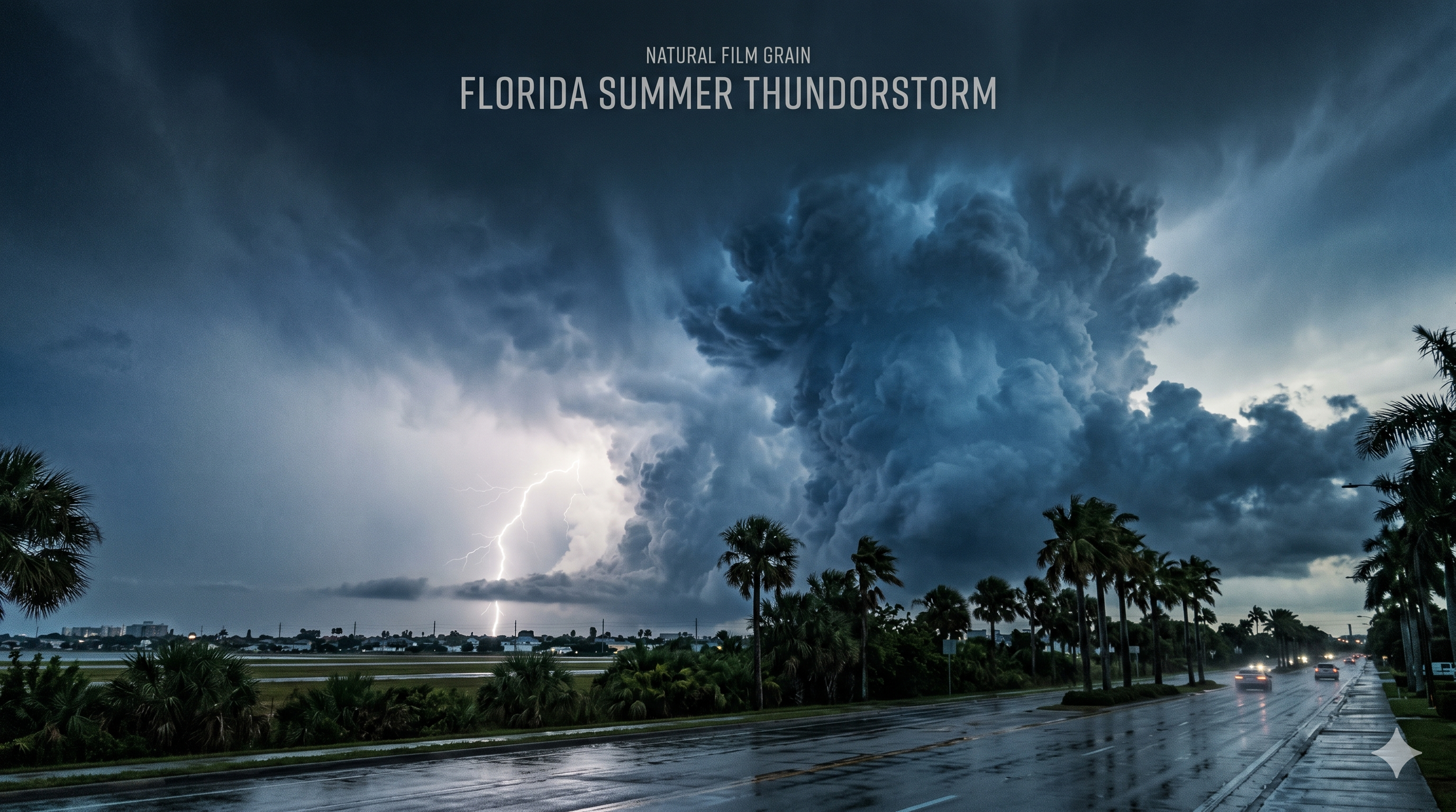
How Lightning Shapes Life Here
Lightning doesn’t just visit Florida.
It changes how people move.
Construction pauses without argument.
Theme parks clear out rides like clockwork.
Beaches empty in minutes, not because of panic—but because everyone already knows.
At home, it’s quieter.
Lights flicker.
Someone checks the radar.
Someone else says, “It’ll pass.”
Because it always does.
⚠️ Respect Is Part of the Routine
For all its familiarity, lightning isn’t something Floridians take lightly.
It leads the nation in strikes, and for years, it led in injuries, too.
The rule is simple and repeated often:
If you can hear thunder, you’re close enough.
That’s not drama.
That’s experience talking.
Plans wait. People move inside. No one argues with the sky when it gets like this.
More Than Weather
Somewhere along the way, lightning stopped being just a forecast.
It became part of the culture.
It names teams.
It fills photo albums.
It sneaks into stories told years later, usually starting with, “You remember that storm…”
Visitors stop to watch it.
Locals glance, measure, and adjust.
Not unimpressed.
Just familiar.
Explore the archives: If you’re looking for more, check out these recent posts:
Why Florida, Though?
Other places get bigger storms. Louder ones. Longer-lasting ones.
But Florida gets something different.
Consistency.
Here, lightning isn’t rare. It isn’t a surprise. It’s built into the day like humidity and late sunsets.
For its size, few places on Earth do it this often.
Not by accident.
By design.
A Sky That Keeps Showing Up
Florida’s lightning doesn’t ask to be understood.
It just keeps arriving.
Day after day. Summer after summer.
The storms roll in. The thunder follows. The ground steams. Life continues.
And somewhere between the flash and the count, you realize something:
You’re not watching the weather anymore.
You’re reading it.
Closing Thought
If Florida teaches patience, lightning teaches respect.
It reminds you that some things don’t slow down, don’t wait, don’t negotiate.
They just happen.
And once you learn the rhythm, you stop being surprised when the sky speaks.
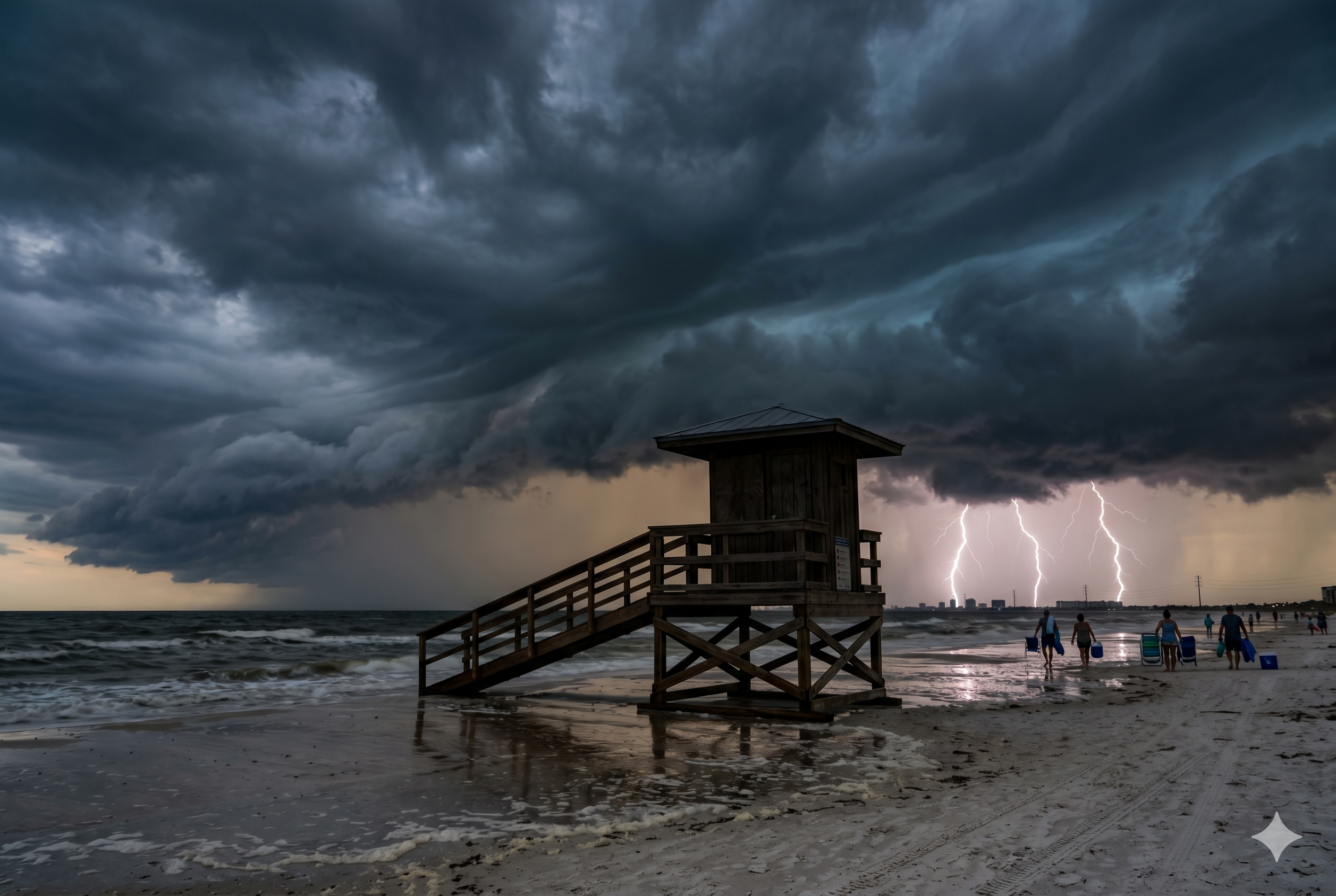
lightning over the Gulf, beachgoers leaving quietly, dramatic skies, realistic coastal photography
Part of Florida Unwritten
Lived experiences. Not guidebook gloss.
If this felt familiar—the counting, the waiting, the way plans quietly shift—you’re already in on it.
Share it with someone who knows the sound of distance.
And until next time… watch the sky.
Thanks for spending part of your day with Florida Unwritten.
If this story felt familiar, salty, strange, or a little too Florida to explain at dinner, share it with someone who’d understand.
👉 More stories live at [Your Website]
📬 Join for weekly Florida stories, coastlines, wildlife, weirdness, and the kind of local moments tourists usually miss.
