Florida Wasn’t Always America
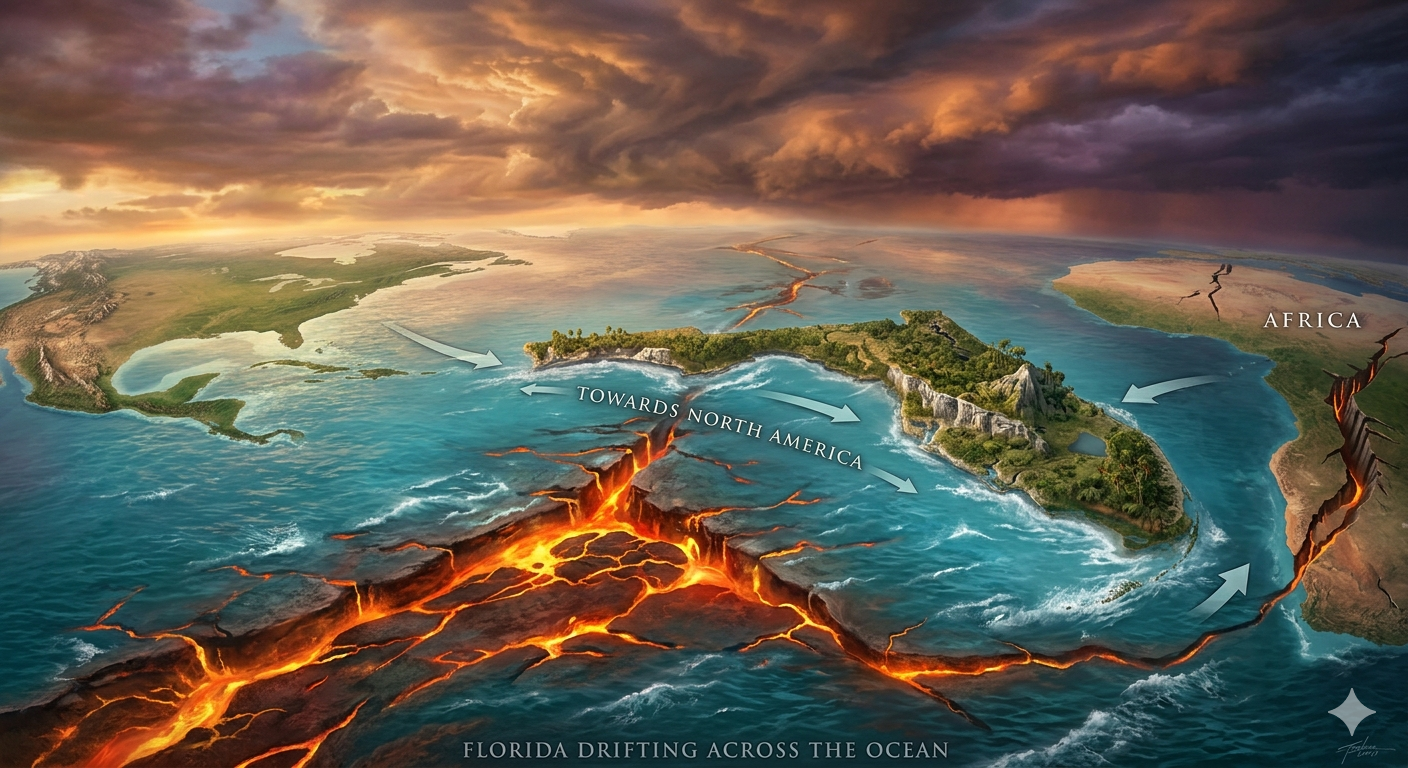
Florida drifting across the ocean
The Strange Journey of the State That Drifted Here
Something is fitting about Florida feeling a little… separate.
Maybe it’s the way the peninsula hangs off the map like it’s still deciding whether to stay.
Maybe it’s the salt air, the hurricane seasons, the roadside orange stands that somehow survive decades longer than they should.
Or maybe it’s because, deep beneath the palmettos and retirement condos, Florida literally came from somewhere else.
Not metaphorically.
Geologically.
Long before tourists packed coolers for Daytona and snowbirds clogged I-75 with Buicks moving at the speed of molasses, Florida was floating near Africa and South America as part of the ancient supercontinent Gondwana.
The ground beneath our feet wasn’t born attached to North America at all.
Florida drifted here.
Which honestly explains a lot.
Florida’s Bedrock Took the Scenic Route
If you grew up in Florida, like me, you probably spent your childhood hearing adults say things like:
“Careful near that sinkhole.”
Or:
“Don’t lean too hard on that dock.”
Florida always carried a reputation for being soft around the edges. Swampy. Sandy. Temporary.
But underneath all that sugar sand sits ancient rock with a passport older than memory itself.
Hundreds of millions of years ago, the chunk of crust that would become Florida was attached to Gondwana,
The massive southern supercontinent that included parts of modern Africa and South America.
Then tectonic plates began their slow cosmic shuffle.
At some point around 300 million years ago, Florida’s geological foundation collided and fused with North America like a wandering puzzle piece finally snapping into place.
Which means the state we know today technically immigrated here before dinosaurs even had a chance to complain about the humidity.
That feels very Florida somehow.
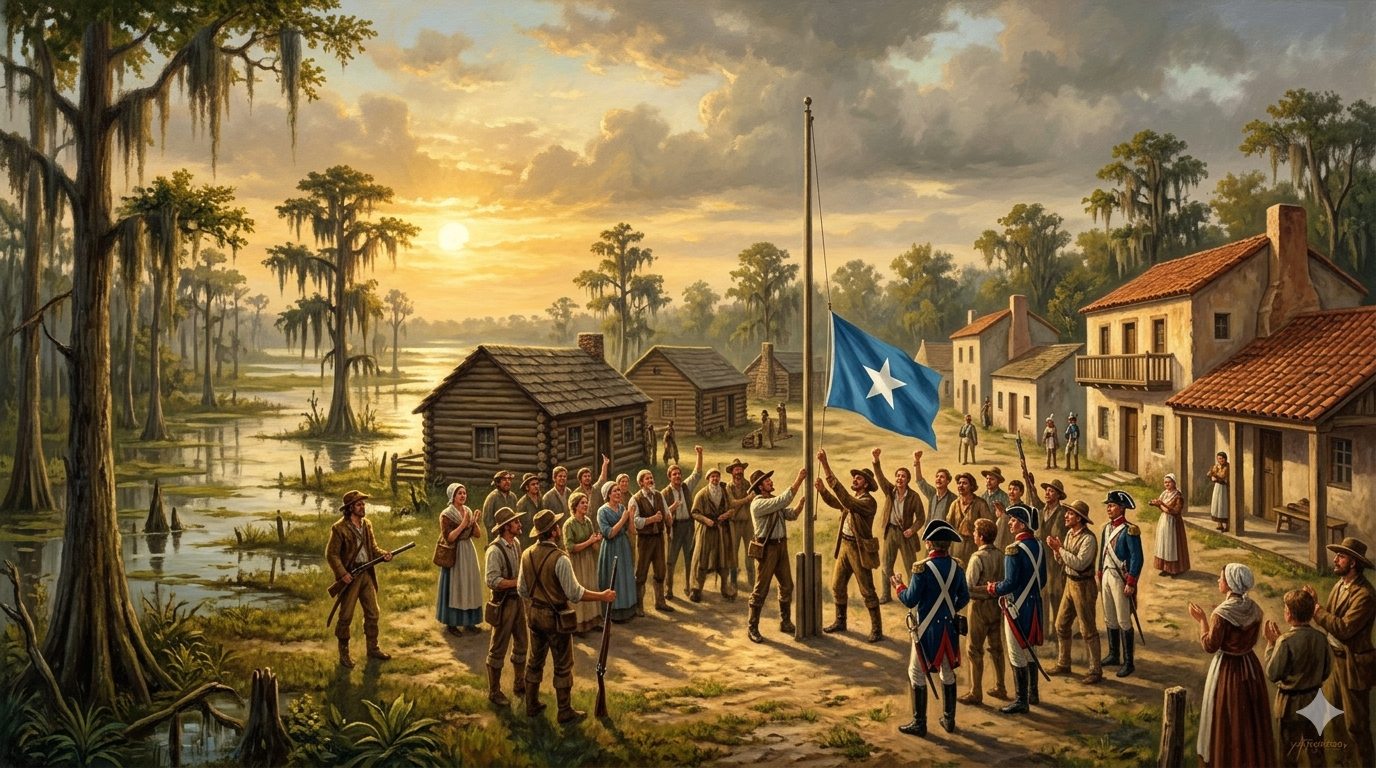
1810 frontier Florida settlement raising the Republic of West Florida flag
The Peninsula That Changed Flags Like Beach Towels
Long before Florida became the 27th state in 1845,
ownership of the peninsula bounced back and forth between empires like a volleyball at a spring break cookout.
Spain controlled it.
Then Britain.
Then Spain again.
Florida spent centuries existing as a strange tropical borderland full of forts, pirates,
runaway settlements, mosquito clouds large enough to qualify for representation in Congress, and explorers convinced every swamp concealed either gold or doom.
Usually doom.
The old cities still carry traces of that confusion. Walk through St. Augustine at sunset, and it almost feels like history stacked itself in layers there. Spanish stone streets. British influences.
Southern porches. Caribbean colors. Everything was weathered by salt air and afternoon thunderstorms.
Florida never fully belonged to one thing.
It absorbed pieces of everything that touched it.
