The Corpse, the Cowboy, and the Best Train Ride Money Could Buy
If you sit long enough on a porch in Arcadia, watching the dragonflies dance over the saw palmettos like tiny, shimmering helicopters, eventually someone is going to stop mid-sentence.
They’ll look at you with a glint in their eye and start telling you about the time Morgan “Bone” Mizell played his most "capricious caper" on a wealthy New Orleans family.
It’s one of those Florida stories that gets passed around like a lukewarm beer at a Fourth of July barbecue—equal parts absurd, heartwarming, and deeply, unmistakably weird.
It’s a tale that perfectly captures the essence of the Florida scrub: a blend of fierce loyalty, a little too much moonshine, and a stubborn refusal to let the rules of "polite society" dictate who gets to have a good time—even if that friend is already six feet under.
The Man Who Was Mostly Elbows and Legend
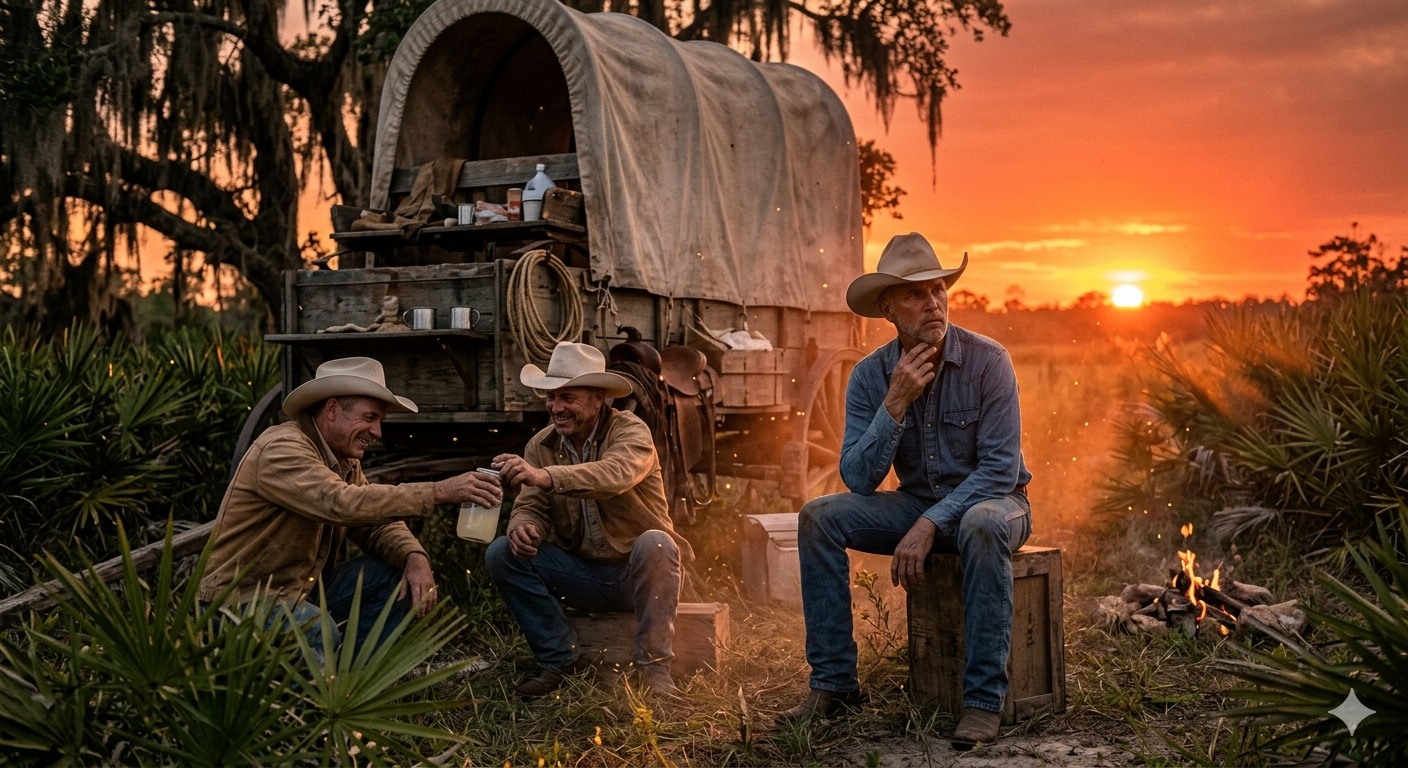
Before we get to the great body-snatching caper, you have to understand the man himself. Morgan "Bone" Mizell wasn't just a cowboy;
He was a monument to the Florida frontier. Standing six-foot-five and lanky enough to look like Ichabod Crane in a sweat-stained Stetson, he was the original "Cracker Cowboy."
Artist Frederic Remington immortalized him in sketches, but to the folks in the Florida cow camps, Bone was just the funniest, most unpredictable force of nature in the state.
He lived for the open range, the taste of cheap whiskey, and the kind of pranks that would land a modern person in a heap of trouble.
But underneath that chaotic exterior was a heart as big as the Everglades. If you were Bone’s friend, you were set for life—and apparently, even for the afterlife.
A Cowboy’s Goodbye in the Prickly Palmettos
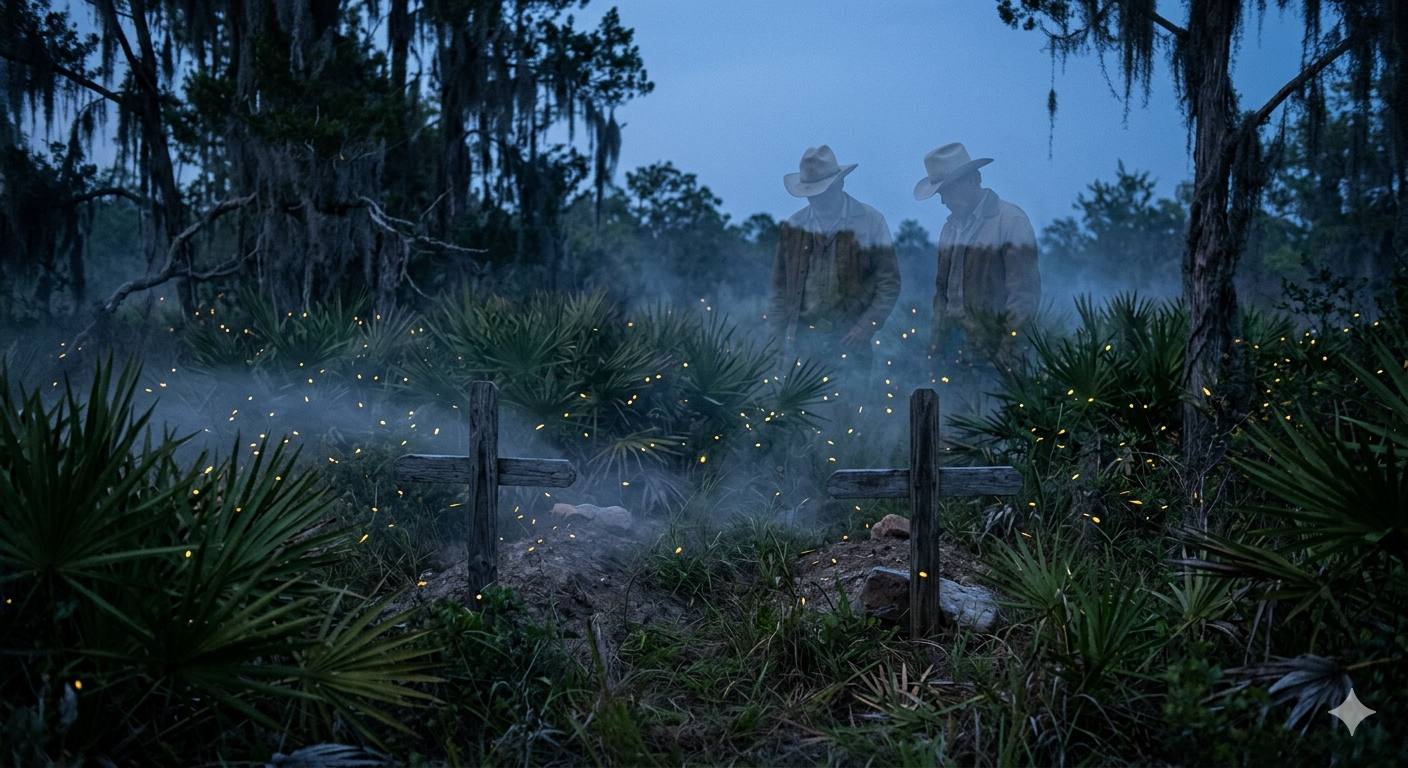
The story picks up around 1890 in a desolate cow camp in Lee County. Bone’s best friend and fellow cow hunter, John Underhill, had finally reached the end of his trail.
The other cowboys, wanting to show respect, started preparing to wash John’s body and dress him in something decent for a funeral. It was the "proper" thing to do.
Bone, however, was having absolutely none of it. He reportedly looked at his companions and growled, "Hellfire, no... Y'all ain't gonna wash ol' John. He'd never allow it if he was livin', and y'all ain't gonna take advantage of him now he's dead."
Bone knew John was a man of the dirt, the saddle, and the swamp.
Turning him into a "city dandy" for the sake of appearances felt like an insult to everything John had stood for.
So, they buried John exactly as he was—in his grimy, sun-baked cowboy duds—right there in the prickly palmettos.
No frills, no fuss, just a final rest in the landscape he’d spent his life herding cattle through.
The Stranger Who Stayed Forever
Life in the scrub goes on, indifferent to the dead.
Not long after John was laid to rest, a young man from New Orleans wandered into the camp.
He was a classic "disillusioned dilettante"—a wealthy city boy in failing health, sent to the Florida bush by doctors who thought the hard labor and fresh air of cow country would fix what ailed him.
Bone took a genuine shine to the kid. He probably figured a little bit of sweat and some good, hard Florida sunshine would turn the boy into a real man.
But the Florida heat is a fickle beast; it doesn’t care about your pedigree or your bank account. The young man didn’t last long in the humidity, and soon he was gone too.
Bone, ever the pragmatist, knew there was no hauling a body back to town in that heat. So, he said a few words, gave the boy a respectful cowboy eulogy, and buried him right next to John Underhill.
A Moral Dilemma and a Bottle of Fortification
Years rolled by. The scrub grew back over the graves, and the memory of the two men faded into the hum of the cicadas. But eventually,
The young man’s parents in New Orleans caught wind of where their son had ended up.
They were devastated.
They wanted him home, buried in the family plot with a proper headstone and a wrought-iron fence.
They sent a significant sum of money to an Arcadia undertaker to make it happen.
The undertaker, knowing full well that Bone Mizell was the only living soul who could find those unmarked graves, hired him for the job.
Now, Bone being Bone, he took the cash and promptly went on a legendary bender. But once he finally sobered up, he grabbed two helpers and rode out into the palmettos to earn his keep.
As they rode, the sun beating down on their necks, Bone started to ponder.
He thought about the city boy who had always complained that he was "tired of travelin’" and never wanted to see the inside of a train again.
Then he thought about old John Underhill, who had spent his whole life "hankering" to take a train ride but never had a nickel to his name.
The Best Ride John Underhill Ever Had
Bone and his helpers stopped for a few "snorts" of moonshine to fortify themselves for the digging. The more Bone drank, the more the situation seemed like a cosmic injustice.
He looked at the empty expanse of the scrub and thought, “Well, sir, it just didn't seem right... Here was a free train ride just for the takin’—with a damn fine funeral at the end.”
In a final, beautiful act of devotion, Bone made the executive decision to perform the world’s quietest, weirdest swap.
He exhumed John Underhill, loaded him onto the wagon, and delivered him to the undertaker. The city boy? He stayed right there in the peaceful, quiet Florida scrub he’d come to find.
John Underhill finally got his wish. He was placed on a first-class train to New Orleans, where he was given a rich man’s burial.
Bone liked to imagine that even four white horses were pulling the hearse.
Back in Florida, Bone went back to his cattle and his moonshine,
safe in the knowledge that he’d given his buddy the grandest send-off a Cracker cowboy ever had.
The Echoes of a Cowboy Guffaw
Bone Mizell eventually met his own end in 1921. He passed away on a depot floor with his boots on, his death certificate simply stating: "Moonshine—went to sleep and did not wake up."
He’s buried now in Joshua Creek Cemetery near Arcadia.
Folks say if you stand perfectly still at his grave, you might hear a faint chuckle coming from beneath the Florida soil.
It’s the sound of a man who knew that a good story is worth more than a fancy headstone, and that a truly loyal friend will always find a way to get you where you want to go—even if it means a little bit of grave-robbing along the way.
This post is part of our Literary Spy-Glass series, exploring the writers who captured the heart of Old Florida. For more on the legends of the scrub, check out our pillar post: [Voices from the Porch: A Journey Into Florida’s Unwritten Past].
Seeking the Soul of the Scrub
Florida is a state built on tall tales, and the legend of Bone Mizell is the bedrock. It reminds us that underneath the pavement and the vacation homes, there’s a wilder,
funnier and more rebellious history that refuses to be forgotten.
Ready to uncover more Florida folklore? Join us at the next Florida Storytelling Festival in Mount Dora,
where the legends of the scrub come to life under the concert tent. Just remember: if someone like Bone Mizell ever offers you a train ticket,
you might want to double-check who’s actually going for the ride.
Earl Lee
Florida Unwritten
