Listening to the Scrub: Marjorie Kinnan Rawlings’ Legacy
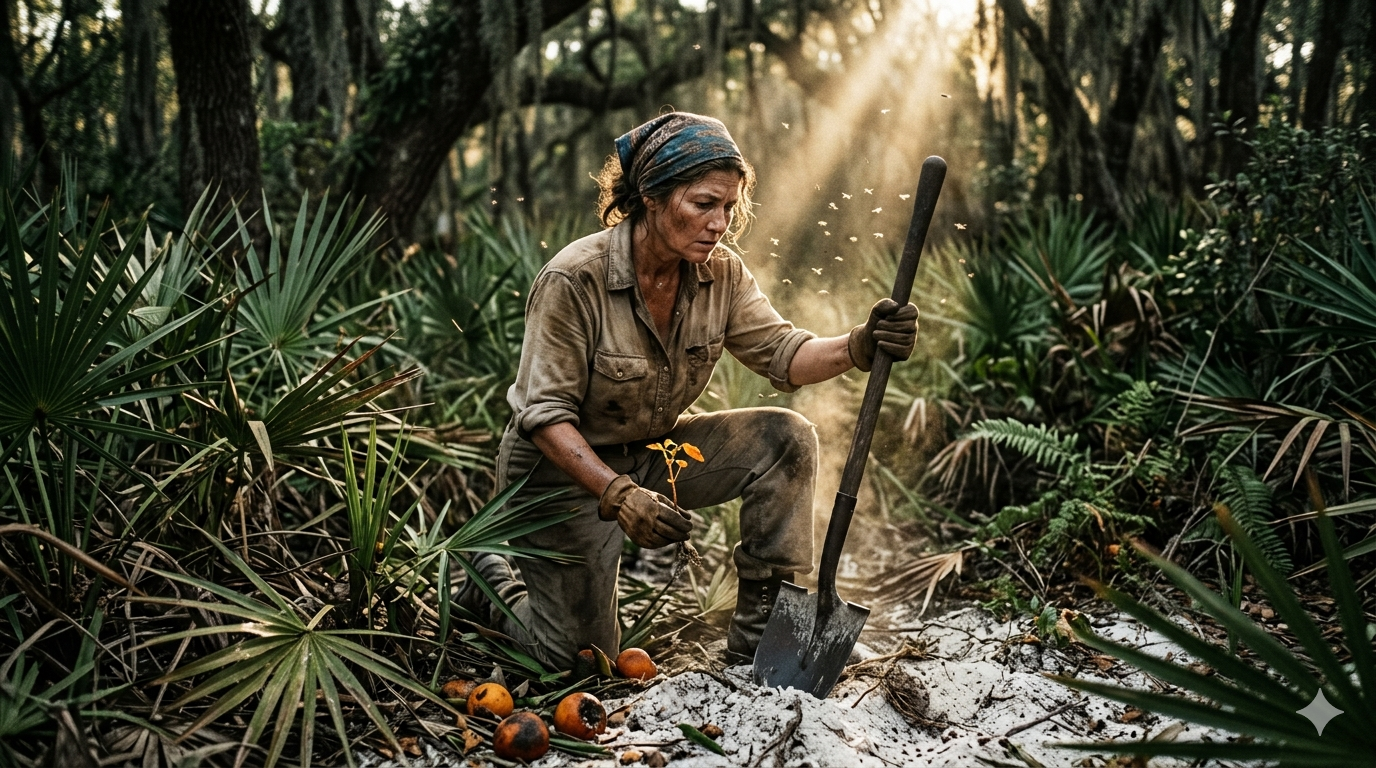
photograph capturing Marjorie Kinnan Rawlings
This post is part of our Literary Spy-Glass series, exploring the writers who captured the heart of Old Florida. For more on the legends of the scrub, check out our pillar post: [Voices from the Porch: A Journey Into Florida’s Unwritten Past].
There’s a particular silence in the Florida scrub that doesn’t feel empty—it feels observant. Not the cathedral hush of a pine forest or the breezy chatter of a coastline, but something older, drier, and quietly judgmental. The kind of silence that watches you back.
It’s the kind of place where you become aware of your footsteps, your breath, even your intentions.
And it’s exactly the kind of place that changed a woman named Marjorie Kinnan Rawlings—who arrived in Florida chasing a dream of citrus and sunlight, and instead found herself wrestling with a deeper question:
What do we owe the land that feeds us?
🌿 A Citrus Dream That Turned Into Something Wilder
When Rawlings first came to rural Florida in the late 1920s, she wasn’t looking for philosophy. She was looking for a reset.
Like so many who drift south, she imagined oranges glowing like small suns, easy harvests, a life softened by warm air and slower clocks. She purchased a grove near a tiny settlement called Cross Creek, expecting a pastoral escape.
Instead, the land greeted her with stubbornness.
The soil was sandy and thin. The seasons swung between drought and flood like a pendulum with a temper. The scrub—low, tangled, and prickly—didn’t offer postcard beauty. It offered resistance.
And then there were the people.
Crackers, they called themselves—families who had learned to live with the land not by conquering it, but by negotiating with it daily. They hunted when they needed to. They fished because the pantry said so. They understood that survival wasn’t pretty, and it certainly wasn’t polite.
Rawlings, notebook in hand, began to watch.
Not just the land.
The choices.
🐾 The Scrub Doesn’t Care About Your Ideals
It didn’t take long for Rawlings to realize something unsettling: the ethics she brought with her didn’t quite fit here.
Back in more comfortable places, morality could be neat. You could afford to be gentle, idealistic, maybe even a little sentimental about nature. But in the scrub, survival blurred those tidy lines.
A neighbor might shoot a deer—not for sport, but because winter was coming and meat didn’t grow on trees.
A boy might raise a fawn, only to face the reality that affection doesn’t override hunger.
Sound familiar? It should. That tension would later shape The Yearling, her most famous novel. But before it became literature, it was lived truth.
The scrub taught a hard lesson:
Nature is not moral. It is balanced.
And humans, whether they like it or not, are part of that balance.
🌾 The Quiet Ethics of Taking Only What You Need
Here’s where Rawlings began to change—not in some dramatic, lightning-strike moment, but slowly, like roots pushing through sand.
She noticed a pattern among the people who lasted here:
They took what they needed.
Not more.
Not less.
There was no romantic reverence, no speeches about conservation. Just an understanding, passed down like a family recipe:
If you take too much, the land remembers.
And it answers.
Maybe not today. Maybe not tomorrow. But eventually, the fish thin out, the game disappears, the soil stops giving.
This wasn’t environmentalism as we know it now—with policies and panels and polished language. This was something older. More instinctive.
Call it respect.
Call it caution.
Call it a quiet agreement between human and habitat.
Rawlings didn’t just observe it—she absorbed it.
🪶 Writing the Land Without Dressing It Up
When Rawlings began to write seriously about Florida, she made a decision that set her apart:
She refused to pretty it up.
No sugarcoating the hardships. No turning the scrub into a tropical fantasy. No smoothing over the rough edges of the people who lived there.
Instead, she wrote it as it was:
The heat that pressed against your skin like a second body
The mosquitoes that treated you like an open invitation
The beauty that appeared suddenly, like a deer stepping into a clearing, then vanished just as quickly
Her stories didn’t ask readers to admire Florida.
They asked them to understand it.
And in doing so, she preserved something that might have otherwise been lost—the emotional truth of a place that doesn’t perform for visitors.
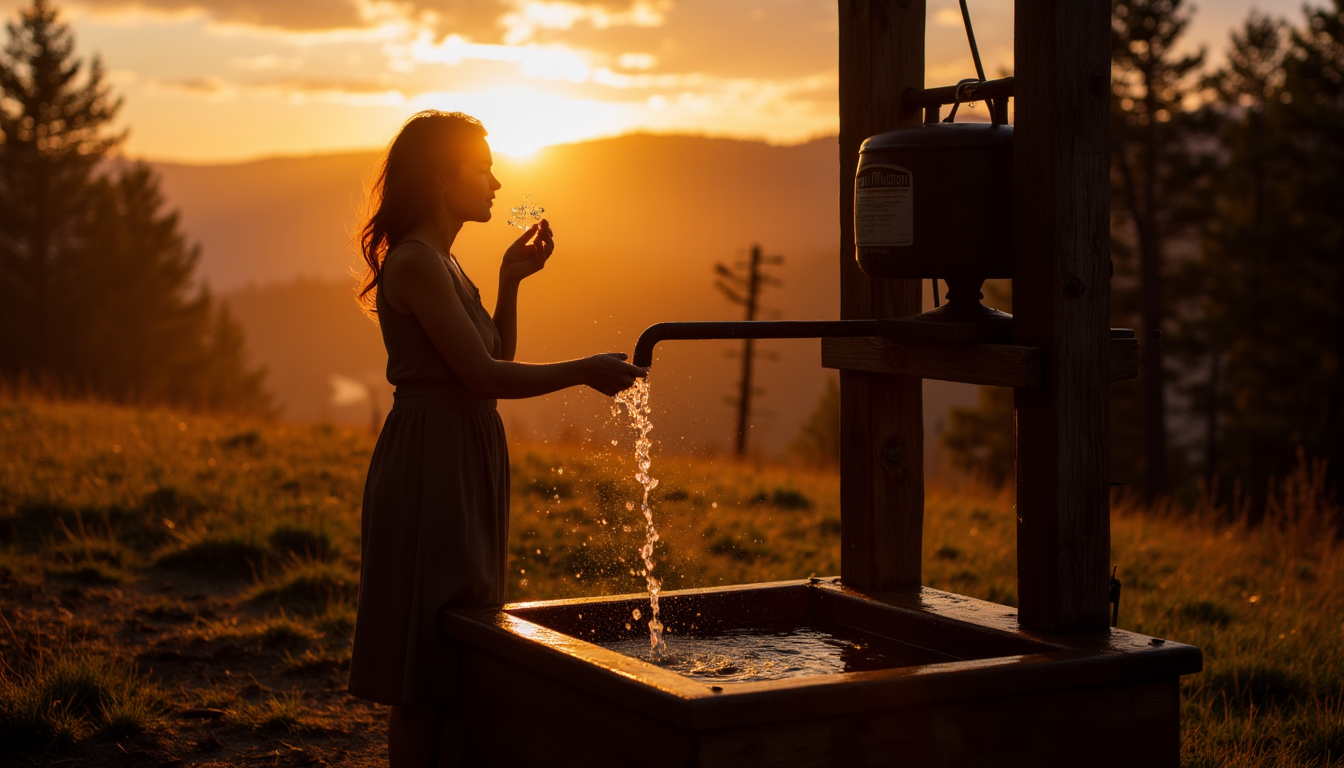
a well-used, rustic artesian well behind her cabin. She is splashing a handful of cool water onto her face
🌅 A Porch, a Pencil, and the Weight of Witnessing
If you could time-travel to Cross Creek and find Rawlings, you’d likely spot her on a porch.
Not writing furiously.
Listening.
To the scrape of boots on wood.
To the distant call of a bird you can’t quite identify.
To the stories people tell when they forget they’re being recorded by memory.
There’s a kind of responsibility that comes with witnessing a place honestly. Rawlings understood that. She wasn’t just documenting Florida—she was translating it.
And translation is tricky.
Lean too far into romance, and you betray the truth.
Lean too far into hardship, and you miss the quiet beauty that keeps people rooted there.
She walked that line carefully, like someone crossing a narrow board over dark water.
🌿 What the Scrub Still Teaches Us Today
It’s tempting to think of Rawlings’ Florida as something that no longer exists—a ghost landscape paved over by subdivisions and softened by air conditioning.
But the ethics she uncovered?
They’re still here.
You see them in the fishermen who know when to stop casting.
In the hikers who carry their trash back out, even when no one’s watching.
In the quiet understanding that just because you can take something doesn’t mean you should.
The scrub hasn’t changed its rules.
We’ve just gotten better at pretending they don’t apply to us.
And maybe that’s why her work still feels relevant—not as nostalgia, but as a reminder.
The land doesn’t need us to love it.
It needs us to respect it.
Florida Unwritten: A weekly dispatch from the state’s quieter side.
From ice-cold springs to forgotten backroads, we explore the places you only find when you slow down. One good Florida story, every Friday morning. Jump on in and ride with us.
🌅 A Warm Ending, Like the Last Light Over Sand
There’s a moment in any Florida evening when the light softens and the world seems to exhale. The heat loosens its grip, the shadows stretch, and even the most stubborn landscapes feel… forgiving.
That’s where Rawlings leaves us.
Not with answers, but with awareness.
The kind that lingers.
The kind that makes you pause before stepping off a trail, before picking something up, before assuming the land is yours to use however you please.
Because out there—in the scrub, in the silence, in the spaces that still resist being tamed—the question remains:
What do we owe the place that lets us exist within it?
If you’ve enjoyed finding the quieter side of the state with me, consider buying me a cup of coffee. It’s the fuel that keeps me exploring the springs, the forgotten crossroads, and the stories that only surface when you turn off the highway. Your support helps keep this weekly dispatch rolling.
📬 Want More Florida Stories Like This?
If you enjoy stories where Florida feels less like a destination and more like a living, breathing character, stick around.
👉 Follow Florida Unwritten for more true stories, hidden histories, and the kind of details you only notice when you slow down long enough to see them.
There’s a lot this state is still trying to say.
