The Anchor in the Storm: Why Your Grandfather’s Stories Are Your Secret Strength
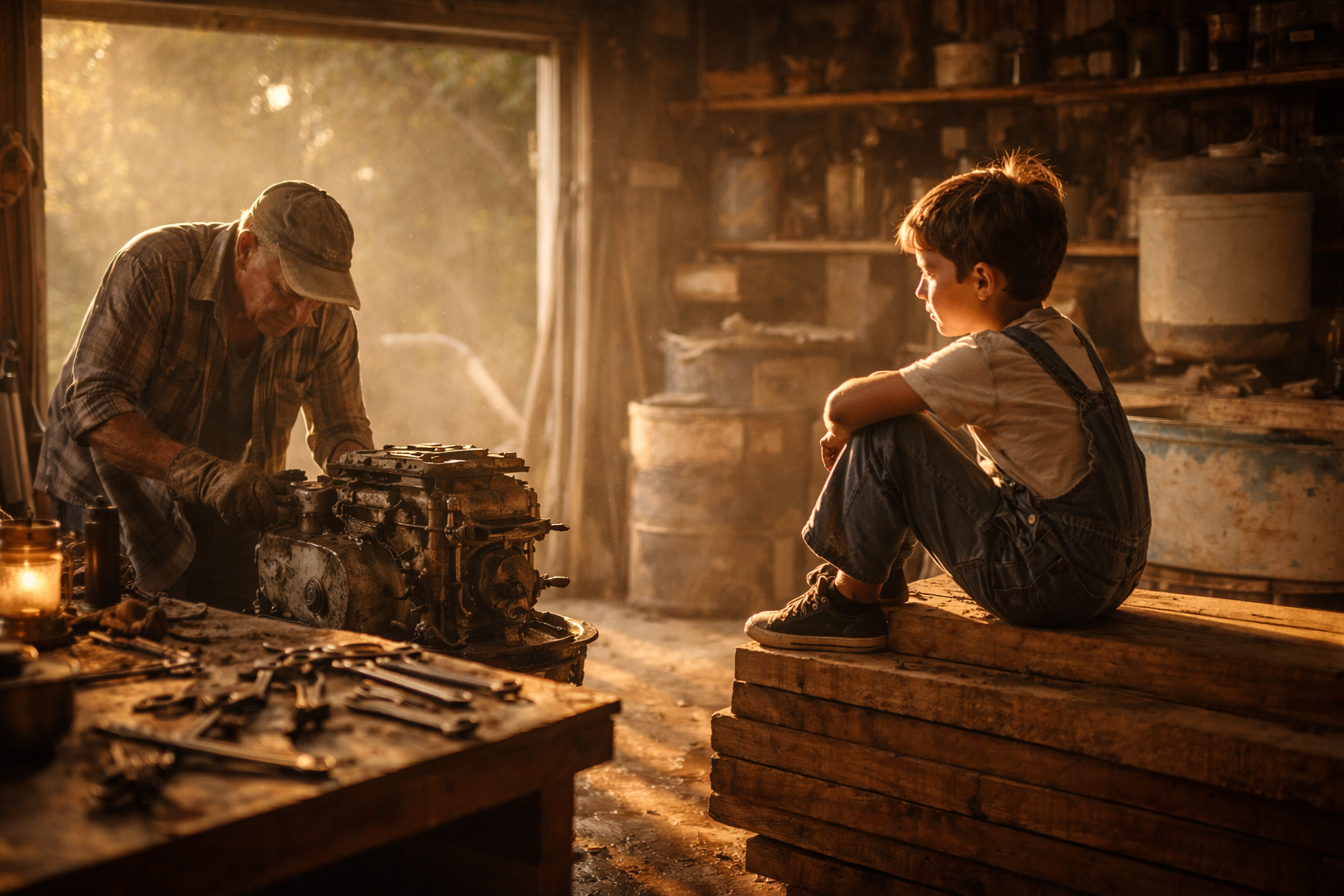
working on a worn boat engine, child sitting quietly on stacked cypress boards watching,
This post is part of our Literary Spy-Glass series, exploring the writers who captured the heart of Old Florida. For more on the legends of the scrub, check out our pillar post: [Voices from the Porch: A Journey Into Florida’s Unwritten Past].
I remember the smell of my grandfather’s garage better than I remember the layout of my first apartment.
It was a sensory cocktail of WD-40, stale sawdust, and the faint, sweet ghost of a pipe tobacco he hadn't smoked in a decade.
But that wasn’t the real reason I spent hours sitting on a stack of reclaimed cypress boards while he tinkered with an old boat engine.
I was there for the stories.
He didn't call them "lessons." He didn't sit me down for a lecture on resilience or the importance of grit. He just told me about the time he broke his leg three miles deep in the Ocala National Forest,
or how he lost a season’s worth of crops to an unseasonable freeze, or the time he and his brothers tried to outrun a squall in a boat that was held together mostly by hope and rusted nails.
To me, at the time, these were just "Grandpa stories"—the kind you nod along to while waiting for the interesting stuff.
But today, I realize those stories were something much heavier. They were an anchor. In a world that feels increasingly like it’s being buffeted by digital winds,
Those old tales are the thing that keeps us from drifting too far from who—and where—we actually come from.
The Science of "I Remember When"
We often treat nostalgia like a junk-drawer emotion—something we visit when we’re feeling sentimental or a little bit blue.
But psychologists have been digging into the "Nostalgia Effect," and the findings are fascinating.
Turns out, reminiscing isn't just about escaping the present; it’s about fortifying the future. When we hear stories from our elders,
we aren't just listening to history; we are downloading a survival guide.
Think about it: every time your grandfather talked about a time he failed, or a time he was scared, or a time he had to scrape by on nothing, he was essentially teaching your brain how to navigate turbulence.
He was providing a roadmap of resilience. He was saying, "Look, I got knocked down by life, and here is how I got back up."
When you carry those stories in your mind, they become a psychological buffer. They make you stronger because you’re no longer facing your own struggles as an island.
You’re facing them as the latest chapter in a long, proven legacy of "getting through it."
“Jump on in and ride with us. We’ll drop you a Friday line, fresh as a new week.”
The Anatomy of a Florida Tale
What makes a Florida story particularly potent?
Maybe it’s the landscape itself. We live in a place that has historically demanded a certain kind of stubbornness.
From the pioneers who cleared the scrub to the families who weathered the Great Depression in the backwoods, Florida history is not a tale of comfort; it’s a tale of adapting
My grandfather’s stories were always anchored in the dirt of this state. He’d talk about the humidity that made the air feel like a damp wool blanket, or the way the palmettos looked during a hurricane.
These sensory details act as a mnemonic device. By grounding his stories in the specific geography of our home, he tied me to this land in a way that no textbook ever could.
I’m not just a person living in a zip code; I’m a person living in a place that my family has negotiated with, fought with, and flourished in for generations.
That sense of belonging—of being part of a larger, living narrative—is one of the most powerful shields against the modern epidemic of loneliness.
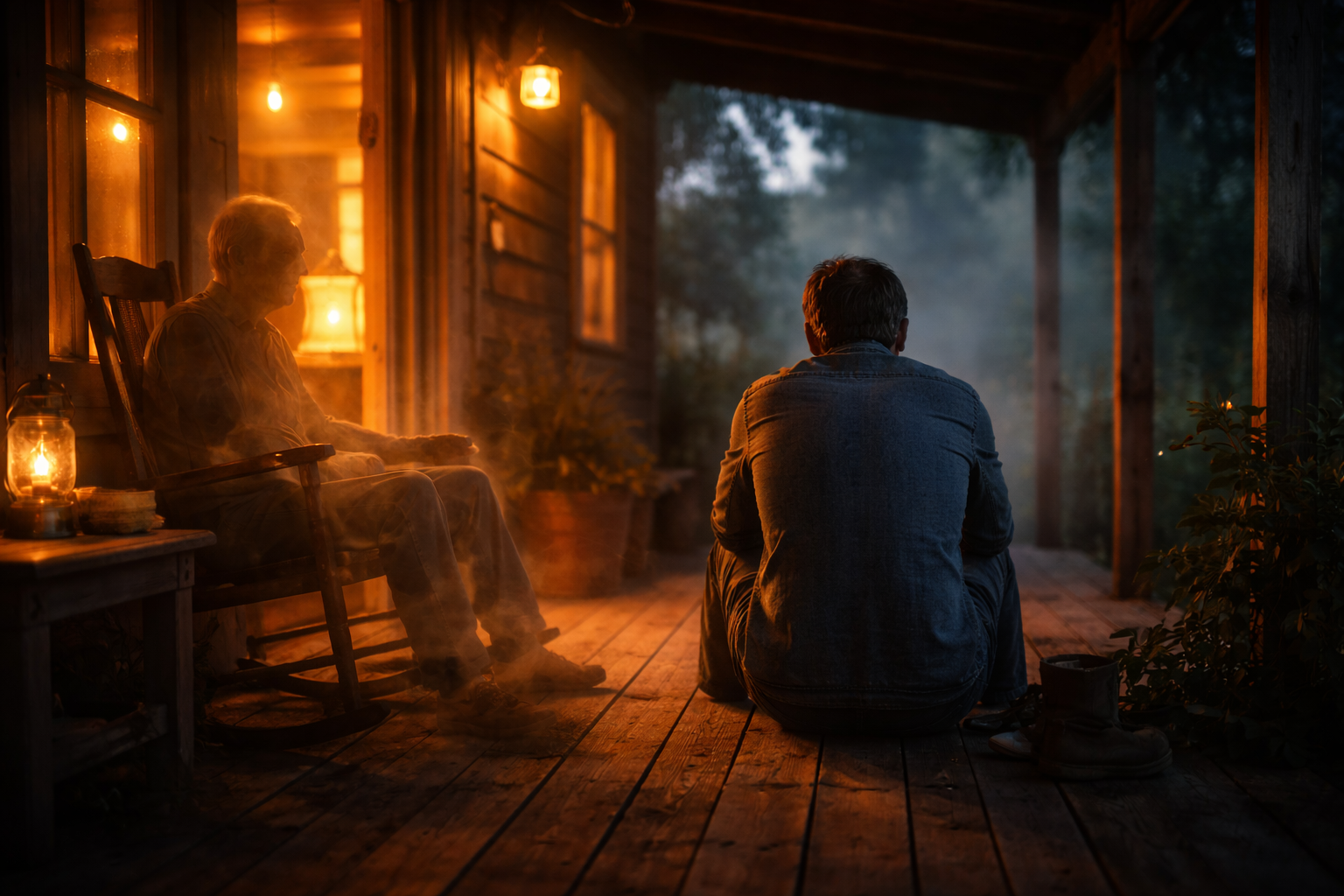
The Porch Between Worlds
The "Grandpa Filter" and Our Own Choices
There is a gentle humor in looking back at these stories. We tend to remember our elders as invincible, but the real magic happens when you realize they were just as flawed and uncertain as we are.
That realization is perhaps the greatest gift of the "Nostalgia Effect."
When you see your grandfather’s vulnerability—when he laughs about how he almost lost his shirt in a bad business deal or how he once made a complete fool of himself at a town dance—it lowers the stakes for your own life.
It teaches us that perfection isn't the requirement for a good life;
Persistence is. Hearing his voice in my head when I’m facing a crossroads—“Well, let’s see what we can do with what we’ve got”—is a powerful prompt. It helps me filter out the noise of perfectionism.
It reminds me that I don't need to have all the answers right now; I just need to be willing to keep showing up, just like he did, day after humid, challenging Florida day.
🔜 NEXT
(A nostalgic look at growing up on Florida’s chain of lakes and the timeless wisdom found in "sea fog," aluminum boats, and the difference between fishing and catching.
Weaving the Thread Forward
So, why does this matter now? Because we are the bridge. If we don’t keep the stories going, the anchor snaps.
There is a quiet, profound responsibility in listening—and in eventually telling those stories to the people who come after us.
Nostalgia, when used correctly, isn't a retreat; it’s a fuel source. It provides us with the perspective to see that our current problems, while they might feel earth-shattering, are just ripples in a much deeper stream.
By keeping these narratives alive, we aren't just honoring our grandfathers; we are building our own internal strength.
We are reminding ourselves that we are descended from people who could look at a storm, a failure, or a stretch of impossible land and decide that they were going to find a way through.
From ice-cold springs to forgotten backroads, we explore the places you only find when you slow down. One good Florida story, every Friday morning. “Jump on in and ride with us. We’ll drop you a Friday line, fresh as a new week.”
A Legacy Worth Keeping
The next time you find yourself stuck, or anxious, or just plain tired of the digital grind, take a step back. Go find an elder, or just close your eyes and summon the memory of one of those "boring" old stories.
Don’t listen for the plot; listen for the character. Listen for the grit. Hear the echo of their voice telling you that they’ve been where you are, and they’ve survived.
You aren't starting from scratch. You are standing on the shoulders of people who knew how to live, how to laugh in the face of trouble,
and how to keep their boots on the ground even when the winds were howling. That’s not just a memory. That’s armor. And it’s the best thing you’ll ever inherit.
🌊 SHARE THIS
Enjoying Florida Unwritten?
Forward this to a friend or share it—
That’s how these stories keep moving.
This post is part of our Literary Spy-Glass series, exploring the writers who captured the heart of Old Florida. For more on the legends of the scrub, check out our pillar post: [Voices from the Porch: A Journey Into Florida’s Unwritten Past].
Earl lee
Florida Unwritten
