Voices from the Porch: A Journey Into Florida’s Unwritten Past
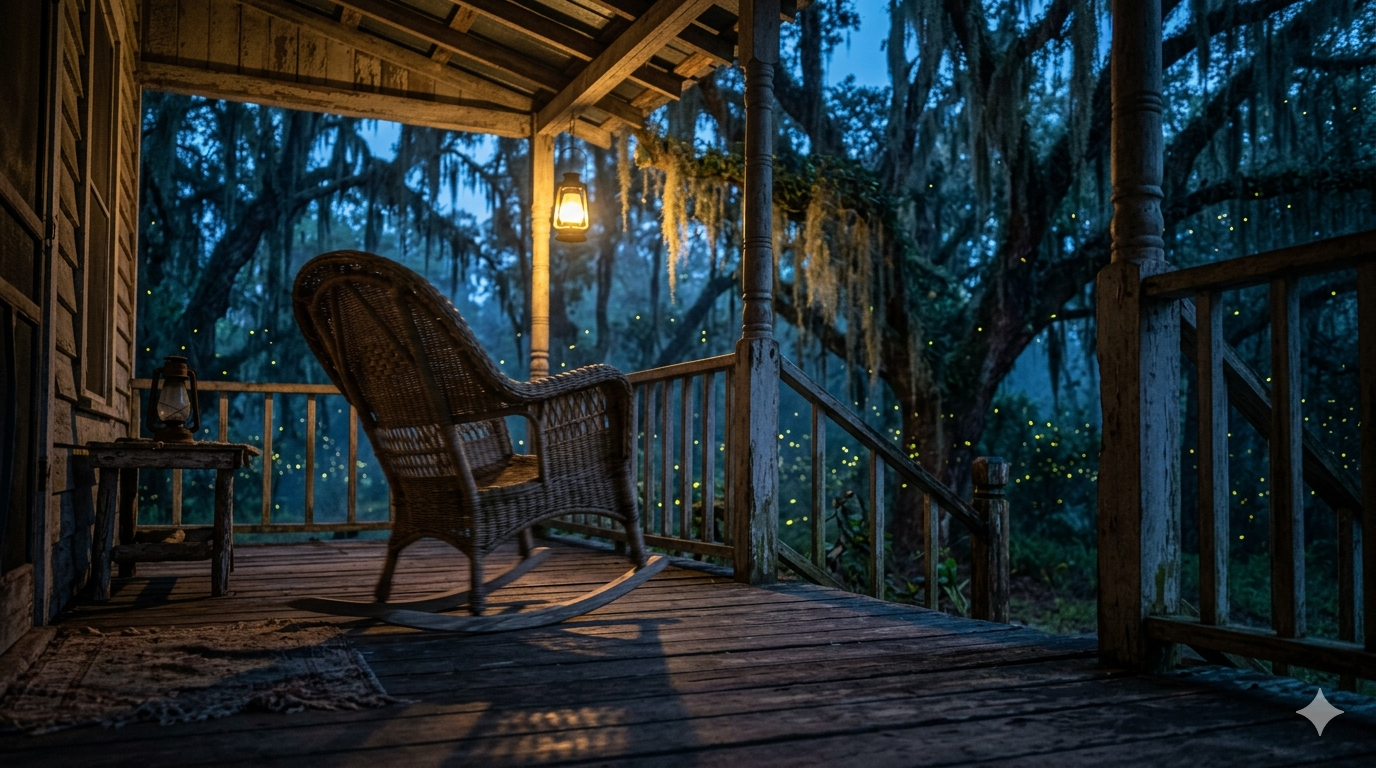
You know that particular kind of Florida quiet?
It isn’t true silence. It’s a heavy, expectant hush where the only thing cutting through the thick, citrus-scented humidity is the rhythmic, metallic creak of a porch swing.
It’s a sound that suggests time hasn't quite decided which way to flow. In that creak, if you listen close enough,
You can almost hear the ghosts of conversations past—the low rumble of a grandfather’s advice, the sharp cackle of a neighbor’s joke,
and the whispered warnings about the rising tide.
Long before we could pull a definitive answer out of our pockets at the speed of light, we lived in the "B.G." (Before Google) era.
This wasn't just a time before smartphones; it was a time when the world’s greatest intelligence wasn’t found in a search bar or a fluorescent-lit classroom. It was found in the deep, flickering shade of a live oak,
where the air was cooler, and the truth was more honest.
The Survival Kit of the Soul
In those days, history wasn't a series of dates printed on a glossy page. It was a living, breathing thing.
We learned who we were not from textbooks—which often smoothed over the jagged edges of our reality—but from the mouths of our elders.
They carried our stories like a "survival kit," a collection of essential tools handed down to ensure the parts of us that shouldn't be forgotten weren't lost to the encroaching sawgrass or the relentless march of progress.
This preservation isn't just about nostalgia; it’s about survival. Storytelling is a "succession of language"—what the Native Hawaiians beautifully call moʻolelo.
It is a bridge built of breath and memory that spans the gap between generations. In a state like Florida, where the landscape changes with every hurricane and every new development,
these stories act as an anchor for our collective identity. They keep us moored when the winds of change threaten to blow our heritage out to sea.
When an elder tells a story on a porch, they aren't just reciting facts; they are transferring a legacy. They are telling you how to find the sweetness in a sour year and how to recognize your kin by the way they navigate a storm.
They are filling your "backpack" for a journey they won't be around to finish with you.
Looking Through the Spy-Glass
To understand the "Unwritten Past," we have to look to those who mastered the art of listening.
Few understood the power of the unspoken better than Zora Neale Hurston. A daughter of Eatonville—the first incorporated all-Black city in the country—she didn't just listen to stories;
She studied them with a soul-deep precision.
Hurston famously called her academic and folkloric training a "spy-glass," a tool that allowed her to look past the surface and see the sacred truth hidden within the "big old lies" told on those dusty Eatonville porches.
To the untrained ear, a folk tale about a talking mule or a clever rabbit might seem like a mere distraction.
But through Zora’s spyglass, those stories were the very DNA of a culture that refused to be silenced by the Jim Crow era. She knew that the "lying sessions" (as the locals called them) were actually masterclasses in philosophy, resilience, and wit.
The Cosmic Secrecy of the Scrub
Further north, in the wild, tangled heart of the Florida scrub, Marjorie Kinnan Rawlings was embarking on her own journey into the unwritten.
When she moved to Cross Creek, she didn't just write about the land; she let the land write her. She captured what she called the "cosmic secrecy" of the Florida wilderness—the feeling that the woods are watching you back.
Rawlings reminded us through her work that we are never truly owners of this peninsula; we are merely tenants of a territory that ultimately belongs to the wind, the rain, and the ancient spirits of the swamp.
Her writing was an attempt to transcribe the unwritten laws of the wilderness, ensuring that the grit and grace of the "Florida Cracker" life—a life defined by the hunt,
the harvest, and the hard-won peace of the woods—wouldn't vanish into the heat haze of history.
Wit as a Weapon: The Legend of Bone Mizell
And then, of course, there is the legendary Bone Mizell. If Zora provided the spy-glass and Marjorie provided the soul, Bone provided the spirit.
A man of the soil and the saddle, Mizell was a Florida cowboy (a "cowman") who used his "quick and cutting wit" to transform the grueling hardships of the cattle trail into a bellyful of laughs.
Bone wasn't interested in being a hero in a history book.
He was interested in the "now." Yet, by turning his struggles into stories, he created a folk history so vibrant and stubborn that it refuses to be paved over by subdivisions and strip malls.
His "unwritten" legacy teaches us that humor is often the best way to preserve a hard truth.
The Science of Why We Remember
While the lore is beautiful, the science behind why we gather on these "porches" is just as compelling.
Psychology tells us that nostalgia isn’t merely a sentimental daydream or a longing for a "simpler time." Instead, it is a "self-relevant" and deeply "social" emotion.
By reliving these memories, we aren't just looking backward; we are performing an act of psychological maintenance. Science suggests that storytelling:
Symbolically reignites bonds: We bring the voices of the departed back into the room, making them present in our current struggles.
Creates self-continuity: It weaves a thread from who we were to who we are, helping us navigate the present with a sense of purpose.
Bolsters resilience: Hearing how our ancestors survived their own "Great Depressions" or "Great Storms" provides a blueprint for our own endurance.
In essence, storytelling is how we keep our internal compass calibrated. It’s the "faith that cushions our fall" when the world feels too fast and too loud.
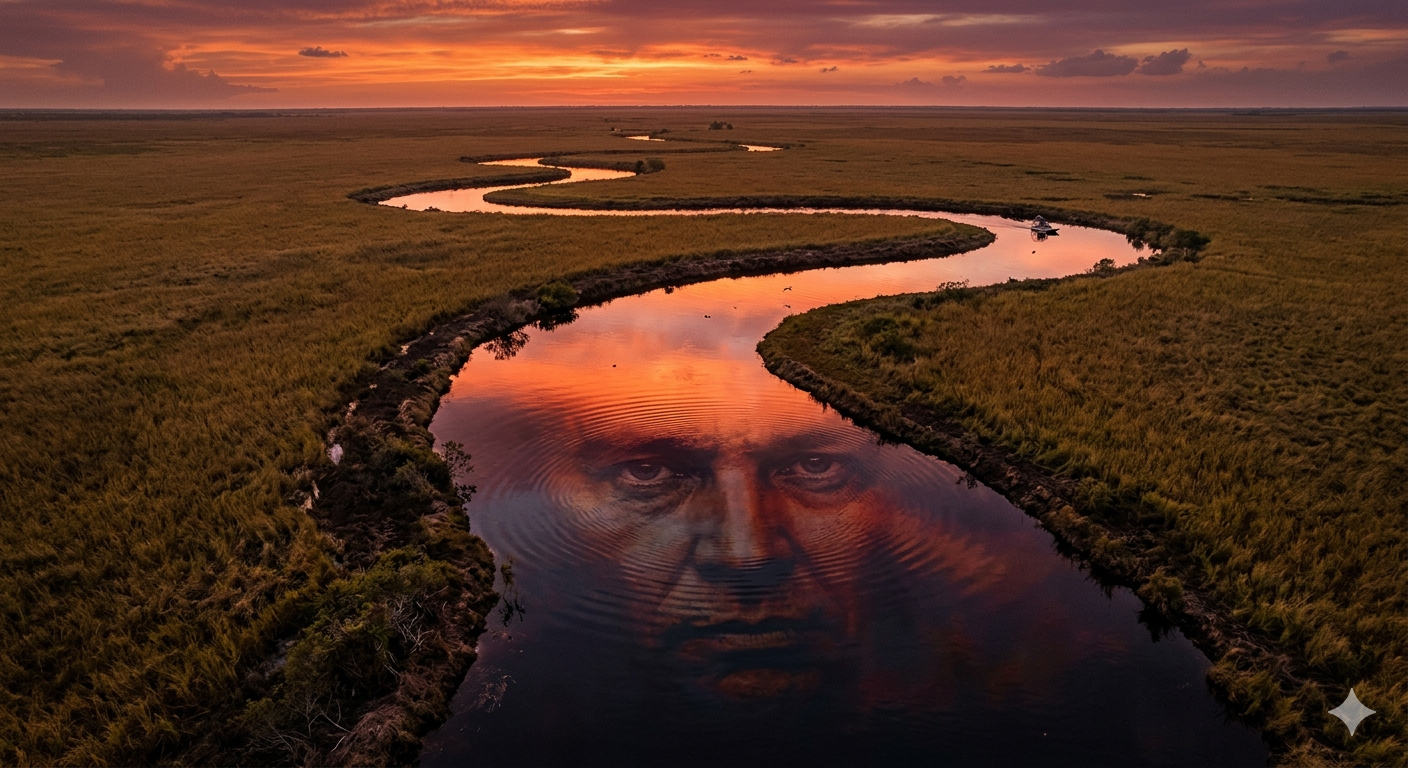
The water reflects the orange sunset, but the ripples in the water form the faint, liquid shape of a human face or a pair of eyes watching
Creating the Digital Porch
I created Florida Unwritten because I realized that the porches of my youth were disappearing.
The physical spaces where we used to sit and exchange "the unwritten" are being replaced by screens and high-speed commutes.
I wanted to build a Digital Porch—a space that transcends physical boundaries but maintains that same rhythmic, slow-paced atmosphere of a summer evening.
My grandfather was a man whose voice felt like it was carved out of cedar.
His stories weren't just entertainment; they were the maps I used to find my way home.
Florida Unwrittenis my way of carrying on his ways.
It is a mission to ensure that we don’t get "lost at the ends of sentences" simply because our histories weren’t honored by the mainstream.
We are at a crossroads where the "B.G." generation is passing the torch to a digital-native generation.
If we don’t grab hold of those backpacks of our ancestors and fill them with our own new stories, that "succession of language" breaks.
We owe it to the ones who sat on the porch swings before us to keep the ink wet on the pages of our unwritten history.
Your Place at the Table
Every community has its legends—the woman who could charm the bees, the fisherman who knew the tides by the ache in his knees,
or the teacher who taught more about life through gardening than through books. These stories are the "survival kits" for the modern age.
They remind us that we come from a long line of people who were tougher than the humidity and more resilient than the hurricanes.
The "Florida quiet" isn't an absence of noise; it's a space waiting to be filled with a voice.
It’s an invitation to remember that we are part of something much larger than our social media feeds or our daily to-do lists.
We are the stewards of a narrative that began long before we arrived and will continue long after we are gone—provided we dare to speak it.
As we continue this journey into Florida’s unwritten past, remember that the most important story is the one that hasn't been told yet.
The one that lives in your memory, waiting for the right moment to be shared.
The porch is open, and the sun is beginning to set. I’ve shared a bit of what keeps me grounded in this shifting sand, but a porch is no good if only one person is talking.
What is one "unwritten" story from your neck of the woods that helped you grow up? Was it a piece of wisdom from a grandmother, a legend about a local landmark, or a "big old lie" that turned out to be true?
Pull up a chair, take a breath of that heavy air, and let’s keep the succession going. Tell me your story in the comments below.
Earl Lee
Florida Unwritten
