The Accidental Island: Presidents, Peanuts, and the Prettiest Water in Palm Beach
gentle manatee swimming past snorkeler
There is a particular kind of Florida magic that doesn’t announce itself with fireworks or neon signs. It sneaks up on you. It waits until you’re standing somewhere you didn’t expect to fall in love with, somewhere that technically shouldn’t even exist.
That’s exactly what happens on Peanut Island.
You feel it the moment you step off the boat. The sun leans in close, heavy and golden. The air smells like salt, sunscreen, and that faint tropical sweetness that seems baked into South Florida itself. The water stretches out around you in impossible shades of blue, shifting from turquoise to sapphire like it’s showing off.
And then you remember something almost absurd: this place wasn’t supposed to be here.
Peanut Island is an 80-acre accident. A beautiful, sun-soaked, fish-filled accident sitting right inside the Lake Worth Lagoon. It’s a place with a name that makes no sense, a Cold War secret buried beneath its sand, and some of the clearest water you’ll find without leaving the state.
It’s weird. It’s wonderful. It’s Florida in its purest, most unapologetic form.
The Spoil of the Century: How a Mistake Became a Masterpiece
Peanut Island didn’t rise from tectonic drama or ancient coral formations. There was no grand geological origin story. No, this island was born the way many great things are born: from leftovers.
Back in 1918, engineers were deepening the Lake Worth Inlet to make room for larger ships. All that dredging produced mountains of sand, and they needed somewhere to put it. So they dumped it into the lagoon.
Just like that, a ten-acre pile appeared.
They called it Inlet Island, which is about as imaginative as naming a dog “Dog.” But over time, more dredging projects added more sand, more shape, more life. The island grew steadily, like a slow-motion sandcastle refusing to wash away.
Today, that humble pile has expanded into an 80-acre playground of palm trees, picnic areas, snorkeling spots, and winding trails. Not bad for something that started as a construction afterthought.
Why “Peanut” Island? A Name That Stuck Like Humidity
Here’s where things get even more Florida.
In the 1920s, the Port of Palm Beach had a plan. The island would become a terminal for shipping peanut oil. It was a practical idea, tied to commerce and industry, the kind of thing that looks great on paper.
Except it never really happened.
By 1946, the peanut oil venture was abandoned. Whether it was economics, logistics, or just bad timing, the plan fizzled out before it could take root.
But the name? The name refused to leave.
And so, despite never actually becoming a hub for peanuts or peanut oil, the island became forever known as Peanut Island. It’s the kind of naming logic that feels perfectly at home in Florida, where stories matter more than accuracy and nicknames stick harder than sunscreen on a July afternoon.
Cold War bunker entrance under tropical island
Detachment Hotel: A Cold War Secret Under the Sand
For a while, Peanut Island’s biggest claim to fame was its quiet presence near the inlet. Then history decided to drop something heavy onto its sandy shoulders.
In 1961, during the height of the Cold War and the tension of the Cuban Missile Crisis, the U.S. government needed a contingency plan.
President John F. Kennedy often stayed nearby in Palm Beach, at what was known as the “Winter White House.” If things went sideways in a hurry, there needed to be a safe, secure place to move him quickly.
Enter the Navy Seabees.
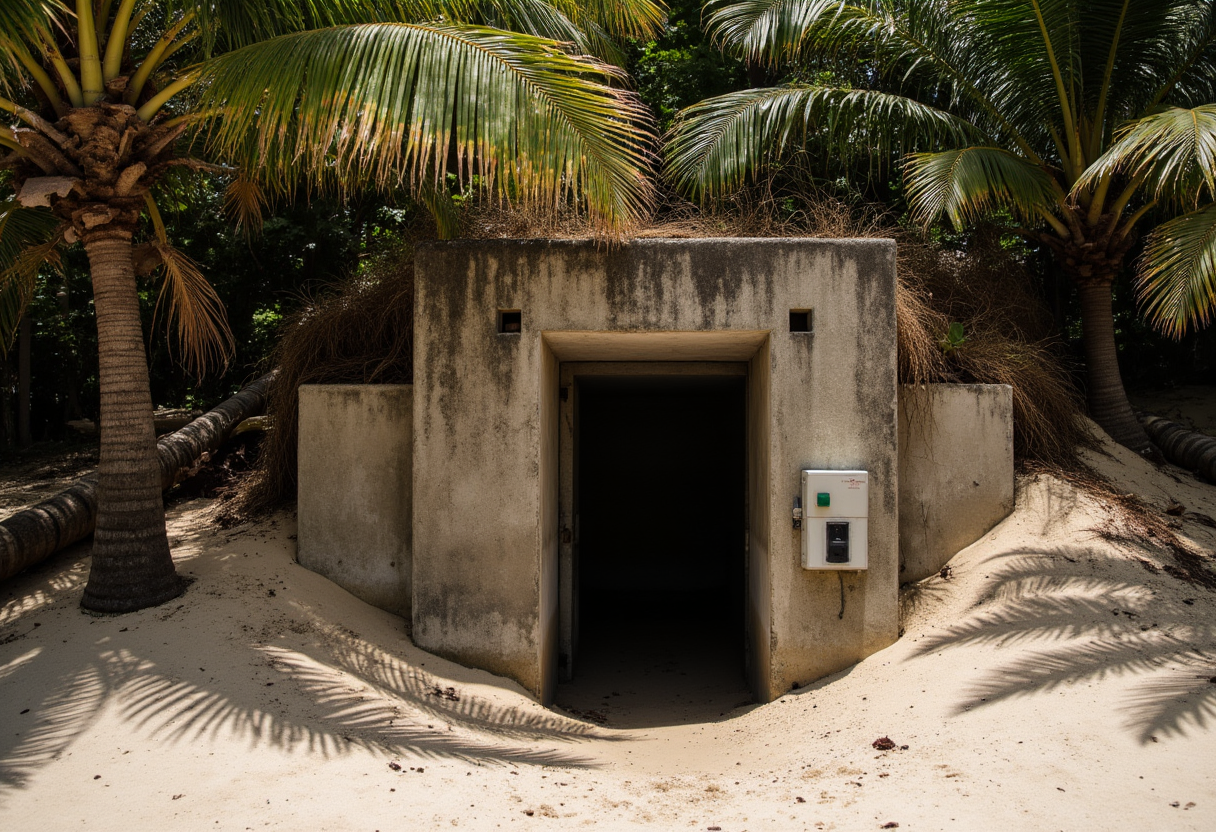
In just seven days, they constructed a 1,500-square-foot nuclear fallout shelter beneath Peanut Island. It was discreetly named “Detachment Hotel,” which sounds more like a budget motel than a last-resort command bunker.
But don’t let the name fool you.
This was serious Cold War engineering. The bunker was buried under twelve feet of earth and reinforced with a lead-lined roof. Inside were thirty bunks, a communication center, a decontamination shower, and supplies designed to keep the President and his team alive in the event of nuclear fallout.
It was never used for its intended purpose, which is the best possible outcome for a place like that.
Today, the bunker stands as a surreal contrast to the island above it. Just a few feet beneath beach towels and picnic coolers lies a relic of global tension, a reminder that even paradise can have a shadow.
Neighbors With Fins: Snorkeling in a Living Aquarium
If the island’s history feels heavy, the water surrounding it feels like the opposite. Light, clear, and almost unreal.
Because Peanut Island sits right at the mouth of the inlet, it gets a constant refresh of ocean water with each incoming tide. It’s like the Atlantic Ocean stops by twice a day to tidy things up.
The result is some of the clearest water in South Florida.
On the island’s southeast side, a man-made snorkeling lagoon creates a calm, protected environment that feels like slipping into a giant saltwater aquarium. Rock breakwaters frame the area, giving fish a place to gather and visitors a front-row seat.
Drift slowly, and you’ll find yourself surrounded.
Angelfish flicker like living stained glass. Parrotfish glide by in bursts of neon color, their beak-like mouths scraping gently at the rocks. Schools of smaller fish move in synchronized flashes, turning the water into something that feels choreographed.
Every now and then, something bigger appears.
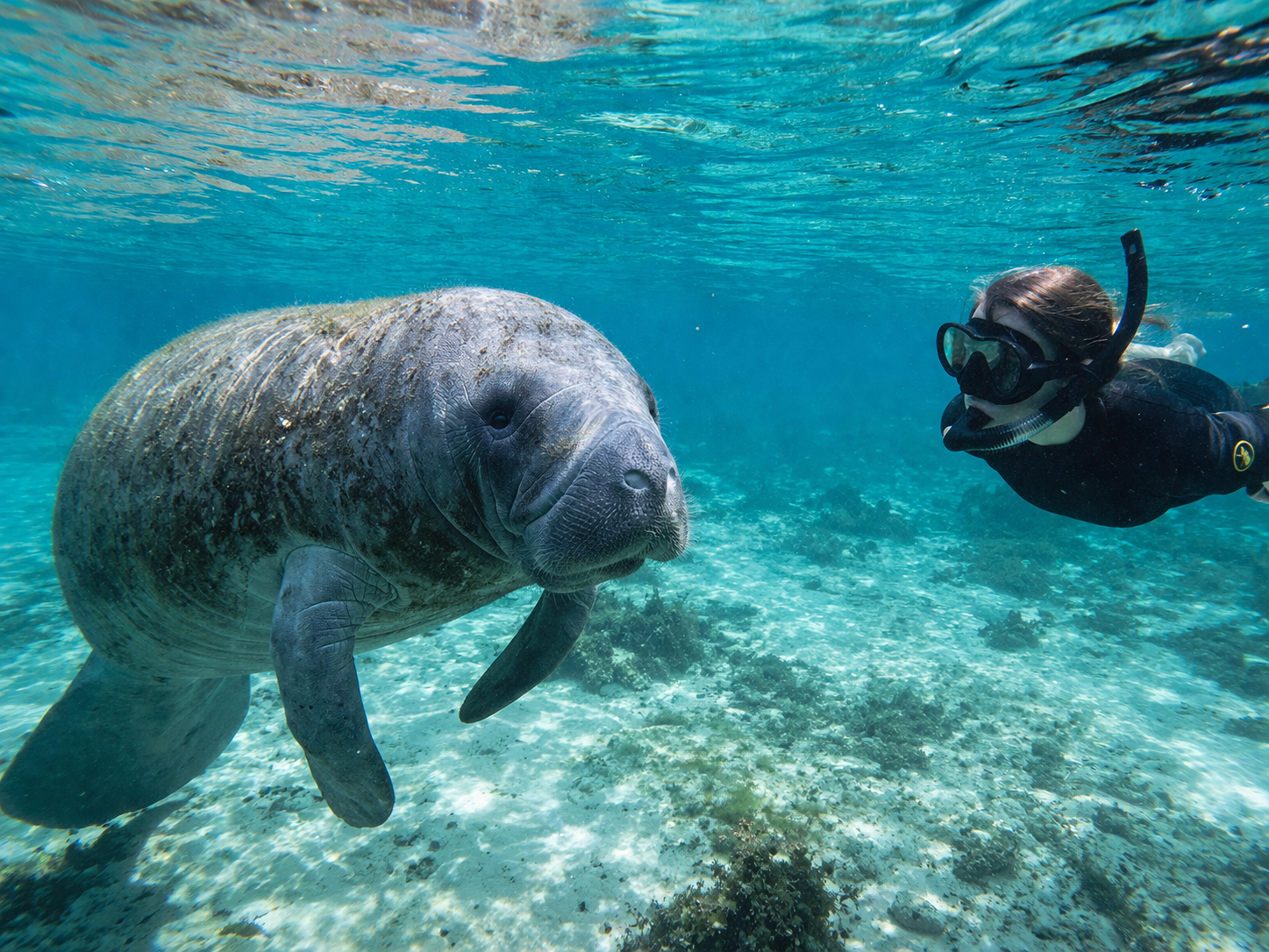
A barracuda might hover in the distance, looking like it’s contemplating your life choices. And if luck decides to smile on you, a manatee may wander through.
There’s something quietly humbling about sharing the water with a creature that weighs as much as a small car and moves with the grace of a drifting cloud. They don’t rush. They don’t panic. They simply exist, unbothered, ancient, and completely at home.
The Long Way Around: Walking the Edge of the Island
Not every experience here requires a mask and fins.
A 1.25-mile paved path wraps around the island like a lazy ribbon, offering a different kind of immersion. This is where you slow down, where the rhythm shifts from waves to footsteps.
The trail winds through maritime hammocks filled with gumbo limbo trees, their peeling red bark catching the light like sunburned skin, and sea grape clusters that rattle softly in the breeze.
Ospreys circle overhead, sharp-eyed and patient. Brown pelicans glide just above the water, folding into dramatic dives that end in a splash and a successful lunch.
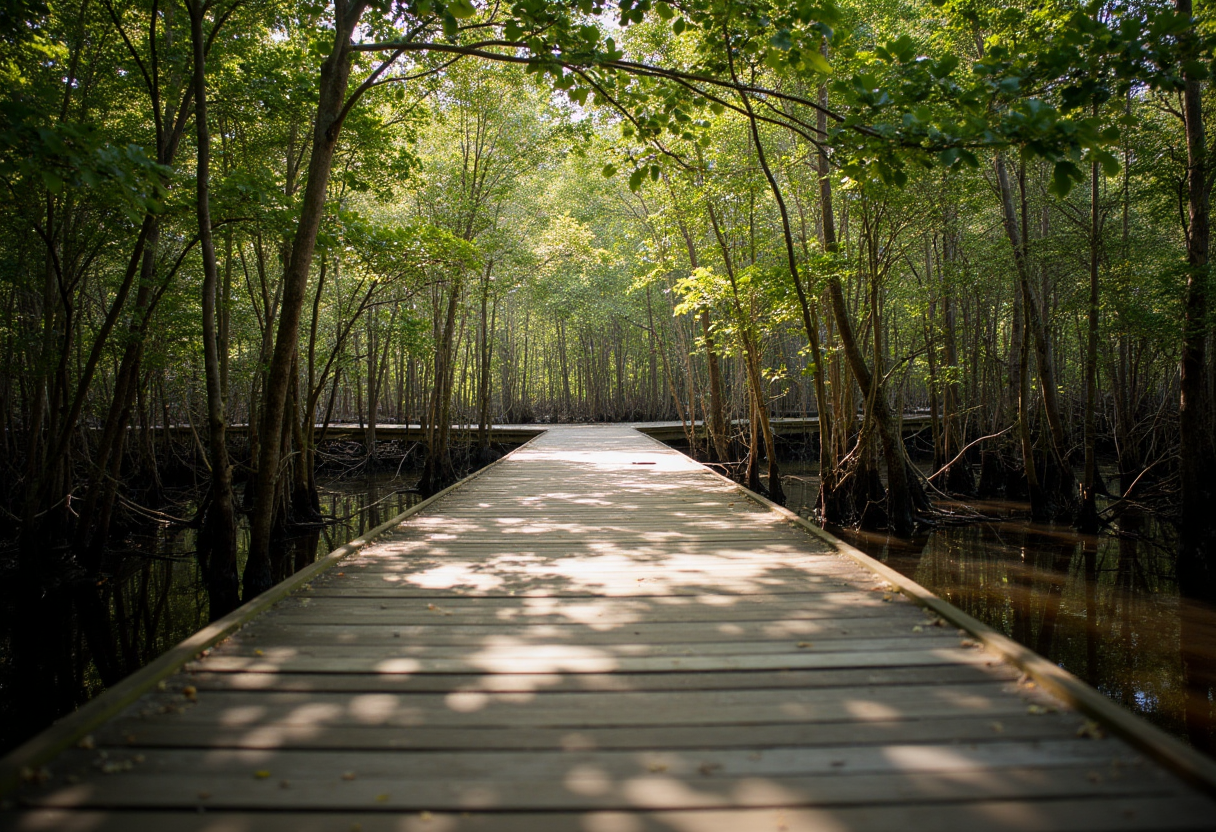
On the mangrove boardwalk, the perspective changes again. Roots twist and tangle beneath the surface, creating a nursery for juvenile fish and a quiet, shadowed world that feels hidden even in plain sight.
It’s the kind of walk where time loosens its grip. You stop checking your phone. You stop thinking about what’s next. You just… move.
wooden boardwalk through mangrove forest
The “Bring Your Own Everything” Philosophy
Peanut Island doesn’t try to impress you with convenience.
There are no beachfront bars mixing frozen drinks. No snack stands are selling overpriced chips. No souvenir shops offering T-shirts you’ll never wear again.
And that’s exactly the point.
This is a place that asks you to participate. You bring your own cooler. Your own snorkel gear. Your own sunscreen, preferably the reef-safe kind. You plan a little. You prepare a little.
In return, the island gives you something that feels increasingly rare: a day that belongs entirely to you.
There are a few rules, of course. Balloons are prohibited to protect sea turtles, and alcohol is limited to designated camping areas. It’s less about restriction and more about respect, a quiet agreement between visitors and the environment.
After the Last Boat: When the Island Exhales
Most people experience Peanut Island as a day trip. They arrive with the morning sun and leave with the late afternoon glow.
But staying overnight changes everything.
The island has 17 campsites tucked into tropical landscaping, and once the last shuttle boat pulls away, a transformation happens. The noise fades. The crowds disappear. The island exhales.
What’s left is something softer.
You sit by a fire ring as the sky deepens into indigo. Stars begin to show themselves, one by one, until the whole sky feels like it’s quietly watching. The tide moves in and out with a steady rhythm, a natural metronome that doesn’t care about schedules.
It’s peaceful in a way that feels almost unfamiliar.
Of course, this is still Florida. The “no-see-ums” make their presence known, tiny invisible locals with a talent for biting at exactly the wrong moment. Bug spray becomes less of a suggestion and more of a survival tool.
But even that becomes part of the story.
The Ride Back: A Different Kind of Tired
Eventually, it’s time to leave.
You board the shuttle back toward Riviera Beach Marina, cooler a little lighter, skin a little tighter from salt and sun. As you drift away, massive cruise ships slide through the inlet, towering and slow, like moving cities.
And you feel it.
That specific kind of Florida tired.
Not exhaustion, exactly. More like a pleasant unraveling. Your shoulders drop. Your thoughts quiet. Your body remembers what it feels like to spend a day outside, fully present, fully unhurried.
Peanut Island doesn’t try to be extraordinary.
It just is.
An accident turned into a destination. A place where history hides underfoot, and fish glide through water clear enough to make you question if it’s even real. A small, sandy reminder that sometimes the best places are the ones nobody planned.
So pack your cooler. Check the tide chart. Step onto the boat.
There’s a little accidental magic waiting out there.
If you’re still here, you’re one of us. You know that the real Florida isn't found at seventy miles per hour. This newsletter is a labor of love, but the coffee that fuels it isn't free. If you want to help protect the "Unwritten" side of the state, feel free to toss a little something[Toss a Coffee in the Tin
Earl Lee
Florida Unwritten
