Saving the Florida Scrub Ecosystem: Science and Serendipity
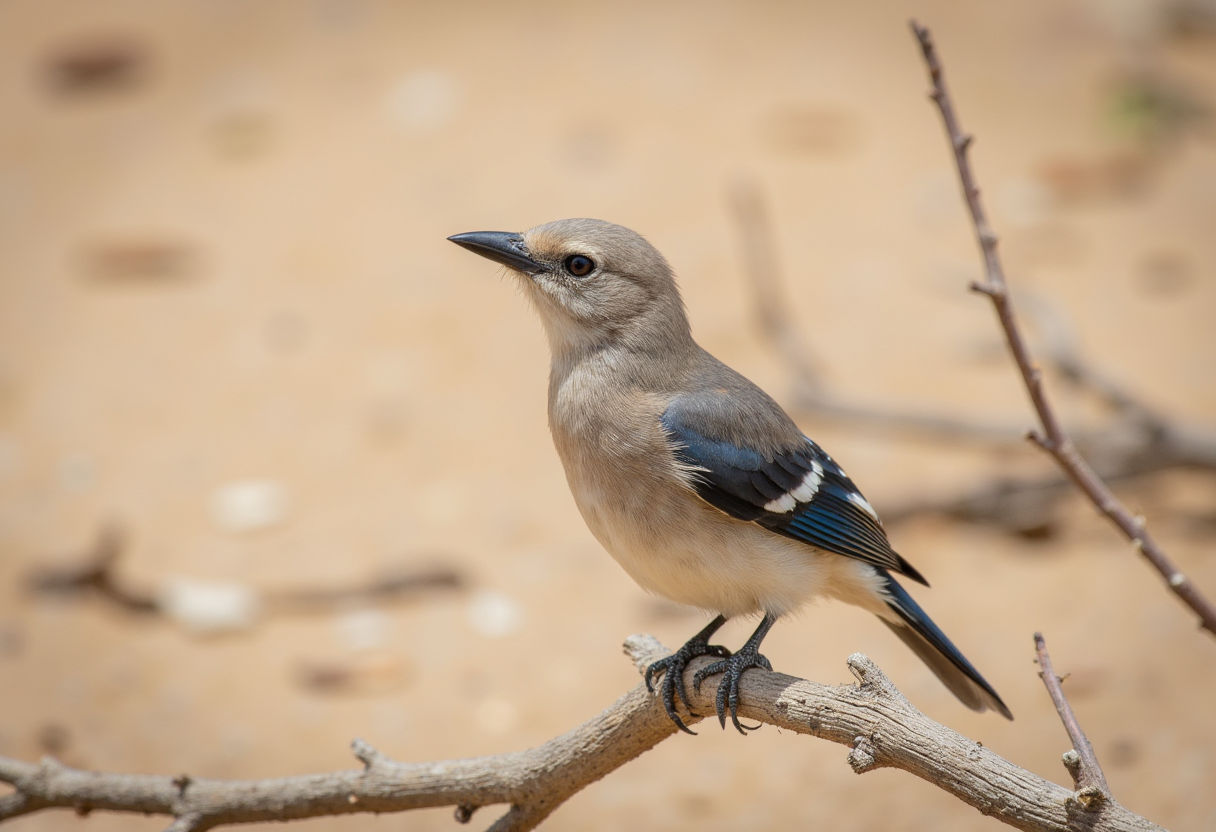
“The Bird That Refused to Leave” Prompt: “Florida scrub-jay perched on scrub oak branch
If you’ve spent any time driving through the middle of Florida, you’ve probably seen it. It’s that stretch of dry, sandy land that looks like a beach that forgot it was supposed to be near the ocean.
The scrub.
To the uninitiated, it looks like nothing more than a collection of twisted, stubborn bushes and white sand that gets everywhere. You might even hear someone call it "wasteland" or "useless brush."
But if you stop—really stop—and crouch down in that silver-grey sand, you’ll realize you’ve stumbled into one of the most ancient, specialized, and downright fascinating neighborhoods on the planet.
The Florida scrub is our version of a desert, a biological time capsule that’s been holding its breath since the last time the ocean levels were high enough to turn Florida into a collection of lonely, sandy islands.
Saving this ecosystem isn't just about protecting a few bushes;
It’s about preserving a piece of Florida that’s been here since before the first tourist ever asked for directions to Disney.
The "Useless" Patchwork That Saved a Species
There’s a certain gentle irony in how we often go about saving things. We tend to want to protect the "majestic" stuff—the panthers, the bald eagles, the manatees.
But in the scrub, the stars are tiny, grumpy, and incredibly picky. Take the Florida Scrub-Jay.
Imagine a bird that’s essentially a social butterfly but refuses to move more than a few miles from the bush where it was born.
Back when scientists began to really study the scrub in the mid-20th century, they were baffled. Why were these birds so specific?
Why did they insist on this dry, fire-dependent, sandy nightmare of a landscape?
It turns out, it wasn't just preference; it was evolutionary perfection. The scrub-jays were perfectly adapted to a landscape that required fire to stay healthy.
The serendipity here is that by protecting a "bunch of weeds," we accidentally saved one of the state's most charismatic and endangered birds.
It’s a classic Florida lesson: sometimes, the most unassuming places hide the most important stories.
When Science Needs a Little "Spark"
If you talk to a modern Florida ecologist, they’ll tell you that the scrub is a pyrophytic ecosystem.
That’s a fancy, college-level way of saying, "If you don't burn it, it dies."
Nostalgically, many of us remember Florida of the past as a place where you didn't see smoke on the horizon unless someone was having a barbecue.
This post is part of our Literary Spy-Glass series, exploring the writers who captured the heart of Old Florida. For more on the legends of the scrub, check out our pillar post: [Voices from the Porch: A Journey Into Florida’s Unwritten Past].
But the reality is that natural lightning strikes have been "cleaning" the Florida landscape for millions of years. When we started building houses and roads, we put a stop to those natural fires.
The result?
The scrub grew tall, the gaps between the plants filled in, and the specialized residents—like the Gopher Tortoise and the Sand Skink—found themselves in the dark.
The science of "prescribed burning" is perhaps the most serendipitous discovery in conservation.
We realized that if we mimic those ancient, natural fires, the scrub doesn't just survive; it explodes with life.
It’s a little funny to think that the best way to save a forest is to intentionally set it on fire, but in the Florida scrub, it’s the only way to keep the lights on.
Florida Unwritten delivers weekly stories of Old Florida—hidden history, backroad towns, and places time forgot.
Every Friday: one story, a little grit, and just enough humor to outrun the mosquitoes. 🌴📬
The Deep Time Connection
There is something deeply nostalgic about the scrub. When you walk through a mature patch of scrub, you are literally walking on an ancient beach.
Those fine, white sands are the remains of oceans that retreated thousands of years ago.
When you see a scrub lizard scurrying across a patch of open sand, you’re watching a tiny, armored dinosaur living in a landscape that has stayed largely unchanged since the Pleistocene.
It’s easy to feel small out there, but it’s also comforting.
It’s a reminder that Florida is more than just the "New Florida" of high-rises and air-conditioned shopping malls.
There is an "Old Florida" that is patient, slow-moving, and incredibly resilient. The science of conservation here isn't just about data points and spreadsheets;
It’s about maintaining a link to a time when Florida was still finding its shape.
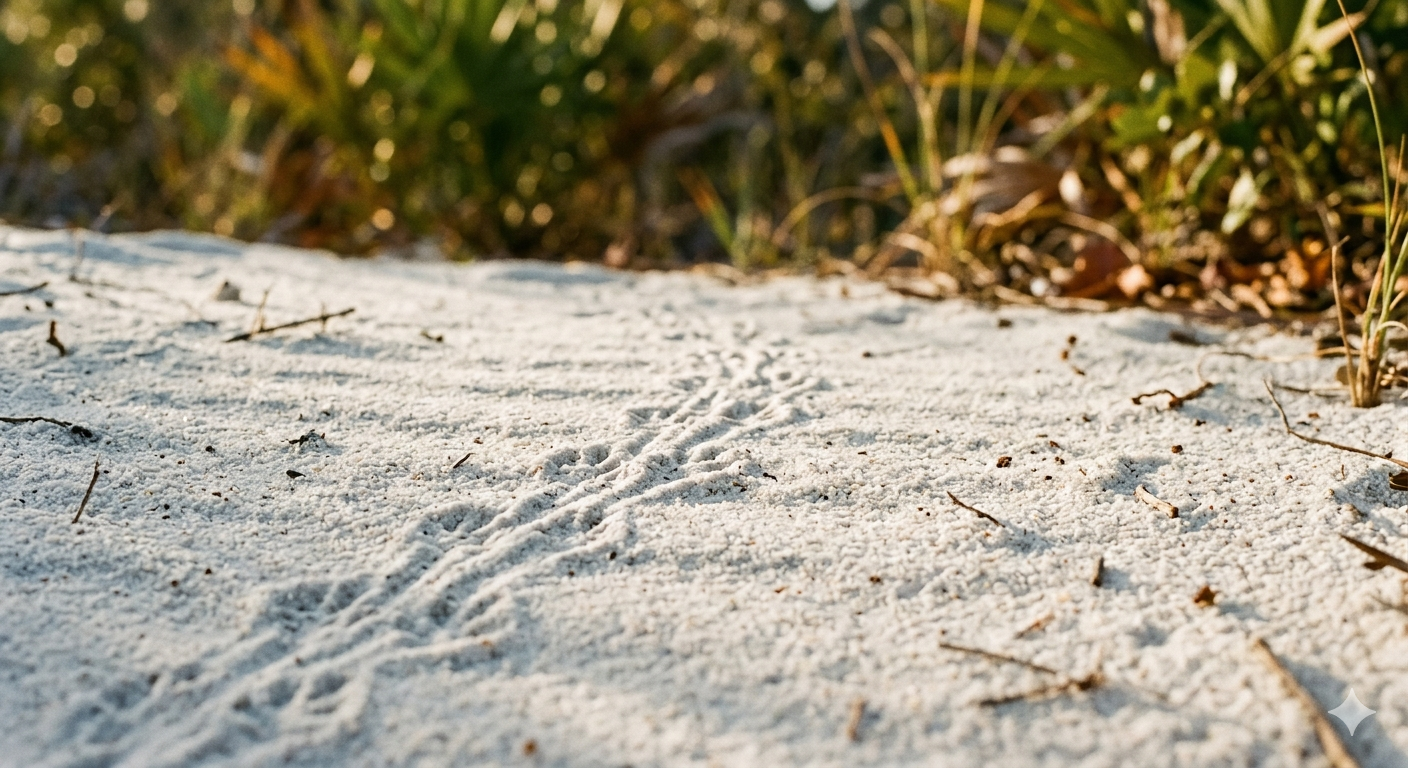
close-up of fine white Florida scrub sand with lizard tracks
Why the "Wasteland" Matters
We’ve learned the hard way that when you pave over the scrub, you don't just lose some shrubs; you lose the natural sponge that filters our water and the barrier that protects our inland communities.
The scrub is a powerhouse of ecosystem services disguised as a patch of sand.
Saving it requires a bit of grit and a whole lot of community. It takes the scientists who know the chemical composition of the soil, the volunteers who help pull invasive species,
and the neighbors who understand that a little bit of smoke once in a while is a small price to pay for keeping our landscape alive.
This post is part of our Literary Spy-Glass series, exploring the writers who captured the heart of Old Florida. For more on the legends of the scrub, check out our pillar post: [Voices from the Porch: A Journey Into Florida’s Unwritten Past].
Join the Scrub Club
Next time you’re driving through the interior of the state, don’t just breeze past those sandy lots.
Take a turn. Look for a state park or a wildlife management area that protects these rare, dry patches of heaven. You might hear the raspy call of a scrub-jay or see the tracks of a gopher tortoise heading toward a burrow.
The scrub isn't a wasteland; it’s a masterclass in resilience. It’s the Unwritten Florida, the part that doesn't need a billboard to prove its worth.
It’s been here since before we were, and if we’re lucky—and a little bit smart—it’ll be here long after we’re gone.
Want to help protect the real Florida? Support the Florida Native Plant Society or visit a local preserve like the Archbold Biological Station. Get out in the sand, bring your binoculars, and discover why this "useless" land is actually the heart of the Sunshine State.
What’s the most surprising thing you’ve discovered when you took the time to slow down and look at the "hidden" parts of Florida’s wild spaces?
Share the secret: Know someone who needs a weekend escape?
Earl
Floridaunwritten.com
