
The Night the Florida Keys Went Dark:
Finding Light After Hurricane Irma
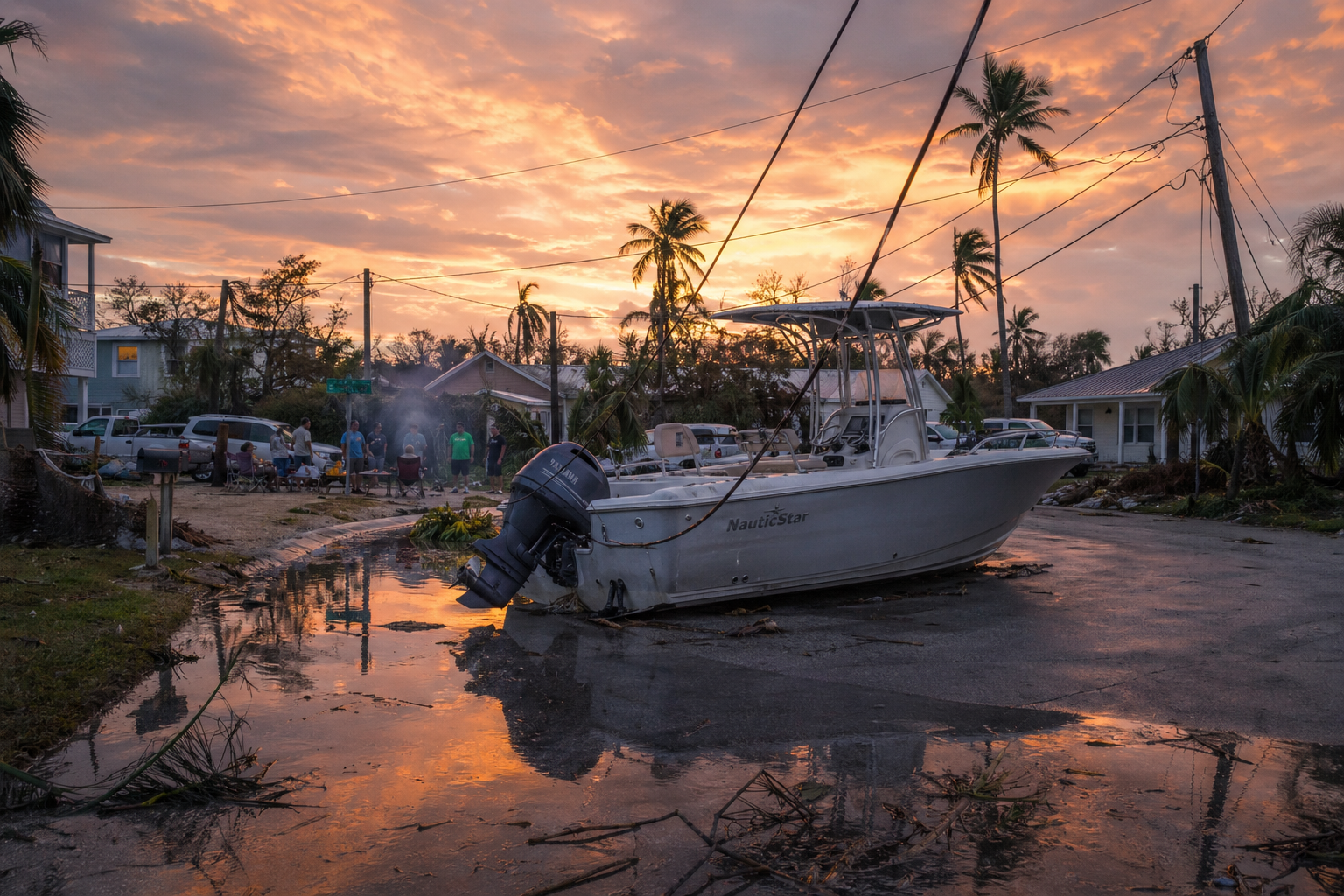
.A small center console fishing boat sits strangely parked in the middle of a suburban cul-de-sac.
The sound of the Florida Keys is usually a rhythmic symphony of outboard motors, the clinking of ice in Tervis tumblers, and the distant, muffled bass of a Jimmy Buffett cover drifting from a tiki bar.
]But on September 10, 2017, the music didn’t just stop—it was ripped away.
As Hurricane Irma made landfall at Cudjoe Key as a Category 4 monster, the entire 125-mile island chain went dark.
Not just "flicker-and-pop" dark, but a deep, prehistoric velvet blackness that swallowed the Overseas Highway whole.
For those who stayed, and those who rushed back across the Seven Mile Bridge the moment the debris was cleared, that darkness didn't just bring fear; it brought a version of the Keys that felt like a ghost from fifty years ago.
The Roar Before the Great Quiet
If you’ve ever lived through a major blow in the islands, you know the sound isn’t just wind; it’s a freight train that never arrives.
It’s the sound of the Atlantic Ocean trying to introduce itself to the Gulf of Mexico right through your living room. When the eye of Irma finally passed and the "dirty side" of the storm finished its business, the silence that followed was heavy enough to feel.
I remember stepping out onto a porch in Big Pine Key just as the sun began to peek through a bruised, purple sky.
The first thing you notice isn't what's there, but what isn't. The power lines, usually humming with the lifeblood of air conditioning and Wi-Fi, were draped across the road like discarded spaghetti.
There was no hum of refrigerators, no buzzing of pool pumps. Just the drip-drip-drip of mangroves shedding seawater and the surreal sight of a 22-foot center console boat parked neatly—if illegally—in the middle of a residential cul-de-sac.
Charcoal Grills and the "Irma Buffet"
In the Keys, we have a very specific hierarchy of disaster management. First, you secure the boat. Second, you secure the liquor. Third, you realize that without power, everything in your freezer is a ticking clock. By day two of the Great Dark, the "Irma Buffets" began.
Necessity is the mother of invention, but in the Florida Keys, it’s the mother of the world's most chaotic neighborhood barbecue.
Since nobody had a stove, but everyone had a bag of charcoal and a sense of impending doom regarding their expensive steaks and frozen shrimp, the curbs became communal kitchens.
I watched a neighbor in Marathon—a man who usually only communicated via a gruff nod while checking his crab traps—drag a rusted Hibachi to the edge of the street.
Within an hour, four other families had joined him. We weren't just eating; we were conducting a symphony of survival. There were Filet Mignons being served on paper plates alongside lukewarm Gatorade and a side of "we’re all in this together."
There’s a specific kind of gentle humor that arises when you’re eating five-star seafood while covered in a three-day layer of salt, sweat, and mosquito repellent. We laughed about the absurdity of it all, mostly because crying would have taken too much hydration.
The Ghost of the Old Keys
Without the orange glow of streetlights or the neon hum of the Duval Street bars, something magical happened to the night sky. With the entire island chain plunged into total darkness, the Milky Way decided to put on a show.
For those few weeks while the linemen (the true saints of 2017) worked their way down from Florida City, we lived by the sun.
We went to bed when it got too dark to see the cards on the table and woke up when the heat became unbearable at 6:00 AM. It was a nostalgic, unintentional trip back to the "Old Keys"—the era before high-speed internet and luxury condos, when life was dictated by the tides and the breeze.
We talked more. Without the distraction of the nightly news or scrolling through Facebook, we actually sat on our porch steps and told stories.
We talked about the "Big One" of '35, the resilience of the mangroves, and whose roof ended up three blocks away. We learned that while the Keys are built on coral rock, the real foundation is the people who don't run when the water rises.
Navigating the New Map: Boats in the Streets
The visual landscape of the post-Irma Keys was like a surrealist painting. You haven’t truly experienced "backroad" Florida until you’ve had to navigate your truck around a displaced houseboat that is now effectively a permanent fixture of a mangrove stand.
The debris piles were mountains—literal monuments to the lives we were clearing out of flooded living rooms. But even in the wreckage, the Keys spirit was poking through.
People began decorating the piles of ruined drywall and sodden mattresses with spray-painted signs. "Irma Sucks, But We Don’t," read one. Another, perched atop a ruined jet ski, simply said: "Free to a good home. Needs minor engine work and a priest."
It was a reminder that even when the Atlantic tries to reclaim the land, the "Conch" spirit is stubbornly buoyant.
We found our humor in the wreckage because, in the Keys, if you can’t laugh at the fact that a manatee is currently swimming in your flooded driveway, you probably won't last long down here anyway.
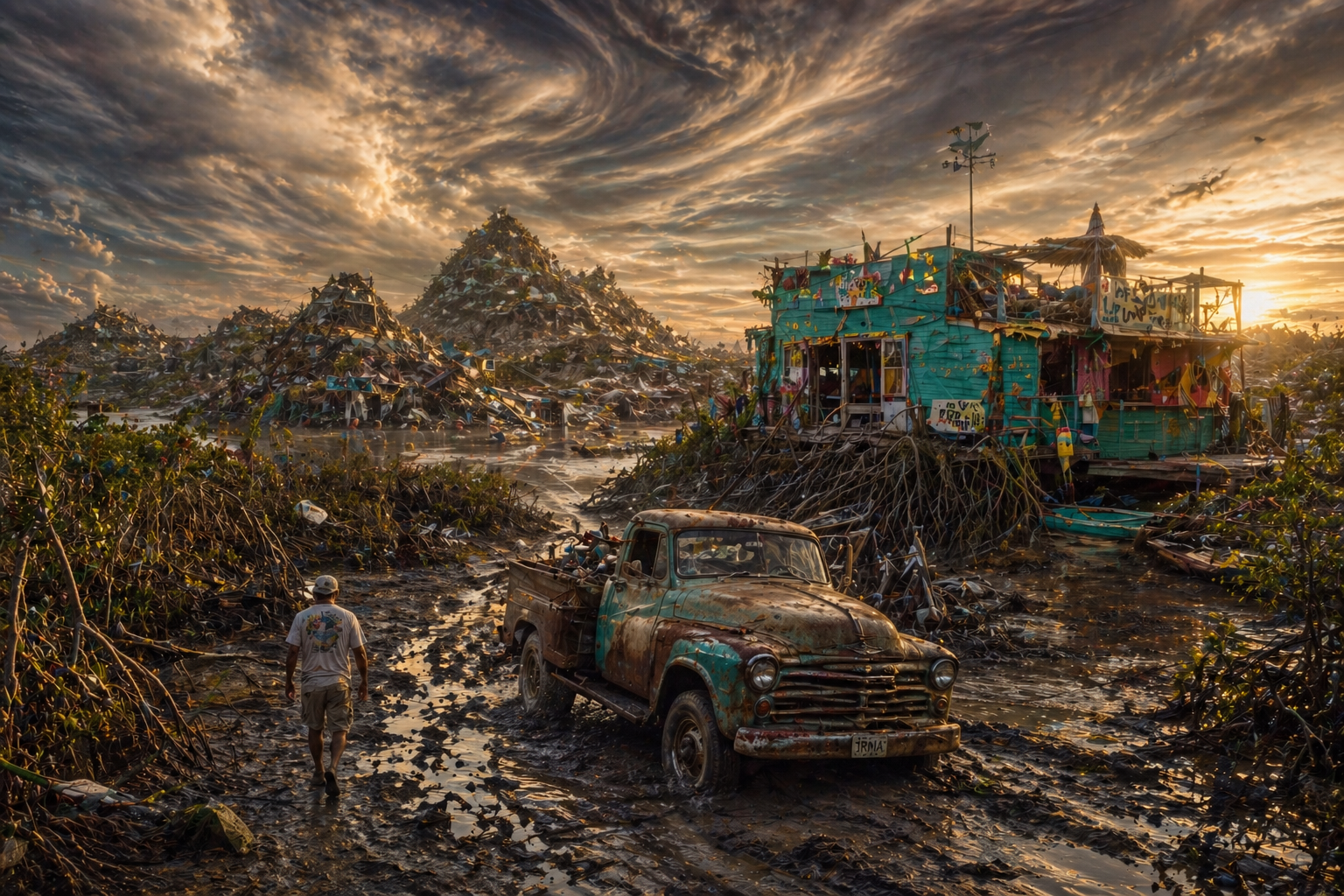
post-Irma Keys landscape
The Hum of Recovery
When the power finally flickered back on—that first, glorious surge of juice that brought the air conditioner to life with a triumphant groan—there was a literal cheer that echoed down the canals. We went back to our cold drinks, our Netflix, and our brightly lit streets.
But sometimes, when the power flickers during a summer thunderstorm, I think back to that week of darkness. I miss the way the stars looked without competition.
I miss the smell of twenty different grills firing up at sunset. Irma took a lot from us—homes, memories, and a whole lot of trees—but she couldn't take the way we look out for one another when the lights go out.
The Keys are back, brighter and busier than ever. But if you head down the backroads of Big Pine or Summerland Key today, you’ll still see the scars on the trees and the new roofs on the houses.
They are badges of honor. We are a chain of islands held together by a single highway, but more importantly, we’re held together by the stories we tell in the dark.
Are you a Florida Keys local or a frequent visitor with a storm story of your own? We’d love to hear how you found your "light" during the dark days of Irma. Drop a comment below and share your favorite memory of Keys’ resilience.
Looking for more hidden stories from the end of the road? Check out our [Backroads Section] for more tales from the Overseas Highway.
Florid Unwritten
