What We Did Before Phones (And Why Faith Felt Bigger)
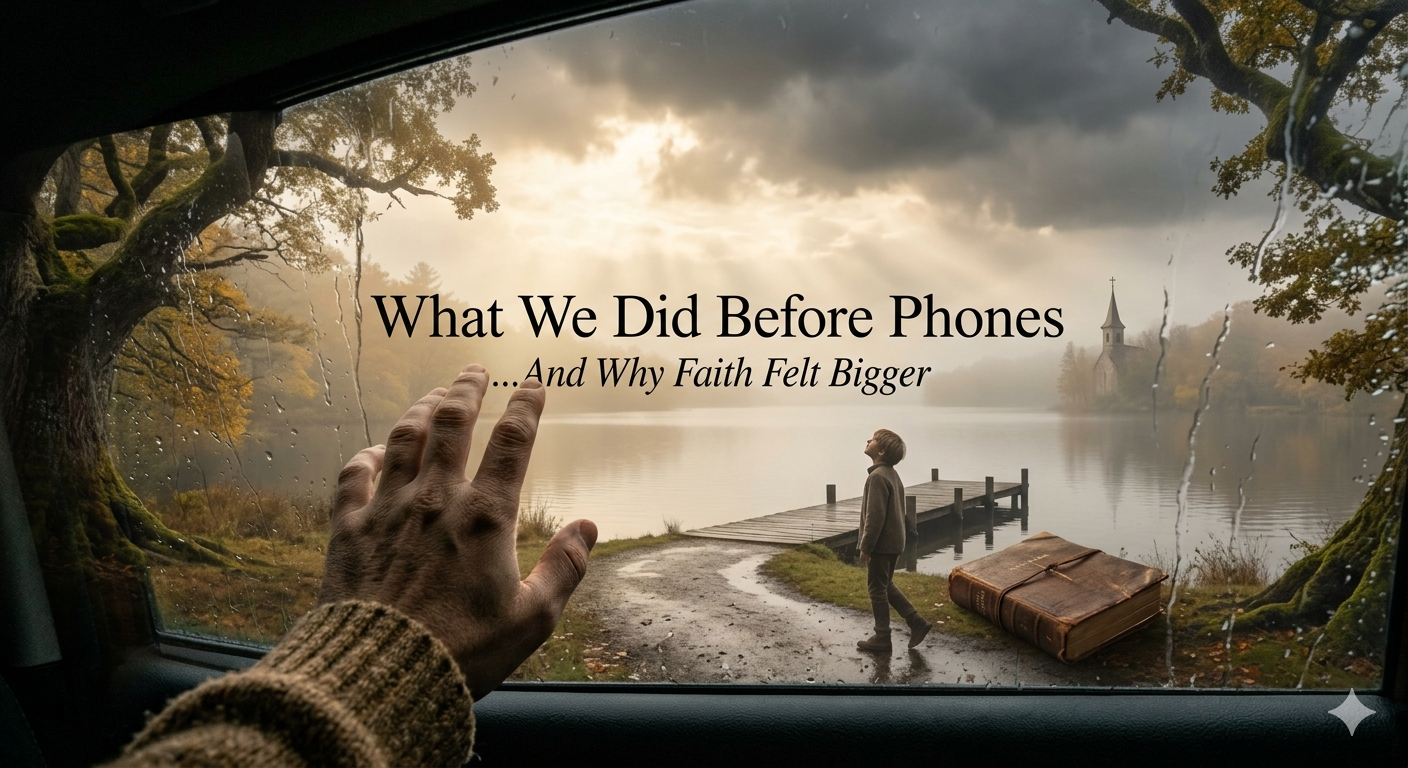
If you grew up in Florida before the era of the glowing blue screen, you probably remember a very specific kind of quiet.
It was the heavy, humid silence of a Sunday afternoon, broken only by the rhythmic hum of a box fan and the distant, lazy buzz of a cicada in an oak tree.
Back then, if you wanted to know what your friends were doing, you couldn’t drop a text into a group chat.
You had to physically pedal your Huffy bicycle down the asphalt—which was hot enough to melt the rubber soles of your flip-flops—and look for the telltale pile of bikes dropped carelessly on a neighborhood front lawn.
We didn't have immediate access to the world’s collective knowledge, nor did we have a digital play-by-play of everyone else's highlight reels.
We had empty pockets, wide-open afternoons, and a whole lot of time to just be.
Looking back, it wasn’t just our freedom that felt larger; our relationship with the divine, with the community, and with the unseen mysteries of life felt infinitely bigger, too.
When we plugged our lives into the grid, we accidentally disconnected from the quiet, sacred spaces where faith used to grow.
The Sacred Mystery of the Landline and the Church Directory
Before we carried the entire internet in our back pockets,
communication required a bizarre mixture of logistical planning and absolute faith.
If your youth group pastor announced a Saturday beach trip to Honeymoon Island, you didn’t get a pinned location link or a real-time ETA update.
You received a flyer printed on neon-green paper that smelled faintly of a mimeograph machine, and you cross-referenced it with the church directory—that sacred, spiral-bound booklet filled with grainy family photos and landline numbers.
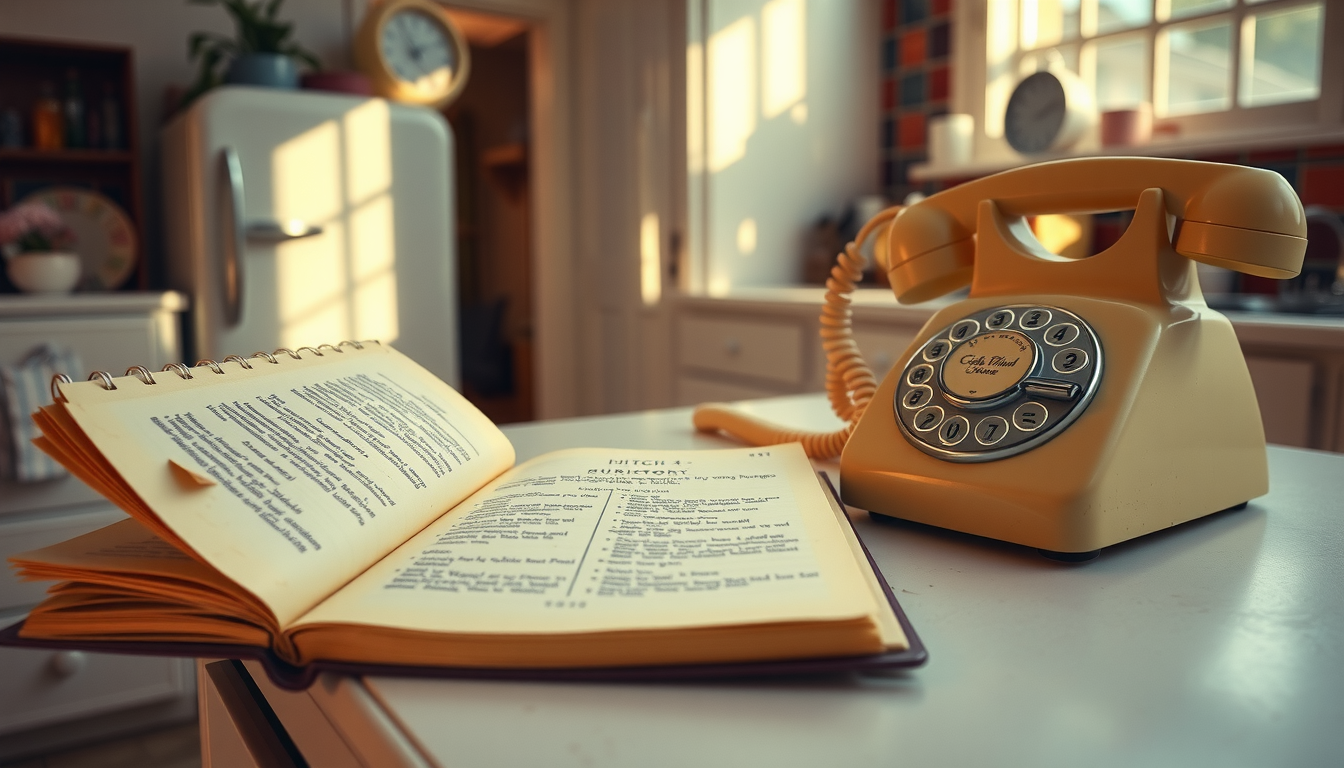
a well-worn, spiral-bound church directory lies opennext to a beige rotary telephone
If a tropical storm blew in and threatened to ruin the beach day, there was no mass text blast.
You had to trust that the "phone tree" would work.
For those too young to remember, a phone tree was a beautiful, deeply flawed human algorithm.
Mrs. Higgins would call Mrs. Davis, who would call your mom, who would then call the next family on the list.
If Mrs. Davis happened to be at Publix buying sweet tea, the entire chain broke.
Living this way taught us a masterclass in patience. We had to trust that people would show up where they said they would, when they said they would.
There was an inherent reverence in making a plan and keeping it, a subtle reflection of keeping vows. Because we couldn't constantly micromanage our schedules from a screen, we surrendered our days to the rhythm of the world around us.
Why Sunday Afternoons Felt Like Holy Ground
In the pre-smartphone era, Sunday wasn’t just a day of the week; it was an entirely different dimension.
Once the post-church lunch at the local diner or cafeteria was over, the world effectively shut down.
Stores were closed, television offered nothing but grainy golf tournaments, and your friends were all trapped in their own family living rooms.
Without a screen to instantly numb our boredom, we were forced to sit with our own thoughts.
For a kid, this felt like an eternity. But looking back through the lens of spiritual maturity, that boredom was actually a form of enforced sanctuary.

click Join our Newsletter
We would lie on the carpet, staring up at the popcorn ceiling, letting our minds wander.
It was in those long, empty hours that we pondered the big, heavy questions.
Why are we here?
What does God look like?
How far does the sky actually go?
Today, the second our minds drift toward an uncomfortable or deep thought, we instinctively reach for our phones to scroll through strangers' vacation photos.
We cure our boredom, but we kill our wonder. Before phones, the emptiness of a Sunday afternoon wasn't a vacuum to be filled with digital noise; it was an open canvas where the Holy Spirit could actually get a word in edgewise.
The Lost Art of Paying Attention to the Unseen
There is a distinct spiritual difference between looking at a map on a screen and navigating the world with your eyes wide open.
When we drove to church camp in the middle of Ocala National Forest, we didn't have a soothing GPS voice telling us to turn right in five hundred feet.
We had a crumpled gas station map, a driver who refused to ask for directions, and a window to look out of.
Because we weren't staring down at our laps, we noticed things.
We watched the orange groves give way to sprawling cattle pastures. We watched the sky turn the bruised, dramatic shade of purple that meant a classic Florida thunderstorm was about to unleash heaven on the windshield.
👉 Florida always has another story
The Dirty History of Florida Mudding and Off-Road Racing
The "Old-Timer" Forecast: Why Grandfather Smelled Hurricanes Long Before Doppler
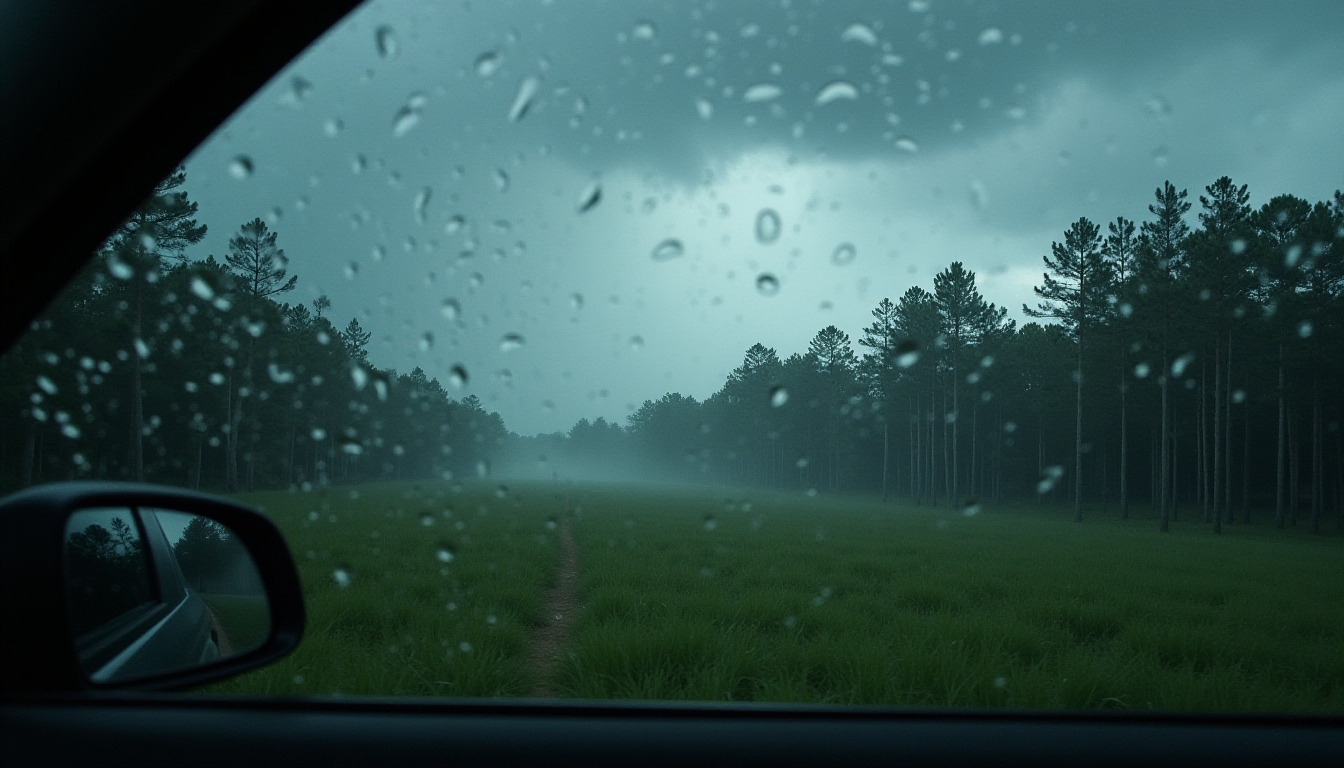
A rain-streaked car window looking out over a misty, green Florida pine flatwoods
Scripture tells us that the heavens declare the glory of God, but you have to actually look at the heavens to hear the declaration.
When our eyes are constantly glued to a five-inch piece of glass, we miss the daily liturgy of creation.
We miss the slow, breathtaking choreography of a Gulf Coast sunset, or the way the morning fog lifts off a retention pond like incense rising to the altar.
Before phones, our world felt bigger because we were actively participating in the grandeur of creation, rather than viewing a compressed, digitized version of it through someone else’s social media feed.
Finding Faith in the Spaces Between the Noise
It is easy to romanticize the past, and to be fair, nobody wants to give up the convenience of digital maps or the ability to FaceTime a loved one across the country. Technology is a gift, but like any powerful tool, it demands a sacrifice. Too often, the sacrifice is our internal quiet.
Faith requires a certain amount of space to breathe.
It thrives in the margins, the waiting rooms, the long drives, and the quiet porches.
When we eliminate every single moment of quiet waiting from our lives by filling it with digital notifications, we slowly starve our spiritual perception.
We become highly connected to the world, but profoundly disconnected from the Divine Whisperer who rarely shouts over the roar of our algorithms.
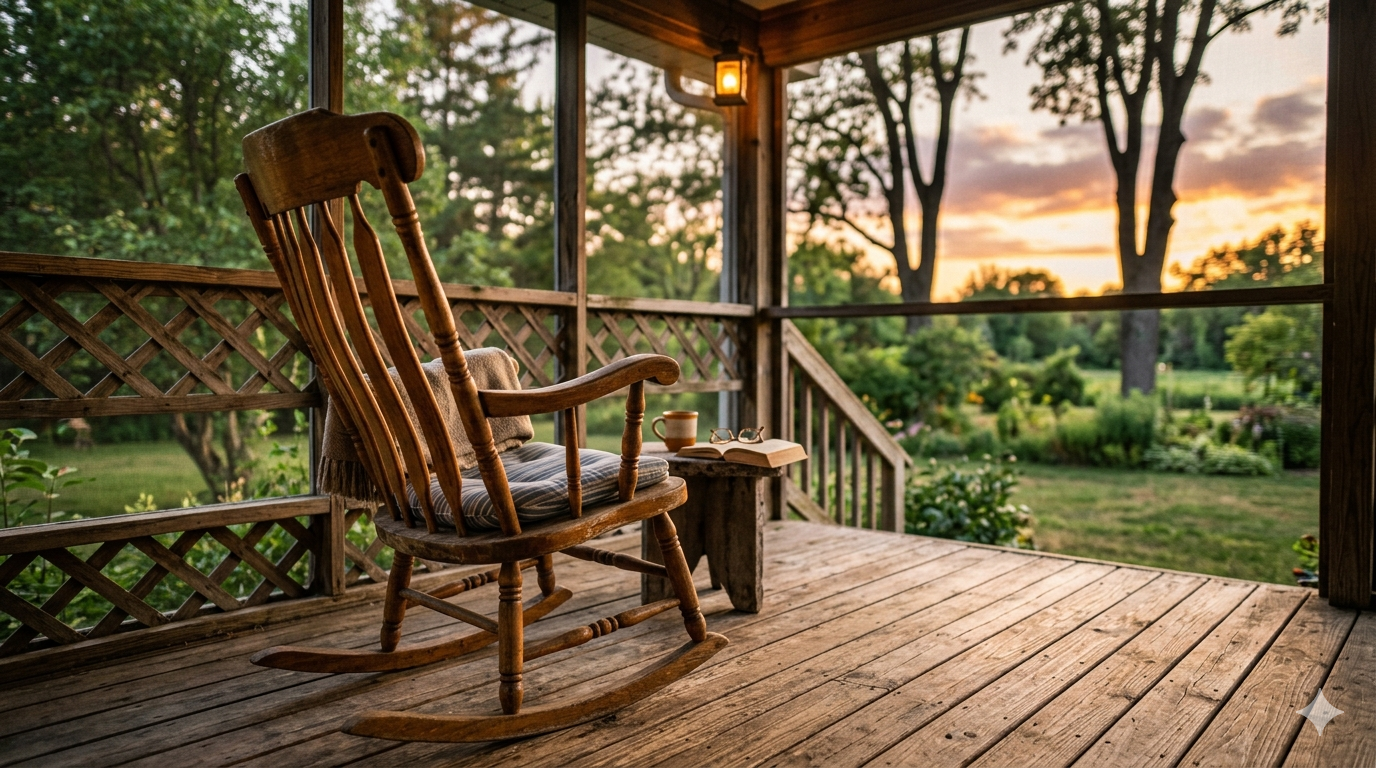
Rocking chair sitting on the worn wooden planks of a cozy screened-in porch.
The good news is that the quiet world hasn't vanished forever; it’s just waiting for us to put down the noise.
You can still find that expansive, "bigger" feeling of faith. It’s waiting for you the next time you leave your phone on the kitchen counter and step outside just to feel the humid evening air,
Watch the lightning bugs track across the grass, and offer up a prayer into the vast, unmonetized silence of the night.
Thanks for spending part of your day with Florida Unwritten.
👉 More stories live at https://surl.lu/uilyob
📬 Subscribe for weekly Florida stories, coastlines, wildlife, weirdness, and the kind of local moments tourists usually miss.
Florida Unwritten is a labor of love dedicated to the places the brochures forget.
Earl lee
