Timeless Tales of Old Florida
The Allure of Old Florida
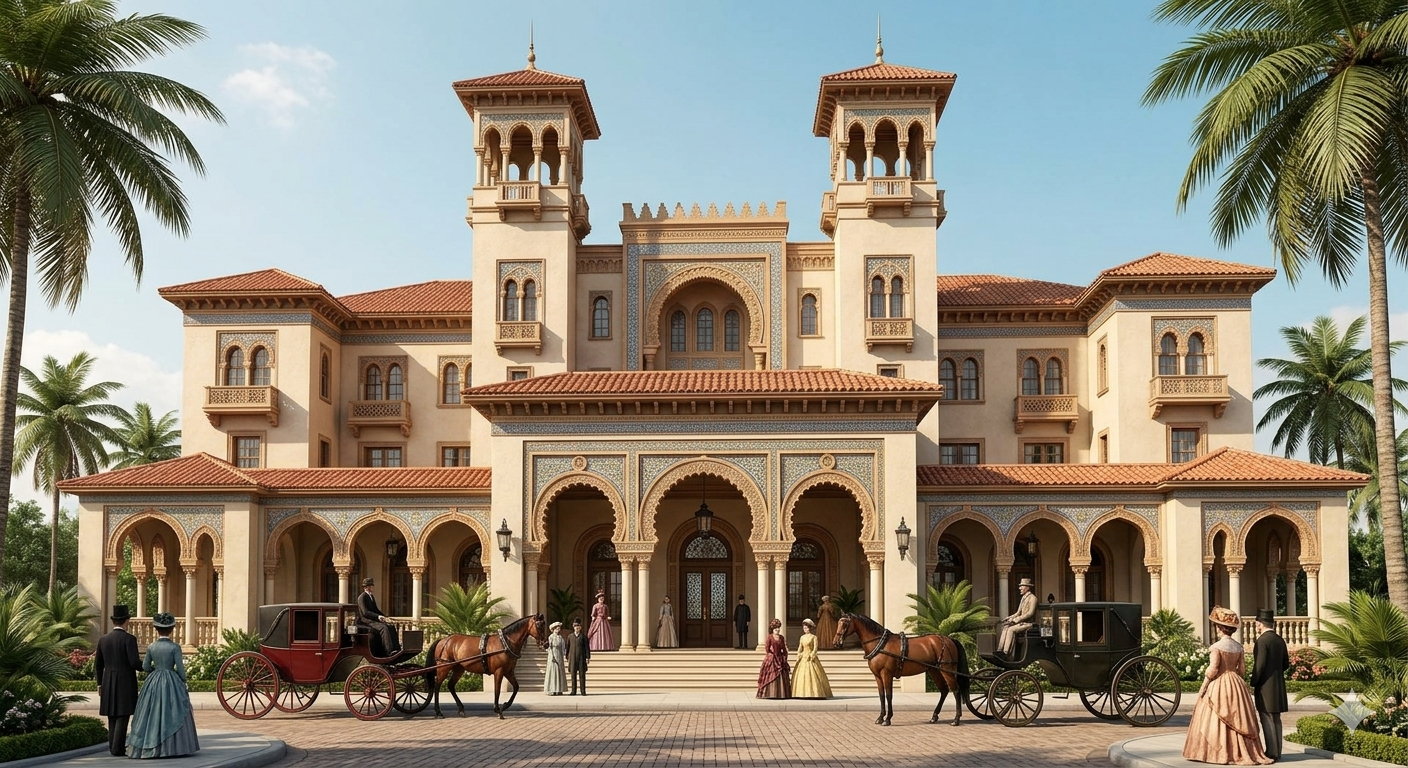
1880s Florida luxury hotel inspired by Moorish Revival architecture
The allure of Old Florida lies in its unique, time-stamped charm—a vibrant tapestry woven from diverse cultures, eccentric pioneers, and a collective refusal to let modern concrete bulldozers win.
Offering a glimpse into a bygone era when life moved at a leisurely pace, largely because everyone was too hot to move any faster.
Visitors are drawn to its vintage architecture, from the quaint wooden cracker cottages designed to survive hurricanes to the grand hotels that once hosted Gilded Age tycoons.
Each structure tells a story, usually involving a lot of mosquitoes and an outrageous dream.
Preservation efforts play a crucial role in maintaining this essence. Local communities frequently band together to restore historic sites, proving that Floridians will fight tooth and nail for an old porch.
These efforts go beyond mere bricks, mortar, and coquina shell.
They embody a collective memory that fosters a sense of belonging. After all, if you don’t preserve the building where a 1920s movie star allegedly wrestled an alligator, did Florida history even happen?
====================================================================
                        THE OLD FLORIDA VIBE
--------------------------------------------------------------------
  [ Humidity: 98% ]   [ Pace of Life: Slower than a Manatee ]
  [ Main Attire: Linen & Regret ]  [ Local Heroes: Preservationists ]
====================================================================
Cultural festivals add a layer of necessary vibrancy to the region's allure.
Events like the Florida Folk Festival showcase the state’s rich heritage, offering a platform for banjo players, storytellers, and artisans who can carve masterpieces out of cypress stumps.
These gatherings bring people together, creating connections over shared plates of fried gator tail and sweet tea,
celebrating the customs that shaped the peninsula long before theme parks took over.
Moreover, the untamed natural beauty enhances this charm.
The lush landscapes, crystal-clear springs, and serene beaches create a picturesque backdrop for exploration.
Wandering through these environments allows one to experience the same tranquility and wonder that have inspired artists, writers, and dreamers throughout history—or at least appreciate the shade of a live oak tree.
In essence, Old Florida invites individuals to step into a world where the past is actively celebrated, occasionally loud, and always full of character.
Historical Context and Significance
The historical context of Old Florida is a wild, centuries-long saga shaped by a dizzying array of cultures.
Long before the first snowbird complained about the traffic,
indigenous tribes like the Timucua and Calusa established complex societies. Then came the Spanish explorers in the 16th century, looking for gold, youth, and territory, followed by British occupiers, Seminole resistance fighters, and rugged American pioneers.
Each group left an indelible mark on the state's identity, resulting in a cultural gumbo reflected in today's architecture, traditions, and local lore.
Vintage architecture stands as the most striking visual reminder of this chaotic timeline.
Historic homes and grand hotels built during the late 19th and early 20th-century land booms serve as monuments to the state’s development into a premier vacation destination.
Preservation efforts have become increasingly vital, ensuring these architectural gems aren't replaced by air-conditioned strip malls.
The intricate woodwork, wide verandas, and high ceilings offer a glimpse into a time when "climate control" meant sitting on the porch and praying for a Gulf breeze.
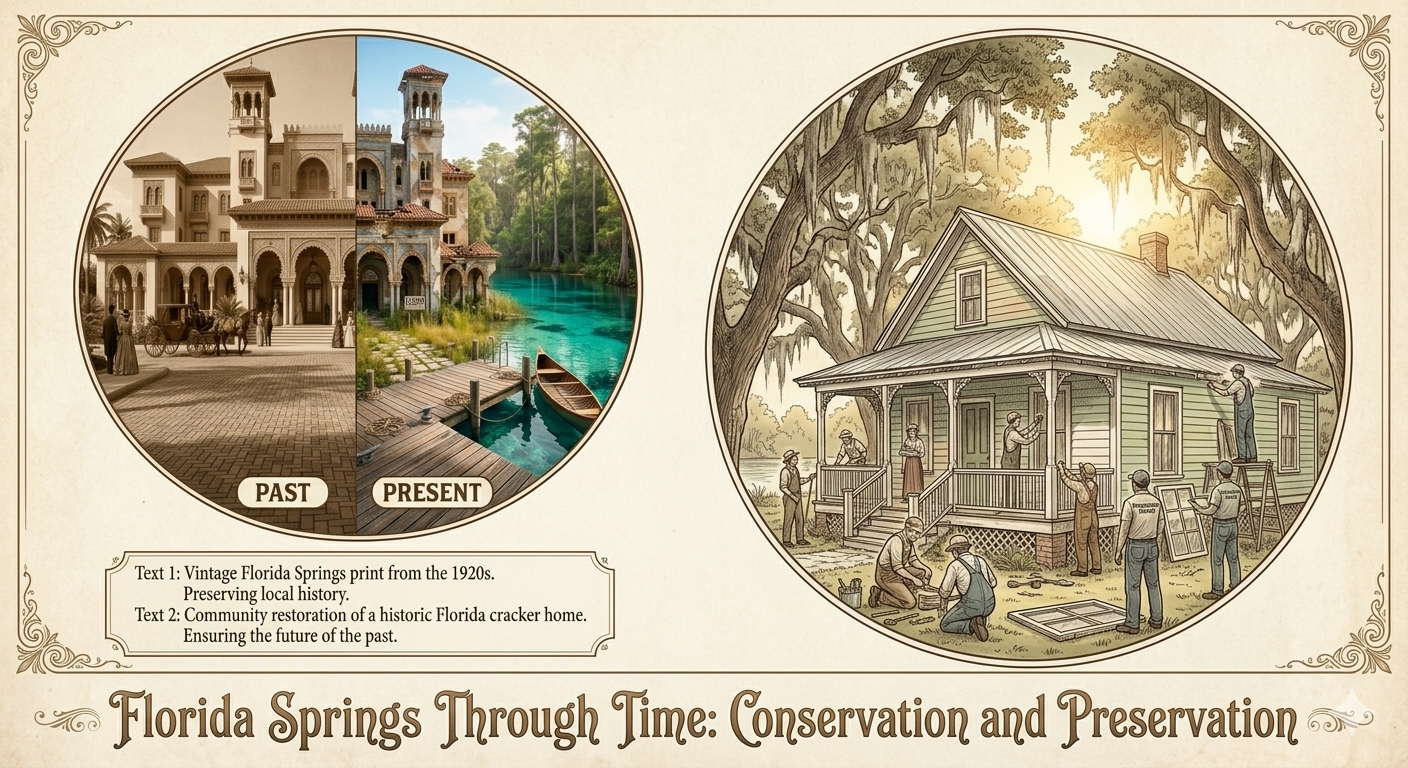
The house features classic cracker architecture with a metal roof and wide porch
                  CHRONOLOGY OF COQUINA & CHAOS

  1500s              1800s              1920s              2020s
    │                  │                  │                  │
    ├──────────────────┼──────────────────┼──────────────────┤
    │                  │                  │                  │
 Spanish Boots     Cracker Cabins     Land Booms       Preservation
 & Mosquitoes      & Cattle Drovers   & Jazz Hotels     & Festivals
Engaging with these traditions fosters a profound sense of pride among residents.
Festivals celebrating local heritage, like the Gasparilla Pirate Festival, bring communities together to honor their roots—usually by dressing up as 18th-century maritime criminals and throwing plastic beads at strangers.
These events do more than just entertain; they educate visitors about the unique customs, music, and culinary delights that define the region, ensuring that the legacy of Old Florida continues to flourish in a modern, hyper-developed world.
Vintage Architecture of Old Florida
Iconic Structures of the Era
The iconic structures of Old Florida stand as magnificent, concrete testaments to human ambition, stubbornness, and varying degrees of artistic madness.
With their unique architectural styles, these buildings reflect a blend of global influences adapted to survive a subtropical climate.
From sprawling luxury resorts to humble, elevated stilt houses in the Everglades, each structure tells a story of the people who dared to build a life on what was essentially a giant limestone sponge.
Notable Historical Landmark:
The Casa Monica Hotel in St. Augustine is an architectural triumph dating back to 1888.
Built in the Moorish Revival style, it features intricate tile work, majestic fortress-like towers, and ornamental arches that capture the essence of Florida’s Spanish roots.
It wasn't just a luxury retreat; it was a theatrical statement designed to make wealthy Gilded Age travelers feel like royalty while hiding from the midday heat.
        _[]_[]_[]_[]_[]_
       |  ___   ___   ___  |      [ CASA MONICA HOTEL ]
       | |_|_| |_|_| |_|_| |      St. Augustine, FL (Est. 1888)
       |                   |      Style: Moorish Revival
      /                     \     Vibe: Gilded Age Opulence
     /_______________________\
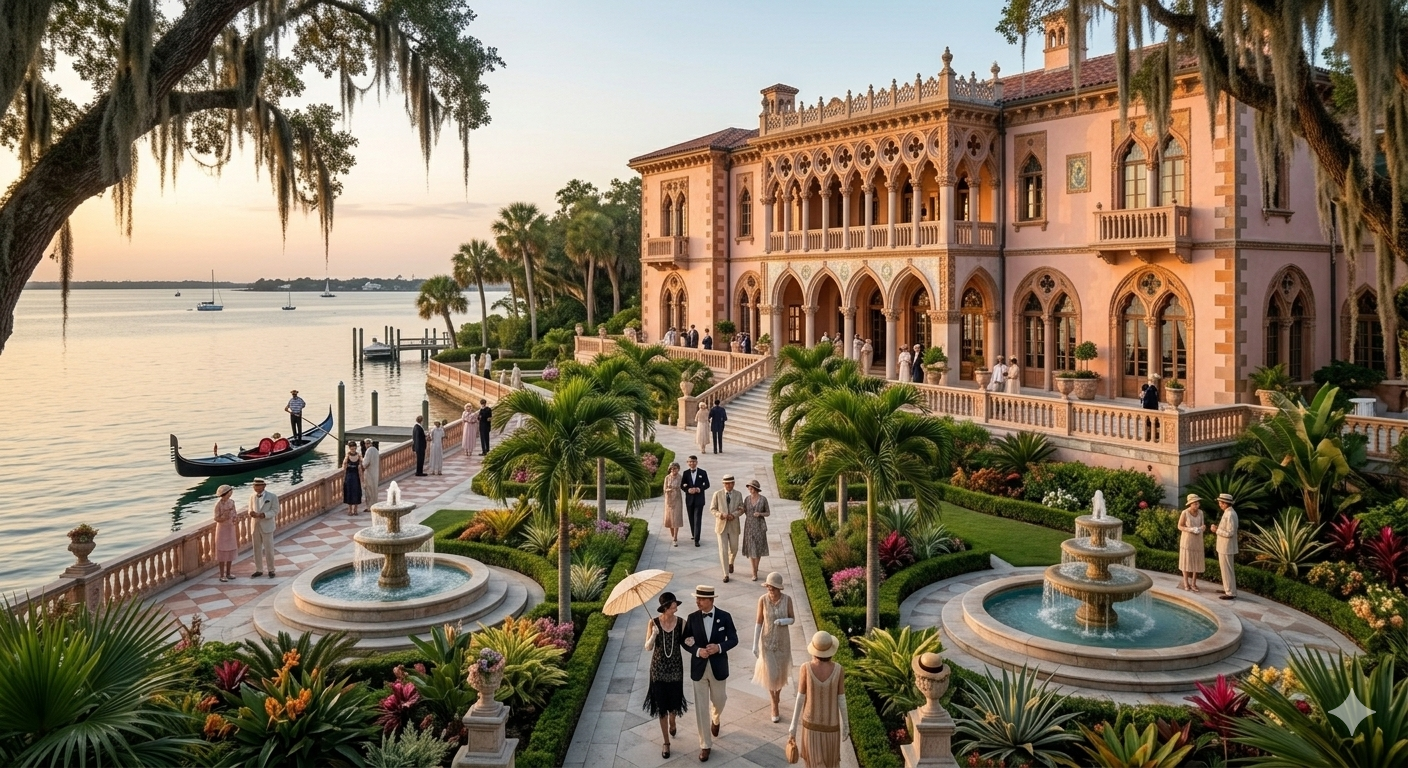
Florida estate overlooking Sarasota Bay
On the Gulf Coast, the Ringling Museum of Art in Sarasota stands as a monument to John Ringling’s unparalleled vision and deep circus money.
The museum's Venetian Gothic architecture, featuring a striking pink façade and stunning Italianate gardens, creates an enchanting, surreal atmosphere.
This landmark preserves the artistic legacy of the Ringling family while serving as a spectacular venue for modern cultural festivals.
Local preservation groups work tirelessly to restore and protect these historic sites, ensuring they remain part of the landscape.
Their commitment allows visitors to experience the genuine, unpolished charm of Old Florida.
When communities gather at historic district festivals, they celebrate the physical structures and the enduring, slightly eccentric spirit of the people who built them.
Architectural Styles and Influences
The architectural styles of Old Florida are a delightful mashup of necessity and high fashion, reflecting a history of borrowing ideas from warmer European climates and making them weirder.
From Spanish Colonial Revival to Southern Gothic and "Florida Cracker," each style adapted to the brutal summer sun and torrential rains.
The blending of native materials—like fossilized coral and coquina shell—with imported European designs created a unique landscape that defines the state's visual identity.
Architectural StyleKey FeaturesPractical PurposeSpanish Colonial Stucco walls, red-tiled roofs, wrought-iron details.
Reflected heat, resisted rot, looked incredibly dramatic. Florida Cracker: Raised foundations, metal roofs, wide wrap-around porches.
Allowed air to circulate underneath, deflected rain, and maximized shade.
Southern Gothic: intricate wooden gingerbread trim, lofty ceilings. Pulled hot air upward, away from sweating high-society guests.
The preservation of these architectural treasures is vital for maintaining Florida’s soul.
Local communities frequently organize walking tours and historic home festivals to raise awareness and funding.
These events prove that the state's true identity isn't found in prefabricated subdivisions, but rather in the hand-carved heart-pine floors and wavy glass windows of houses that have survived a century of hurricanes, termites, and questionable interior design trends.
Ever Friday
A New Story
Notable Architects and Builders
In the annals of Old Florida history, a few notable architects and builders left an indelible, highly stylized mark on the landscape.
These men didn't just build roofs and walls; they imported fantasies.
Drawing inspiration from Mediterranean coastlines and organic design philosophies,
They transformed raw, swampy terrain into high-society playgrounds, proving that if you build something beautiful enough, people will ignore the humidity.
       [ THE ARCHITECTS OF THE BOOM ]
                     │
     ┌───────────────┴───────────────┐
     ▼                               ▼
[ FRANK LLOYD WRIGHT ]      [ ADDISON MIZNER ]
  • Organic Architecture      • Mediterranean Revival
  • Florida Southern College  • Palm Beach Enclaves
  • Concrete & Geometry       • Stucco & Spanish Tile
👉 Florida always has another story
Frank Lloyd Wright left an astonishing legacy at Florida Southern College in Lakeland.
Choosing to embrace the local environment rather than fight it, Wright designed a collection of texturized concrete structures that grew organically out of the orange groves.
His use of embedded colored glass captured the shifting Florida sunlight, creating spaces that celebrated the natural landscape while offering a masterclass in modern geometric design.
Meanwhile, on the East Coast, Addison Mizner was busy inventing the look of Palm Beach. In the 1920s,
Mizner introduced a highly theatrical version of Mediterranean and Spanish Revival architecture,
featuring hand-crafted tiles, distressed wood, and sprawling loggias. His grand estates and charming vias created an architectural playground for the ultra-wealthy, establishing a design language that defines coastal luxury to this day.
Through dedicated preservation and lively local festivals, modern Floridians ensure that the creative gambles of these visionary builders are never forgotten, keeping the authentic, beautifully eccentric spirit of Old Florida alive for generations to come.
Thanks for spending part of your day with Florida Unwritten.
If this story felt familiar, salty, strange, or a little too Florida to explain at dinner, share it with someone who’d understand.
👉 More stories live at https://surl.lu/uilyob
📬 Subscribe for weekly Florida stories, coastlines, wildlife, weirdness, and the kind of local moments tourists usually miss.
Florida Unwritten is a labor of love dedicated to the places the brochures forget.
See Ya Friday
Earl lee
