The Anatomy of Florida's Perfect Storm
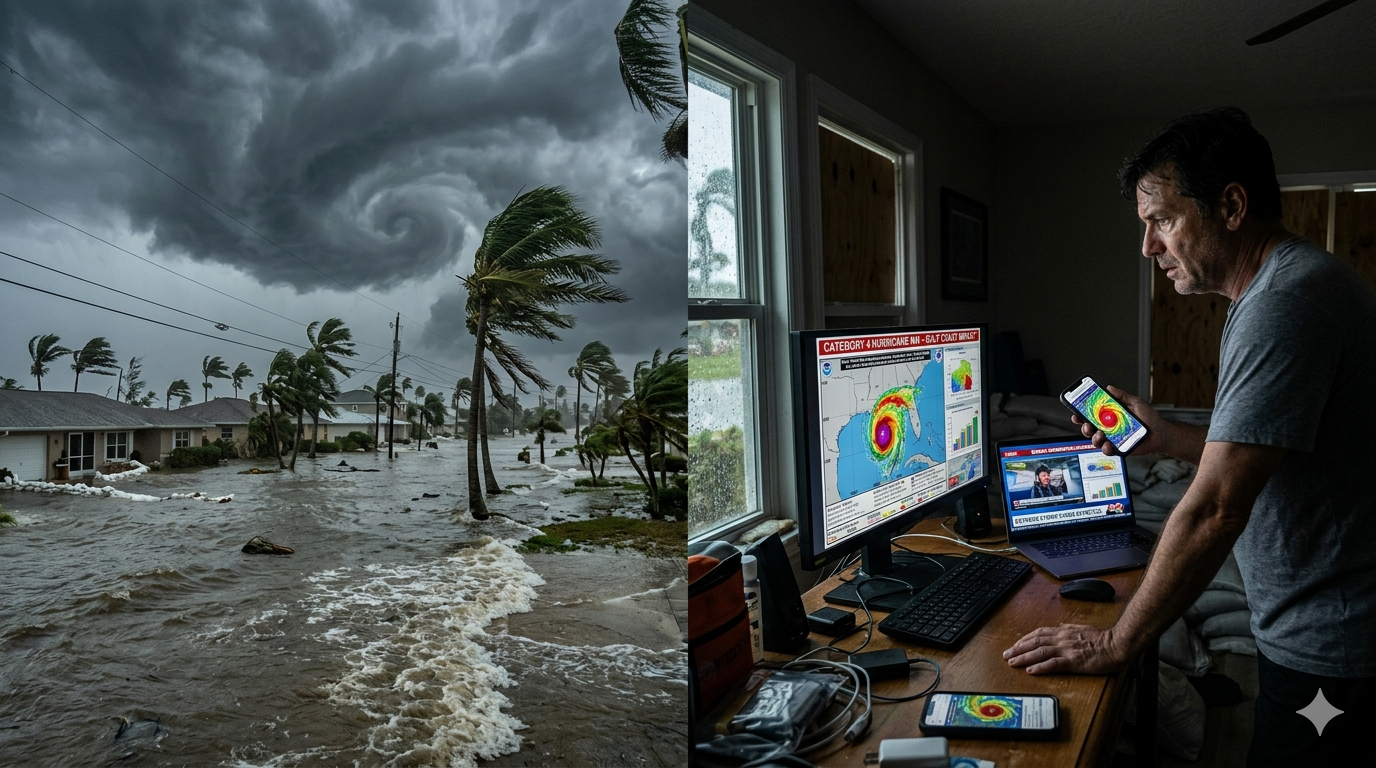
Florida coastal neighborhood under dark hurricane clouds, one side showing storm surge flooding
Why the Next Hurricane Hits Harder Than the Last
Florida folks like to say that after you've survived enough hurricanes, you get used to them. We wear our storm stories like badges of honor. We compare where we rode out Donna, Andrew, Charley, Irma, Ian, Helene, Milton, and every other named menace that came spinning out of the tropics.
But science tells a different story.
The truth is that hurricanes don't necessarily make us tougher. In many cases, they make us more sensitive.
A Florida "perfect storm" isn't just about wind speed, storm surge, and rainfall anymore. It's also about the psychological, financial, and social pressures that build year after year, creating a disaster long before the first rainband reaches shore.
Sensitization vs. Habituation: Why We Don't "Get Used" to Hurricanes
For decades, many Floridians believed repeated exposure to hurricanes would make them less fearful.
Researchers now know the opposite often happens.
This process is called sensitization. Rather than becoming accustomed to disaster, repeated hurricane exposure can actually increase psychological stress over time. Every major storm leaves behind a mental footprint. When the next storm appears on the forecast cone, those memories reactivate.
Think of it like a sunburn. One day in the Florida sun leaves a mark. Another day before you've healed doesn't toughen the skin. It makes it more vulnerable.
For hurricane survivors, each new storm can reopen old wounds, creating stronger emotional reactions than the storm before.

The Media Storm: How Doom-Scrolling Fuels Anxiety
There was a time when hurricane tracking meant a folded map on the kitchen table and a pencil marking the forecast cone every few hours.
Today, storms arrive on our phones long before they reach our coastline.
Television alerts, social media feeds, weather apps, livestreams, and endless updates create a nonstop cycle of hurricane exposure.
Research shows that spending excessive hours consuming hurricane-related news is linked to increased symptoms of post-traumatic stress, anxiety, and depression.
The problem doesn't end when the skies clear.
Heavy media consumption during one hurricane season often predicts higher levels of distress during future storms. The emotional impact becomes cumulative, stacking one season on top of another.
Florida Reality Check
Remember when the closest thing to social media was your neighbor leaning over the fence asking if you needed help hanging plywood?
Today, many Floridians spend eight or more hours a day tracking every model run, every spaghetti plot, and every alarming headline. While staying informed is important, constant exposure can become its own source of stress.
The Evacuation Trap: A Decision That Can Echo for Years
Most people think the stress begins when the winds arrive.
In reality, one of the most important decisions happens days before landfall.
Research shows that residents living in mandatory evacuation zones who choose not to leave often experience higher levels of long-term post-traumatic stress symptoms.
When someone remains in place during a Category 4 or Category 5 hurricane, they endure the full sensory experience of the disaster. The sound of the wind, structural damage, rising water, darkness, and fear become deeply embedded memories.
Those experiences can affect work performance, relationships, sleep quality, and overall mental health for years after the storm itself has passed.
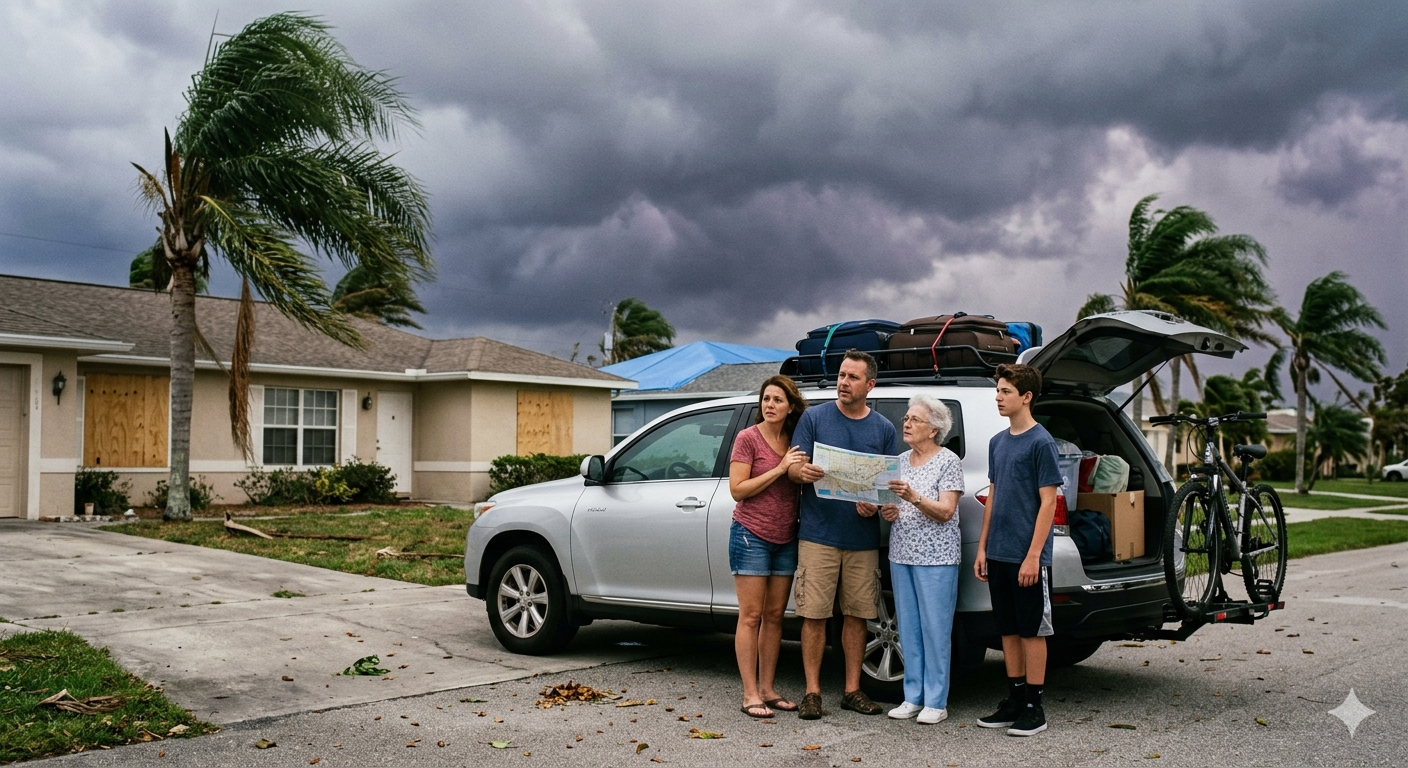
Florida family standing beside packed vehicle in driveway, dark hurricane clouds approaching, evacuation route map
Mental Health, Hurricanes, and Florida's Treatment Gap
For Floridians already managing anxiety or depression, hurricane season can create challenges that extend far beyond weather forecasts.
A major storm often disrupts access to medications, counseling services, pharmacies, and healthcare providers. Roads close, offices shut down, and entire communities may be displaced.
This interruption creates what experts call a treatment gap.
The gap between pre-storm care and post-storm recovery can significantly increase psychological distress. Residents who lose access to mental health support during a disaster are often at greater risk for prolonged symptoms afterward.
Bridging that gap through emergency planning, telehealth access, medication preparedness, and community support can make a tremendous difference in recovery.
The Long Recovery: When the Storm Is Over but the Stress Remains
Recovery is about much more than repairing roofs and replacing drywall.
True recovery means returning to normal life.
Researchers use the term functional impairment to describe the way hurricane-related stress affects everyday activities. For some Floridians, repeated exposure to storms can make it harder to concentrate at work, maintain relationships, or feel secure about the future.
Financial uncertainty compounds the problem.
Rising insurance costs, property damage concerns, and fears about future hurricanes create a persistent level of anxiety that can linger long after debris piles have disappeared from the curb.
For many longtime residents, the emotional impact of hurricanes becomes part of daily life, influencing decisions about where they live, work, and invest.
Florida Reality Check
You don't have to lose your own home to carry the weight of a hurricane.
Simply knowing friends, family members, or neighbors who experienced severe damage, injury, or loss can contribute to long-term psychological stress. Indirect exposure often leaves a larger mark than many people realize.
What Creates Florida's Perfect Storm?
A catastrophic hurricane isn't defined by one factor alone.
The most destructive storms occur when meteorological conditions, geographic vulnerabilities, and societal pressures collide at the same time.
Category 4 and 5 Intensity
The strongest hurricanes produce extreme winds capable of widespread destruction. Hurricane Michael's 160-mph winds demonstrated how quickly a storm can transform entire communities.
Ideal Storm Dynamics
Storm surge depends on more than wind speed. Factors such as storm size, forward speed, track, and landfall location all influence flooding potential.
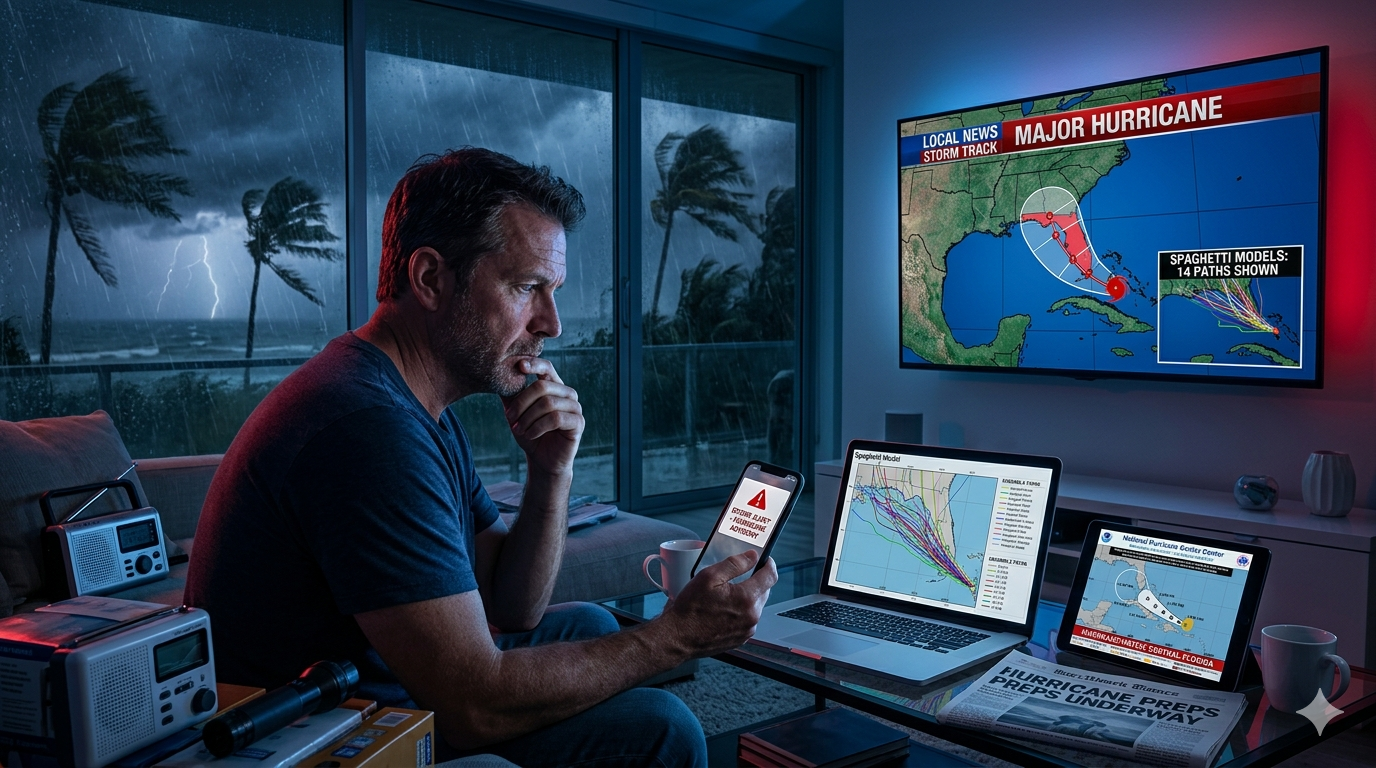
Florida living room at night illuminated by hurricane forecast maps on television, smartphone, tablet, and laptop screens, concerned homeowner surrounded by weather alerts and spaghetti models,
High Tide Landfall
A hurricane arriving during high tide pushes water onto an already elevated ocean level, increasing surge impacts and inland flooding.
Warmer Oceans
Rising ocean temperatures provide additional fuel for tropical systems, contributing to stronger storms and heavier rainfall events.
The Gulf's Wide Continental Shelf
The Gulf of Mexico acts like a giant ramp for storm surge. Its broad, shallow continental shelf allows water to pile up and travel farther inland than many residents expect.
Low-Elevation Coastlines
Florida's 8,400 miles of shoreline and generally flat terrain make storm surge a statewide concern, not just a beachfront issue.
Rising Sea Levels
Sea levels along Florida's coast are significantly higher than they were decades ago. Every inch of additional sea level provides a higher starting point for future storm surge.
The result is simple:
The same hurricane striking today often produces more flooding than it would have produced fifty years ago.
👉 More stories live at https://surl.lu/uilyob
Florida's New Systemic Perfect Storm
The modern Florida hurricane isn't just a weather disaster.
It's becoming a collision of environmental, financial, and psychological pressures.
The Insurance Crisis
Increasing storm risk has created enormous pressure on Florida's insurance market. Rising premiums, shrinking private coverage options, and growing dependence on state-backed insurance have left many homeowners facing uncertainty.
The Risk Perception Problem
Storms are now reaching inland areas that historically experienced less hurricane damage. Many residents outside traditional evacuation zones may underestimate their risk, leading to delayed evacuations and greater danger.
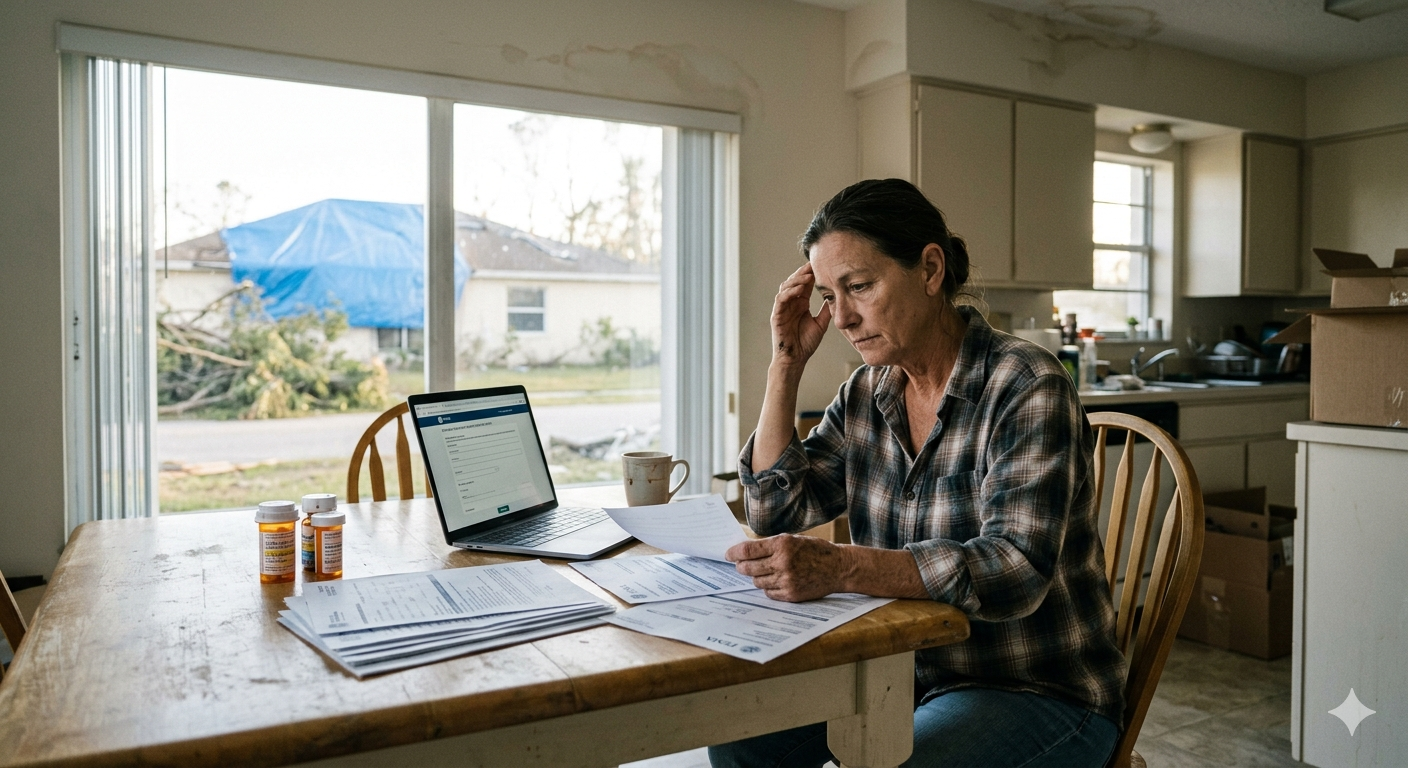
Psychological Sensitization
The final ingredient may be the least visible but the most important.
Repeated exposure to hurricanes, nonstop media coverage, financial uncertainty, and community disruption create a cycle of increasing stress rather than increasing resilience.
Instead of becoming hardened to storms, many Floridians become more sensitive to them with each passing season.
Final Thoughts
Florida's perfect storm isn't just measured by wind speed or storm surge maps.
It's measured by the accumulation of decades of experiences, memories, worries, and losses.
The next hurricane arrives carrying not only the power of the atmosphere but also the weight of every storm that came before it.
And for many Floridians, that's the part of the forecast that never appears on television.
Thanks for spending part of your day with Florida Unwritten.
If this story felt familiar, salty, strange, or a little too Florida to explain at dinner, share it with someone who’d understand.
👉 More stories live at https://surl.lu/uilyob
📬 Subscribe for weekly Florida stories, coastlines, wildlife, weirdness, and the kind of local moments tourists usually miss.
Florida Unwritten is a labor of love dedicated to the places the brochures forget.
See Ya Friday
Earl lee
Florida Unwritten
