Florida Saltwater Fishing Secrets: Master Tides & Catch More Fish
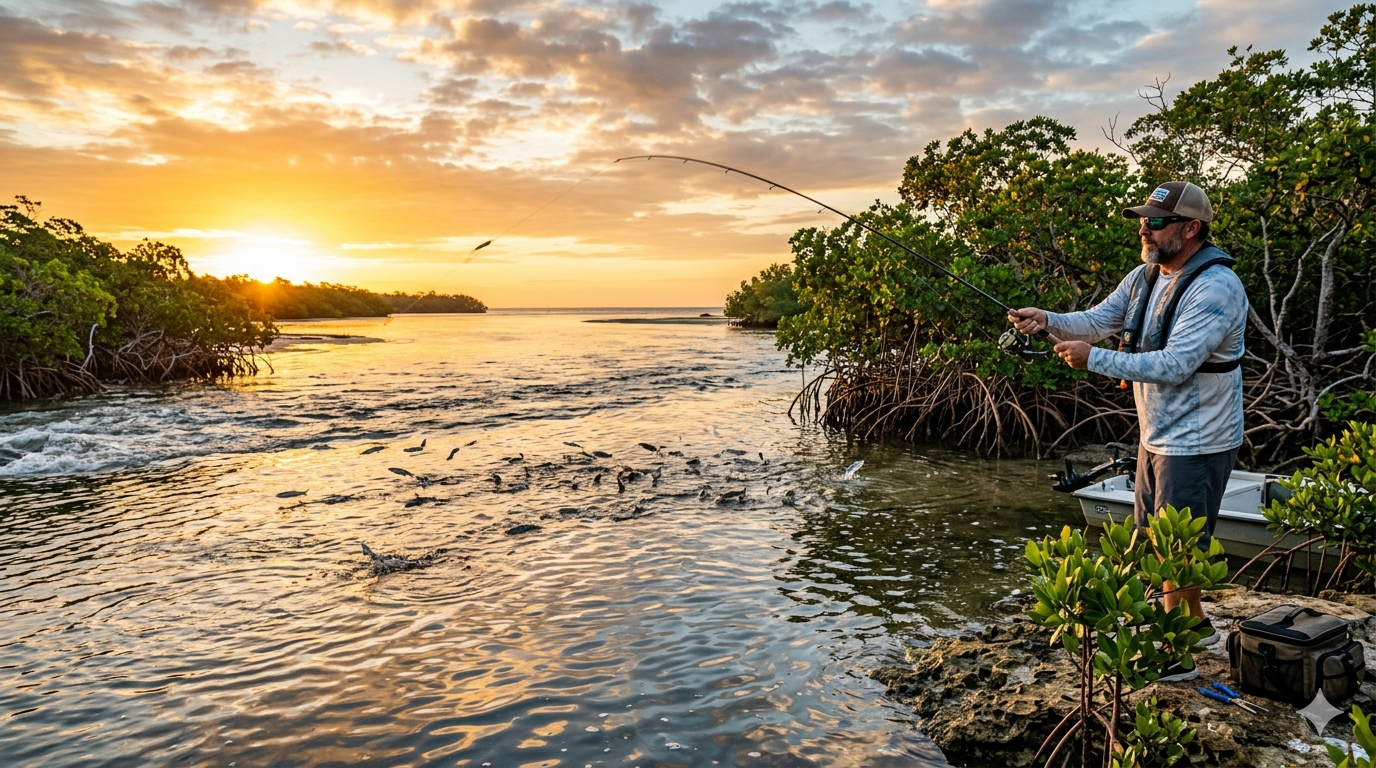
A Florida angler casting into a glowing coastal inlet at sunrise
Understanding Tides and Currents
Tides and currents are integral components of Florida's aquatic ecosystems, significantly influencing both freshwater and saltwater fishing.
Understanding these natural phenomena can enhance your fishing experience, leading to better catches and more enjoyable outings.
Tides, primarily caused by the gravitational pull of the moon and sun, create a rhythmic rise and fall of water levels, while currents, driven by wind, water temperature, and salinity differences,
dictate the movement of water in various bodies of water.
For anglers, recognising the patterns of tides and currents is essential for determining the best fishing spots and times.
In saltwater environments, tidal movements can dictate fish behaviour, as many species are more active during specific tidal phases.
For instance, the incoming tide often brings baitfish closer to shore, attracting larger predatory fish.
Similarly, currents can also shape the distribution of fish species in coastal areas.
Anglers should pay attention to tide charts and plan their fishing trips accordingly, often favouring the hours just before and after a tide change to maximise their chances of success.
Conversely, freshwater fishing in Florida lakes and rivers also requires an understanding of currents, albeit on a different scale.
Rivers have more pronounced currents due to their flowing nature, which can affect where fish are located.
Fish often seek refuge from strong currents in eddies or behind obstacles like rocks or fallen trees. In lakes, factors such as wind can create surface currents that influence fish behaviour, making it vital for anglers to adapt their techniques based on water movement.
Moreover, seasonal changes can impact both tides and currents, further influencing fishing conditions.
During certain times of the year, such as spawning seasons, fish may behave differently in response to changing water levels and temperatures.
For example, in spring, rising water levels may encourage fish to move into shallower areas,
making them more accessible to anglers. Understanding these seasonal patterns in conjunction with tidal movements can provide a strategic advantage when planning fishing trips across Florida's diverse ecosystems.
In summary,
Both tides and currents play a pivotal role in the fishing landscape of Florida, affecting where and when anglers can find success. By incorporating knowledge of these natural elements into their fishing strategies, anglers can significantly improve their outcomes,
whether they are casting lines in the salty surf or quietly drifting on a freshwater lake.
Therefore, becoming attuned to the rhythms of the water can transform an ordinary fishing trip into an extraordinary adventure filled with memorable catches.

join our newsletter
Popular Saltwater Fishing Techniques
Saltwater fishing in Florida offers an array of techniques that cater to both novice and experienced anglers.
One of the most popular methods is bottom fishing, where bait is placed on the ocean floor to attract species like snapper and grouper.
This technique is particularly effective around reefs and wrecks, which serve as natural habitats for many fish. Anglers often use heavy weights to ensure that their bait remains on the bottom,
making it essential to choose the right tackle and bait for success.
Another widely used technique is trolling, which involves dragging baited lines behind a moving boat.
This method is ideal for targeting pelagic species such as tuna, marlin, and mahi-mahi. Trolling allows anglers to cover large areas of water, increasing their chances of finding schools of fish.
Speed and the choice of lures play a crucial role in this technique, as different species respond to varying speeds and bait presentations.
Casting is also a favourite among saltwater anglers, especially in shallow waters. Techniques like fly fishing and spin fishing allow for precise presentations that entice fish from their hiding spots.
Casting near structures such as mangroves, jetties, and docks can yield impressive results,
particularly for species like snook and redfish. The thrill of watching a fish strike at the surface makes casting a popular choice for many fishing enthusiasts.
For those seeking adventure, kayak fishing has gained popularity along Florida's coast.
This technique allows anglers to access remote areas that larger boats cannot reach, providing unique opportunities to catch fish in pristine environments.
Kayak fishing is not only about the catch; it also offers an immersive experience with nature, making it an excellent choice for family-friendly outings or solo adventures.
Finally, understanding seasonal patterns is essential for successful saltwater fishing.
Different species have specific spawning seasons and migratory patterns, which affect their availability throughout the year.
Anglers must stay informed about local fishing reports and regulations to optimise their fishing trips. By adapting their techniques to the seasonal behaviour of fish, anglers can enhance their chances of landing a big one.
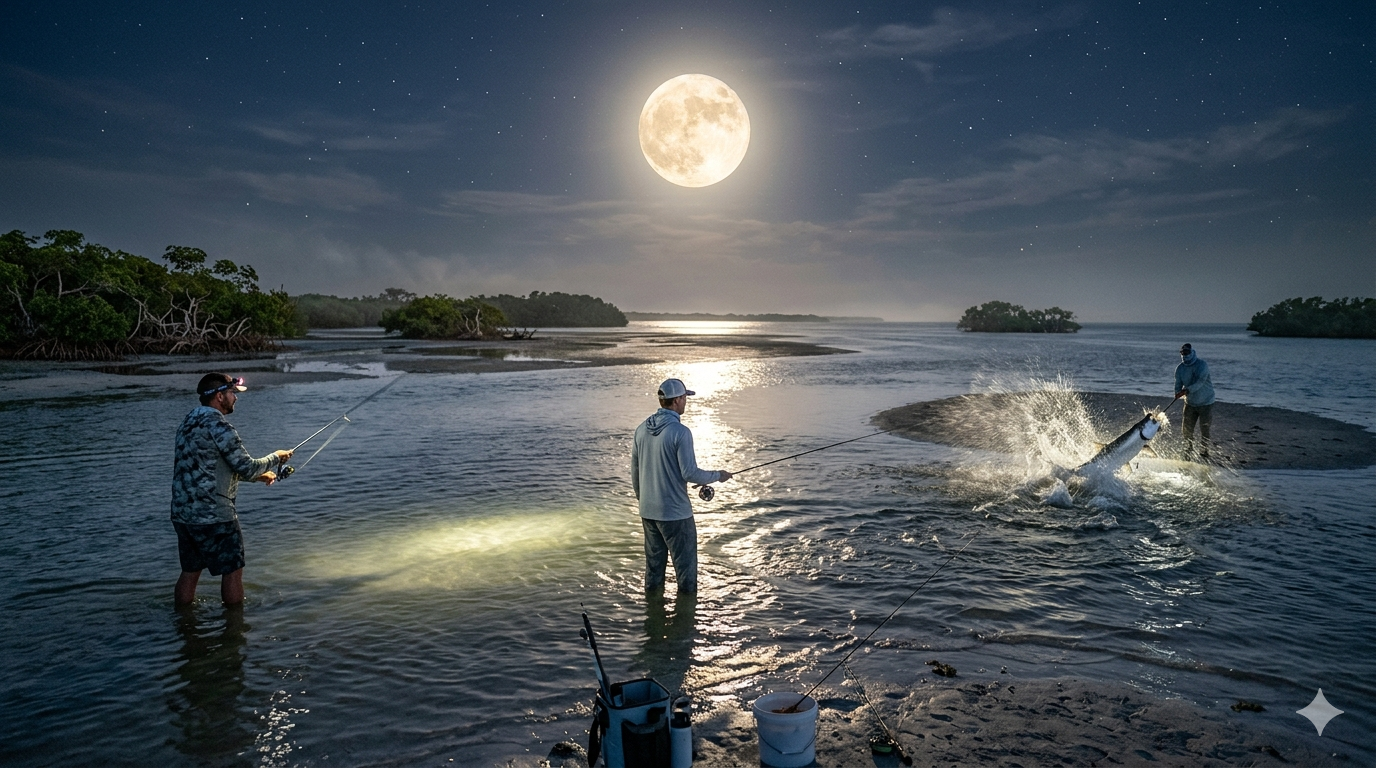
anglers fishing beneath a bright full moon
Best Times for Saltwater Fishing
Saltwater fishing in Florida is heavily influenced by various factors, including the time of day and season.
Anglers often find that early morning and late afternoon are the best times to cast their lines. During these periods, fish are more active, feeding in preparation for the day ahead or winding down as the sun sets.
Observing these patterns can significantly enhance the chances of a successful catch, particularly for species like snook and tarpon, which are known for their feeding habits during these twilight hours.
The moon phase also plays a crucial role in saltwater fishing success.
Fishermen often report increased activity during full moons, when tides are stronger, and fish tend to feed more aggressively. Conversely, new moons may present challenges as fish might be less active.
Understanding lunar cycles can provide anglers with an edge, allowing them to plan trips around these optimal times.
Keeping a lunar calendar handy can assist in selecting the best days for a fishing adventure.
Seasonal changes further dictate the best times for saltwater fishing in Florida.
The warmer months generally yield more opportunities for catching a variety of species,
as fish are drawn to the shallows in search of food. Conversely, winter months may require different strategies, as fish often migrate to deeper waters.
Recognising these seasonal shifts can help anglers adjust their tactics, ensuring they are fishing when fish are most plentiful and active.
Apart from time and season, weather conditions significantly affect fishing success.
Overcast days can often lead to better fishing opportunities, as fish feel secure and are more likely to venture out to feed. Rain can also trigger feeding frenzies,
particularly in brackish waters where salt and freshwater mix. Understanding how weather patterns influence fish behaviour can lead to more fruitful outings.
Lastly, local knowledge cannot be underestimated when it comes to the best times for saltwater fishing. Engaging with local fishing communities and guides can provide insights into the best times to fish specific locations.
Each area along Florida’s coast has its unique characteristics, and local anglers often know the hidden gems and peak times, making their guidance invaluable for both novice and seasoned fishermen.
Thanks for spending part of your day with Florida Unwritten.
If this story felt familiar, salty, strange, or a little too Florida to explain at dinner, share it with someone who’d understand.
👉 More stories live at https://surl.lu/uilyob
📬 Subscribe for weekly Florida stories
Florida Unwritten is a labor of love dedicated to the places the brochures forget.
See Ya Friday
Earl lee
