Smokehouse Chronicles: Finding the Best Pit BBQ Down Dirt Roads
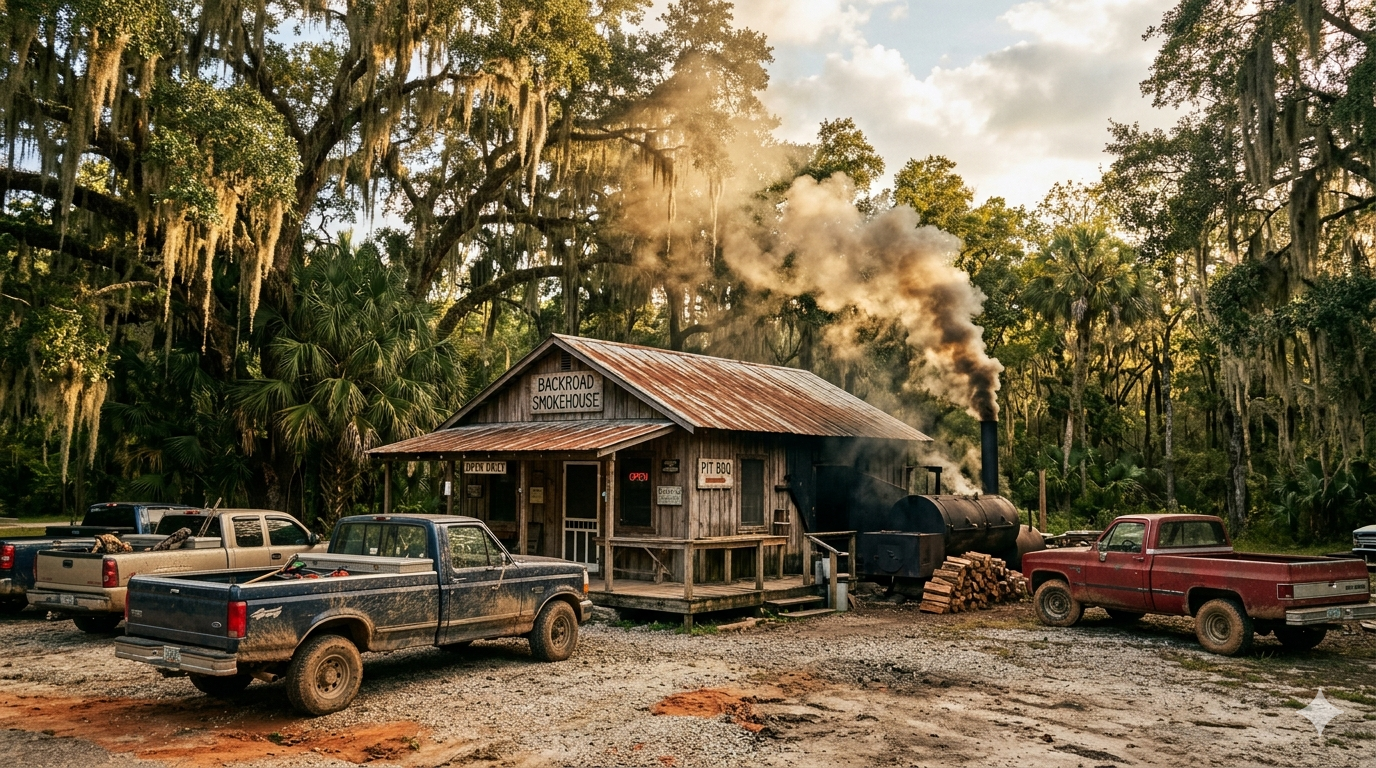
A rustic Old Florida roadside smokehouse with a corrugated tin roof, smoke rolling from a blackened pit smoker
There is a side of Florida that never makes it into the tourism brochures.
It exists far away from the neon-lit coastal strips, the crowded theme park turnstiles, and the bumper-to-bumper interstate traffic.
To find it, you have to intentionally take the exit you didn’t mean to, turn onto a two-lane highway where the cell service starts to flicker, and roll your windows all the way down.
You’ll usually smell it before you see it.
As the pine flatwoods and palmetto prairies blur past, the sweet, heavy, intoxicating scent of slow-burning live oak and hickory will suddenly hit your vents.
A half-mile later, you’ll see it: a low-slung building with a corrugated tin roof, smoke billowing lazily from a blackened metal pit out back, and a gravel parking lot packed with muddy pickup trucks.
This isn't just lunch. This is a culinary pilgrimage into the heart of the Old Florida backroads.
The Anatomy of an Authentic Backroad Smokehouse
Real Florida barbecue is fiercely unassuming.
If a restaurant has a glossy marketing strategy, matching staff uniforms, or an indoor playground, it might be delicious—but it isn't a backroad smokehouse.
True, dirt-road pit BBQ follows a strict, unwritten code of authenticity. When you're exploring the state's interior, keep your eyes peeled for these three non-negotiables:
The Wood Pile
True Florida pitmasters treat local wood like currency. Look out back. If you don’t see a massive, messy mountain of split live oak,
pecan, or hickory logs aging in the sun, keep driving. In the Sunshine State, live oak is king; it burns hot, long, and imparts a rugged, earthy flavor that defines the region’s smoke profile.
Join the Circle
The Architecture of Smoke
The best joints are held together by history, screen doors, and corrugated tin.
Many started decades ago as little more than roadside stands or bait shops.
The walls are often seasoned with a literal patina of grease and smoke from open-pit brick chimneys that have been firing since the mid-century.
The Screen Door Slam
There is a distinct acoustic signature to a real backroad joint: the rhythmic slap-slam of a wooden screen door closing behind hungry locals. Inside,
You won't find digital menu boards.
You’ll find a hand-lettered chalkboard, a counter sticky with sweet sauce, and mismatched picnic tables where strangers sit shoulder-to-shoulder.
Legends of the Interior: Three Spots Worth the Drive
If you’re ready to fill up the gas tank and follow the smoke, here are three legendary, real-deal institutions hidden along Florida's backcountry routes: Here’s my Top 3
Peebles Bar-B-Q (Auburndale): Tucked away on a wooded sand road in Polk County, Peebles has been a temple of smoke since 1947. Stepping inside feels like walking into an old-school hunting lodge.
It features dirt floors covered in sawdust, screen walls that let the afternoon breeze in, and open pits turning out some of the most tender pulled pork in the South.
Payne's Prairie Ba-B-Q (Micanopy): Located just off the historic, canopy-covered backroads of Micanopy, this roadside staple serves up incredible ribs right on the edge of Florida’s most famous prairie.
It’s no-frills, intensely local, and the perfect pitstop after a day of exploring old antique shops.
Mojo's Real Hickory Barbecue (Ocala/Silver Springs): Not to be confused with modern BBQ chains, this tiny, weather-beaten roadside shack features smoke-stained concrete walls and a gravel lot. Pitmasters here use pure hickory to blacken ribs and chicken to absolute, smoky perfection.
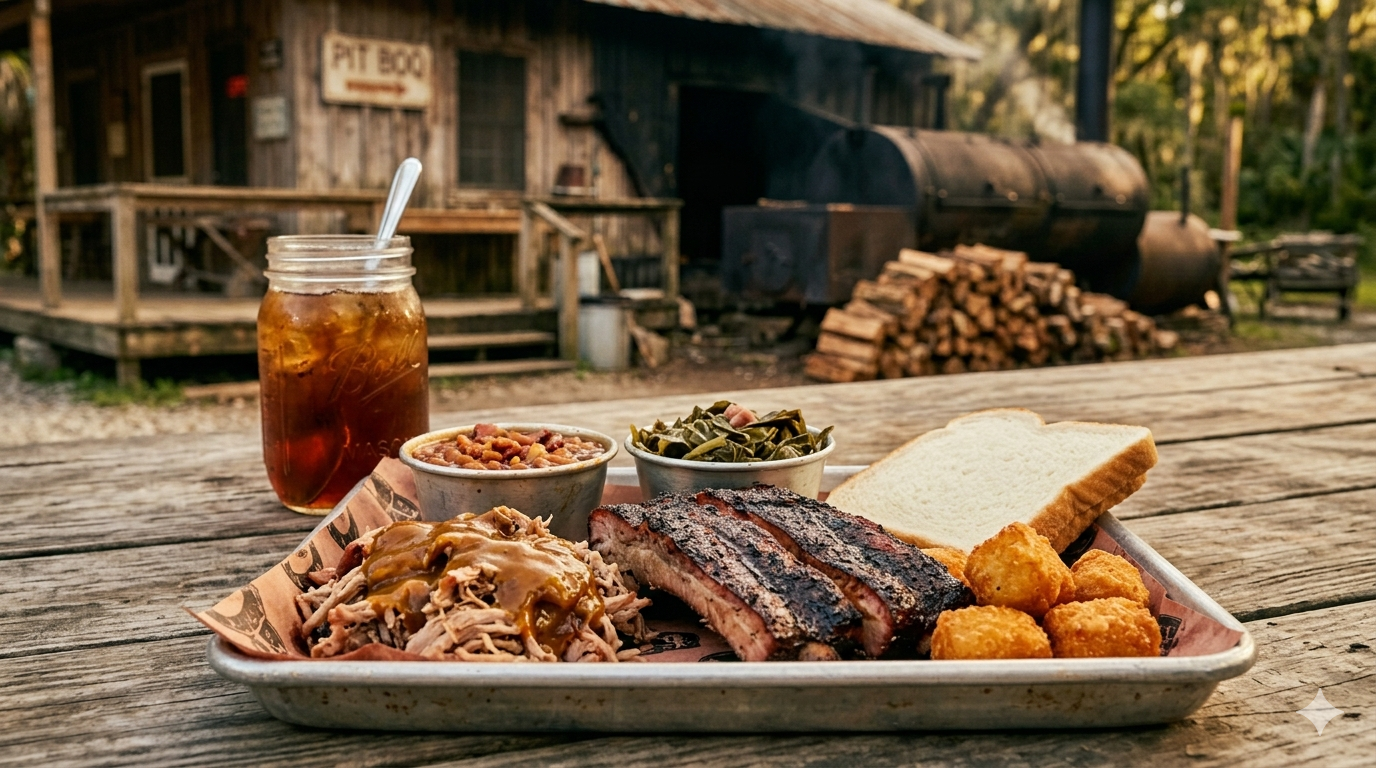
Authentic Florida BBQ plate with pulled pork, ribs, baked beans, collard greens, fried corn nuggets, white bread, sweet tea in a mason jar
What to Order: The "Cracker" BBQ Classics
Florida sits at a fascinating culinary crossroads. Because of its geography, Backroad BBQ doesn't claim just one style—it steals the best secrets from its neighbors to create something entirely unique.
The Meat: Pulled pork is the undisputed anchor of the menu, but keep an eye out for regional anomalies. Along the river roads and coastal backwaters, you’ll often find smoked mullet—a local, oily fish that takes to oak smoke beautifully.
The Sauce: Unlike the strict vinegar of Eastern North Carolina or the heavy molasses of Kansas City, Florida backroad sauce is a hybrid.
You’ll typically find a sweet, tangy, tomato-and-mustard-based concoction influenced heavily by Georgia and the Carolinas, often kicked up with a dash of local datil pepper heat.
The Sides: Never skip the sides. Order the baked beans (which usually sit in a pan directly beneath the dripping meat in the smoker), collard greens simmered for hours with ham hocks, and a basket of fried corn nuggets.
The Backroad Rule of Thumb
Insider Tip: If you are driving between 11:00 AM and 1:00 PM on a Friday and spot a roadside shack where the parking lot is a chaotic mix of mud-splattered farm trucks, local police cruisers, and utility vehicles, pull over immediately.
Cancel whatever reservations you had. You have just stumbled onto backroad gold, and the ribs will likely be sold out by 2:00 PM.
The next time you find yourself planning a trip through the Sunshine State, leave the highway behind.
Take the slow route, roll down the windows, and let your nose guide you down a red dirt road to a rickety tin shack.
Because the real flavor of Florida isn't found at a resort—it’s served on a paper plate, beside a sweating mason jar of sweet tea, under the shade of a live oak tree.
Thanks for spending part of your day with Florida Unwritten.
If this story felt familiar, salty, strange, or a little too Florida to explain at dinner, share it with someone who’d understand.
👉 More stories live at https://surl.lu/uilyob
📬 Subscribe for weekly Florida stories, coastlines, wildlife, weirdness, and the kind of local moments tourists usually miss.
Florida Unwritten is a labor of love dedicated to the places the brochures forget.
Earl lee
Florida Unwritten
