Florida Front Porch Stories: Handshakes, Character, and Manhood
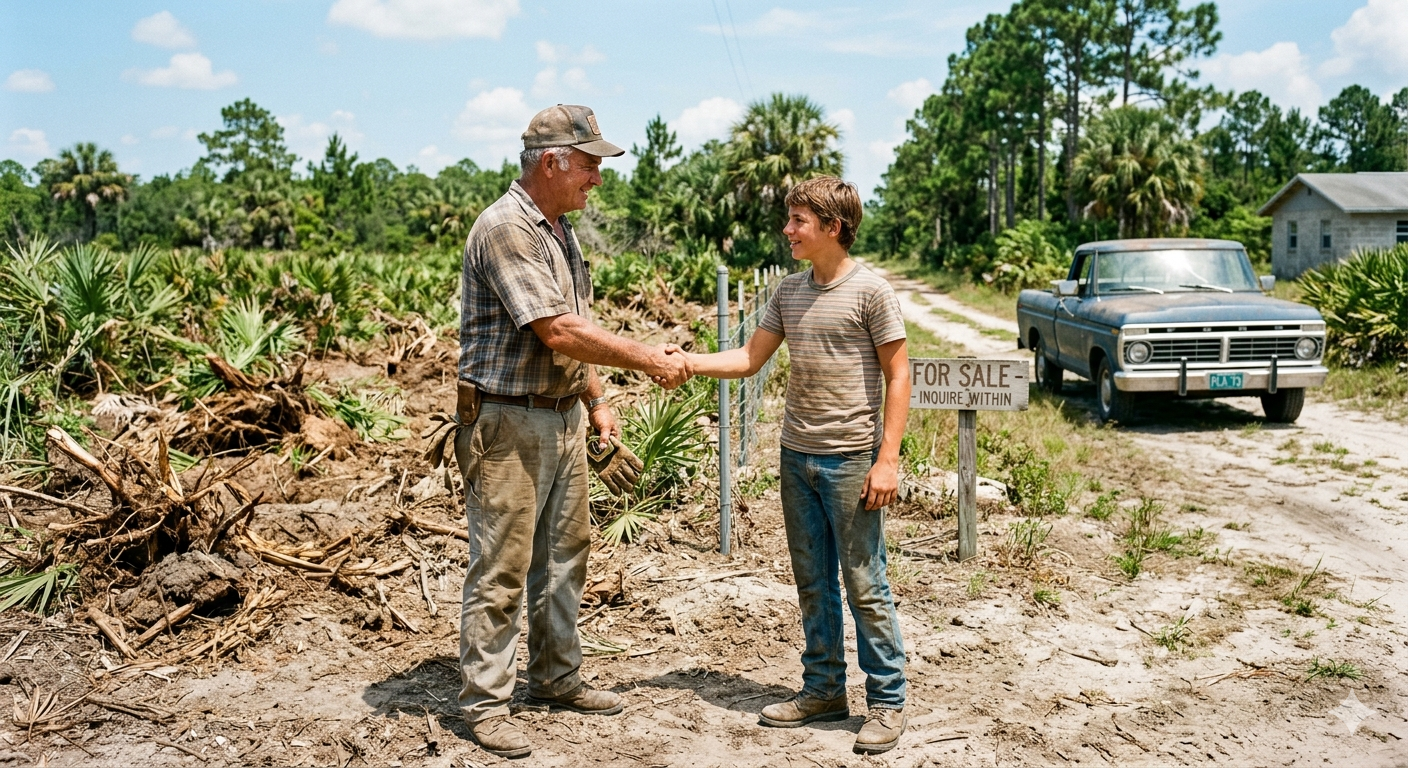
A teenage boy and an older Florida landowner shaking hands
If you grew up under the heavy humidity of a Florida summer like me, you know that the front porch wasn’t just a place to escape the heat—it was a courtroom, a classroom, and a confession booth all rolled into one.
My grandfather, a man born just as the 19th century was drawing its final breaths, spent his golden years anchored to a creaky wicker rocking chair on our screened-in porch in Central Florida.
By the time the 1970s rolled around, bringing with them bell-bottoms, disco, and a sudden, confusing loosening of society’s moral gears, Grandpa looked at the modern world with a mixture of quiet bewilderment and absolute certainty.
He possessed a moral compass forged in an era of horse-drawn plows and handshake agreements, and he was determined to use it to navigate me through a decade that felt entirely unmoored.
Growing Up in the 70s: The Clash of Eras
The 1970s in Florida were a strange time to learn how to be a man.
The old, rural Florida of orange groves, cattle ranches, and slow-moving rivers was rapidly colliding with high-speed interstate systems, neon-lit strip malls, and a cultural revolution that reached even our sleepy town.
I was trying to figure out manhood by watching television characters who wore silk shirts unbuttoned to the navel and drove flashy sports cars.
But whenever the noise of the decade got too loud, I was sent out to the porch.
Grandpa smelled of Prince Albert pipe tobacco, WD-40, and the sweet, heavy scent of the citrus groves just beyond our property line.
He didn’t care about the changing times, the new music, or the fact that inflation was soaring.
To him, the world was remarkably simple, even when it wasn't.
He handed down a collection of spoken rules—"Grandpa-isms"—that acted as a strict boundary line between what was right and what was wrong.
The only trouble was that the 1970s were entirely defined by the gray area, and trying to apply his 19th-century rules to my adolescent life was like trying to clean a modern carburetor with a horse brush.
Lessons in Manhood: The Currency of a Handshake
"A man’s word isn’t something he writes down," Grandpa would say, his voice competing with the rhythmic creak-snap of the floorboards beneath his rocker.
"It’s something he shakes on. If you need a piece of paper to hold you to a promise, you shouldn't have given your word in the first place."
This particular Grandpa-ism was tested when I took a summer job helping a neighbor clear palmetto roots from a vacant lot.
We didn't talk about money beforehand; we just shook hands on the idea that he would "take care of me" when the work was done.
After three weeks of sweating through my t-shirts, fighting off red bugs, and narrowly avoiding a couple of angry pygmy rattlesnakes, the neighbor handed me a crisp five-dollar bill and a lukewarm bottle of cream soda.
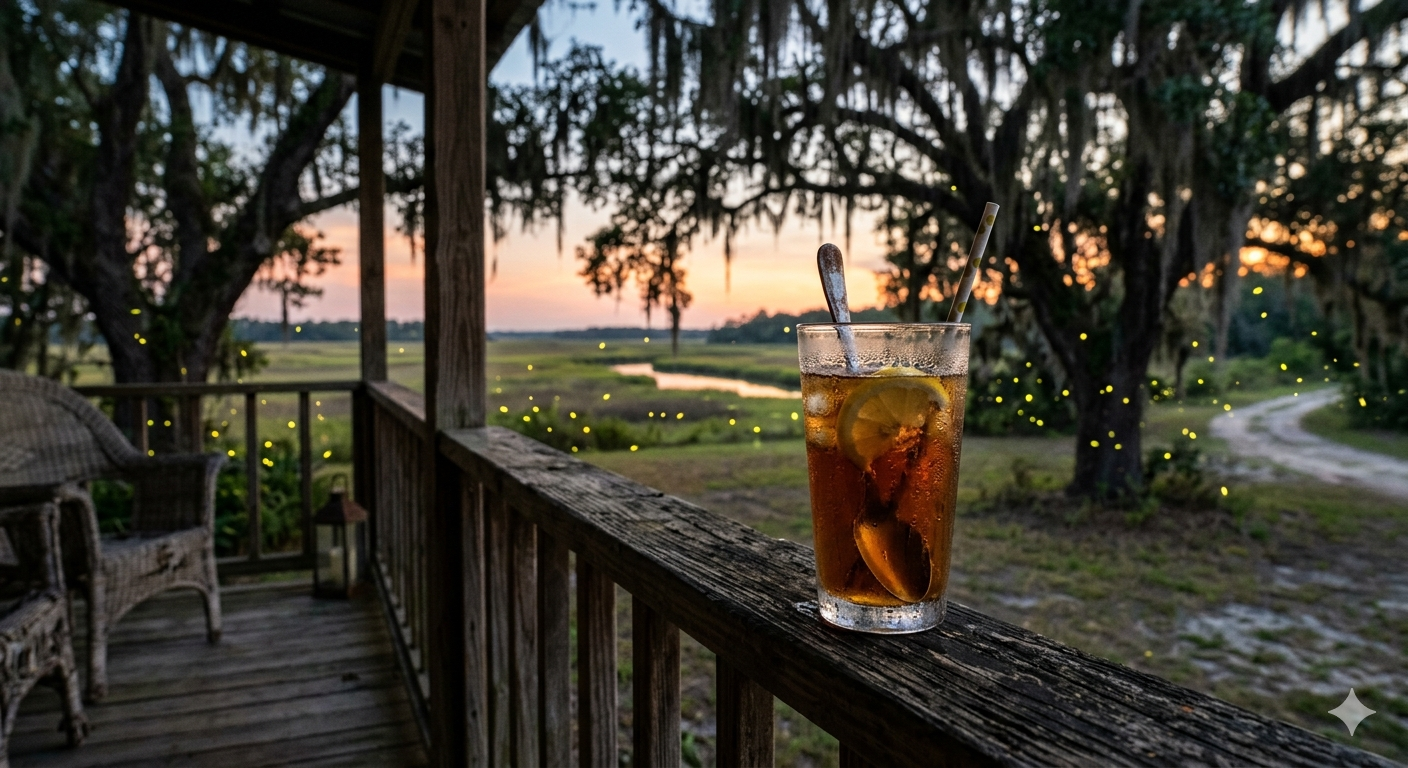
I was furious. By 1975 standards, I had been severely underpaid, even for a teenager.
I marched onto the porch ready to declare war, expecting Grandpa to grab his old shotgun and demand justice. Instead, he just puffed on his pipe, looked out through the screen mesh at the setting sun, and said, "Did you finish the job?"
"Yes," I spat.
"Did you shake his hand when you started?"
"Yes, but—"
"Then you got exactly what you bargained for," he interrupted, completely unbothered.
"You bargained for his character. Now you know what it’s worth.
A five-dollar bill is a low price to pay to find out a man is poor in his soul. Keep your head up, and never work for him again. But you don't whine about a deal you shook on."
It was a harsh, frustrating lesson. In a decade where contracts, lawyers,
And as corporate loopholes became the norm, Grandpa’s rigid adherence to the absolute sanctity of a handshake felt ancient.
Yet, as the years ticked by, I realized what he was actually teaching me: you cannot control someone else's integrity, but you have absolute control over your own.
Southern Nostalgia and Navigating the Gray Areas
As I grew older, the absolute black-and-white nature of Grandpa’s worldview began to show its cracks. The 70s forced a lot of us to realize that the world wasn't just made of good guys and bad guys; it was mostly filled with flawed people trying to scrape by.
☀This story is part of the “Lessons From the Porch series—
“Fishing vs. Catching: A Florida Lesson in Patience, Fog, and Growing Up”
I remember a Saturday afternoon when our car broke down on the side of Highway 27.
A man stopped to help us. He was driving a battered truck, had long hair past his shoulders, wore a faded tie-dye shirt, and frankly, smelled like a concert Grandpa would have actively protested.
By Grandpa’s strict, old-world aesthetic standards, this guy was a "troublemaker."
Yet, without a word of judgment, the man spent two hours under our sweltering hood in the blistering Florida heat, using his own tools and his own spare belts to get our old station wagon running again.
When he finished, wiped the grease from his hands, and refused to take any money,
Grandpa stood silent for a long moment. He looked at the man’s long hair, then down at his greasy hands, and finally extended his right arm.

Join our stories new ever Friday
They shook hands.
Later that night on the porch, the silence stretched out longer than usual.
The cicadas were screaming in the oak trees, and the heat hung like a wet blanket.
Grandpa finally broke the silence. "A clean shirt can hide a rotten heart, and a messy trail can lead to an honest man," he murmured, adjusting his cap.
It was as close to an apology to the universe as he would ever get.
It was his way of acknowledging that his 19th-century compass sometimes needed to calibrate for the human beings standing right in front of him.
Manhood wasn't just about following a set of rigid, unyielding laws; it was about having the wisdom to recognize goodness, even when it arrived in a package you didn't expect.
"The true measure of a man isn't how smoothly he rides the waves of change, but how firmly he stands when the tide tries to wash his foundation away."
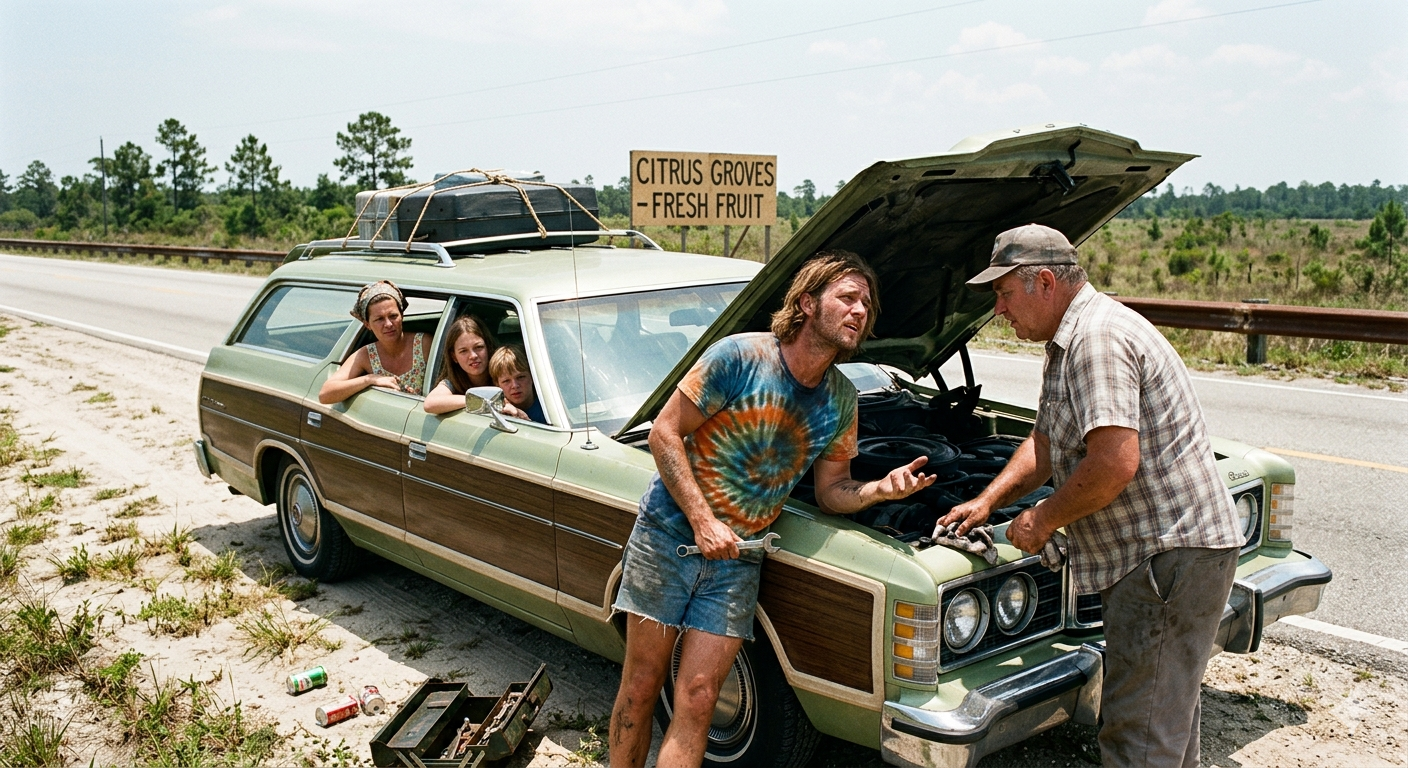
1970s family station wagon broken down along Florida Highway 27, long-haired man in tie-dye shirt helping repair the engine,
The Wisdom of Traditional Values in a Modern World
We often look back at the past through a lens of pure nostalgia, smoothing over the rough edges of the people who raised us. Grandpa wasn't perfect.
His stubbornness could be infuriating, and his refusal to adapt to the changing world sometimes felt less like principle and more like pride.
But sitting on that porch, watching the fireflies blink against the darkness, I learned something invaluable about consistency.
The world changes its mind every few minutes.
Fashions fade, cultural norms shift, and what is considered "right" today might be looked at with skepticism tomorrow. Grandpa’s gift to me wasn't a perfect set of answers for every modern problem.
It was the understanding that a man needs a baseline—a set of unmovable truths that he can fall back on when the world gets confusing.
He taught me that honesty isn't situational, respect isn't earned through a bank account, and the hardest path is usually the one worth walking.
Echoes from the Florida Wicker Chair
Grandpa’s porch is gone now, replaced years ago by a modern housing development, and the wicker rocking chair has faded into family memory.
But whenever I find myself facing a difficult decision, stuck in the deep gray areas of our complicated modern life, I find myself mentally stepping back onto that screened-in porch.
I can still hear the cicadas, smell the faint aroma of sweet pipe tobacco, and hear the slow, steady rhythm of that old rocking chair.
We don't live in the 19th century, and we don't live in the 70s anymore.
But the lessons passed down over a sweat-beaded glass of sweet tea remain entirely timeless.
Manhood isn't about being the loudest voice in the room or chasing the newest trend. It's about anchoring yourself to a few good principles and having the courage to live by them,
no matter which way the cultural wind happens to be blowing.
Thanks for spending part of your day with Florida Unwritten.
If this story felt familiar, salty, strange, or a little too Florida to explain at dinner, share it with someone who’d understand.
👉 More stories live at https://surl.lu/uilyob
📬 Subscribe for weekly Florida stories, coastlines, wildlife, weirdness, and the kind of local moments tourists usually miss.
Florida Unwritten is a labor of love dedicated to the places the brochures forget.
Earl lee
