Pirates, Smugglers, and Forgotten Coastlines
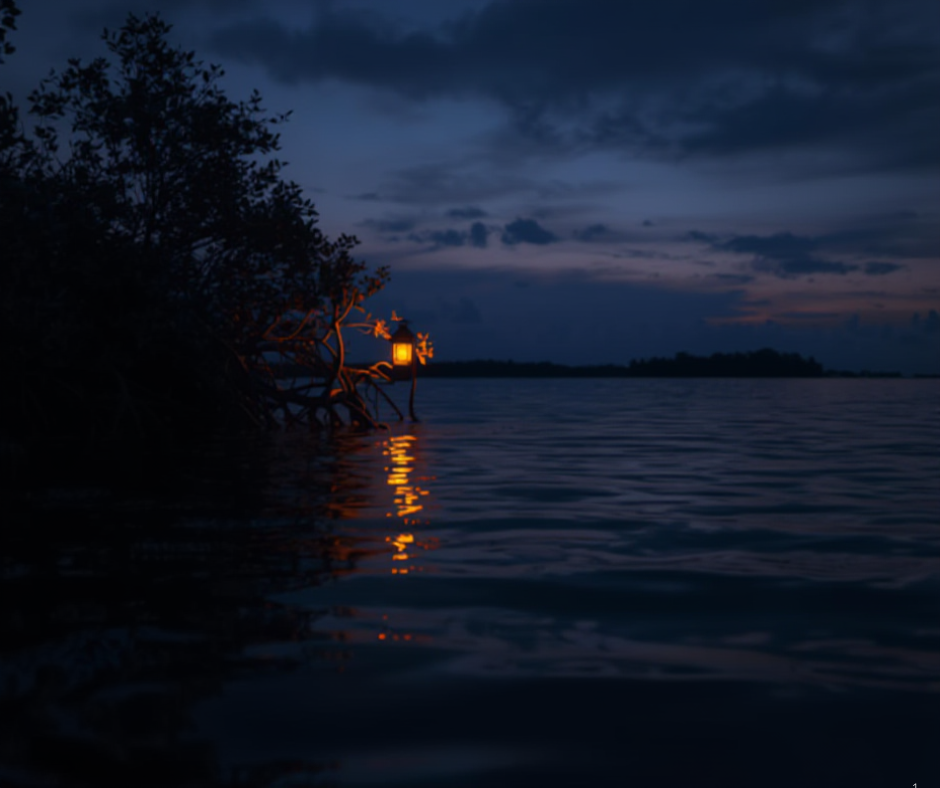
moody Florida coastline at dusk with mangroves and shallow water
A Florida Tall Tale
Florida’s coastline has never behaved like a straight line.
It bends, hides, frays, and vanishes into mangroves and moonlight. Long before cruise ports and condos,
these edges of land were a soft invitation to anyone living outside the law, or outside history’s spotlight.
Where roads ended, stories began.
Along these forgotten coastlines, pirates traded cannon fire for secrecy,
smugglers turned coves into counting rooms, and entire communities learned to live half-visible.
This is not the Florida of postcards. This is the Florida that slipped through fingers and refused to be owned.
The Coast That Wouldn’t Confess
From the Panhandle’s sugar-white beaches to the tangled mangroves of the Ten Thousand Islands,
Florida’s shores have always offered something rare: places where ships could disappear without sinking.
Barrier islands shifted with storms. Inlets opened and closed like blinking eyes. Charts aged badly here.
A safe harbor one year could strand a vessel the next. For pirates and smugglers, that uncertainty was protection.
Spanish treasure fleets learned this the hard way.
Hurricanes scattered gold and silver across reefs and shoals, and suddenly the sea itself became a vault with no lock.
Salvagers, wreckers, and opportunists followed, sometimes rescuing survivors,
sometimes stripping ships down to bones before the tide could finish the job.
Officially, wrecking was condemned. Unofficially, entire coastal families survived on it.
Pirates Without the Theater
Florida’s pirates were rarely the theatrical sort.
No parroted shoulders or choreographed sword fights.
These were practical criminals. Men and women who knew tides better than towns and preferred silence to songs.
The Gulf Coast was especially useful. Its long stretches of shallow water made pursuit difficult.
Naval ships ran deep; pirate craft did not. A smuggler could slip into a bay that looked like nothing from offshore,
unload contraband, and vanish before sunrise.
Rum was popular.
So was tobacco. Later came silk, sugar, weapons, and people. Florida’s position made it a hinge between empires,
And hinges squeak quietly while holding doors together.
Even after piracy was supposedly stamped out, the habits remained. The coastline had learned how to host ghosts.
Smugglers, Moonshine, and the Long Memory of Secrecy
When piracy faded into folklore, smuggling took its place.
During Prohibition, Florida’s forgotten coastlines became arteries of alcohol.
Rum-runners skimmed across the Gulf and Atlantic under moonlight, guided by stars and shoreline silhouettes only locals could read.
Headlands and hammocks served as landmarks. So did lone palm trees, fishing shacks, and the absence of lights.
Communities along these shores developed a polite blindness.
Questions were bad manners.
Cargo was unloaded quickly. Boats were refueled. The sea carried on.
In some towns, the economy depended on it. Fishing paid little. Smuggling paid in cash,
supplies, and favors. Law enforcement was distant. The coastline was close.
Even after Prohibition ended, the infrastructure of secrecy remained. Paths through mangroves didn’t erase themselves.
Families didn’t forget who could be trusted. The coast remembered.
Lost Ports and Vanished Settlements
Not every coastal town survived modernization.
Some ports thrived briefly, then slipped under sand and vines when shipping lanes changed. Others drowned slowly as storms redrew shorelines. A few simply lost relevance when railroads and highways bypassed them.
You can still find their traces if you know how to look. Old pilings rising from the water like ribs.
Brick foundations swallowed by palmetto roots. Cemeteries leaning toward the sea.
These were places where pirates might have traded, smugglers resupplied,
or wreckers waited for bad weather. Their absence now is part of the tale.
Florida is good at erasing its own footprints.
The Sea as an Accomplice
What ties pirates, smugglers, and forgotten coastlines together is not crime. It’s geography.
Florida’s waters do not enforce rules.
They blur them. Visibility drops. Currents shift. Sounds carry strangely. At night, the horizon dissolves.
The sea made it easy to disappear and hard to prove anything later.
A ship gone missing could be wrecked, robbed, or simply renamed somewhere else.
Cargo could change hands without paperwork. Stories could be adjusted to fit the teller.
Even today, some of these coastlines feel unfinished.
Unexplained lights offshore. Boats that don’t answer radios. Locals who shrug and say, “Always been that way.”
What Still Lingers
Modern Florida has paved over much of its past, but not all of it.
The forgotten coastlines still exist in pockets, protected by inconvenience and quiet.
Kayakers drift over submerged ruins without realizing it. Anglers fish near channels once used by smugglers slipping inland.
Beachcombers find old glass, rusted metal, or coins smoothed into anonymity.
And the stories persist. Told around the docks. Passed down without dates.
Pirates blur into smugglers. Smugglers blur into legends. The truth hides comfortably among them.
Because Florida’s edges were never meant to be neat.
They were meant to be used, then abandoned. To shelter secrets. To let people arrive and leave without ceremony.
The Coastline That Refuses to Be Finished
Florida’s forgotten coastlines are not empty. They’re resting.
They’ve watched flags change, laws shift, and maps redraw themselves.
They’ve hosted criminals, survivors, dreamers, and liars in equal measure.
And they remain patient, knowing time will eventually loosen everything built too confidently near the water.
Pirates and smugglers may be gone, or maybe just renamed,
but the coast still knows how to keep quiet.
And if you listen closely, somewhere between the tide and the mangroves,
it’s still telling stories it never wrote down.
“Florida Unwritten runs on stories, sunburn, and caffeine.
If you enjoyed this, you can buy me a coffee. No pressure.”
Earl Lee
