Backroads: The Island That Tried to Disappear
A Tall Tale from the Edges of the Map
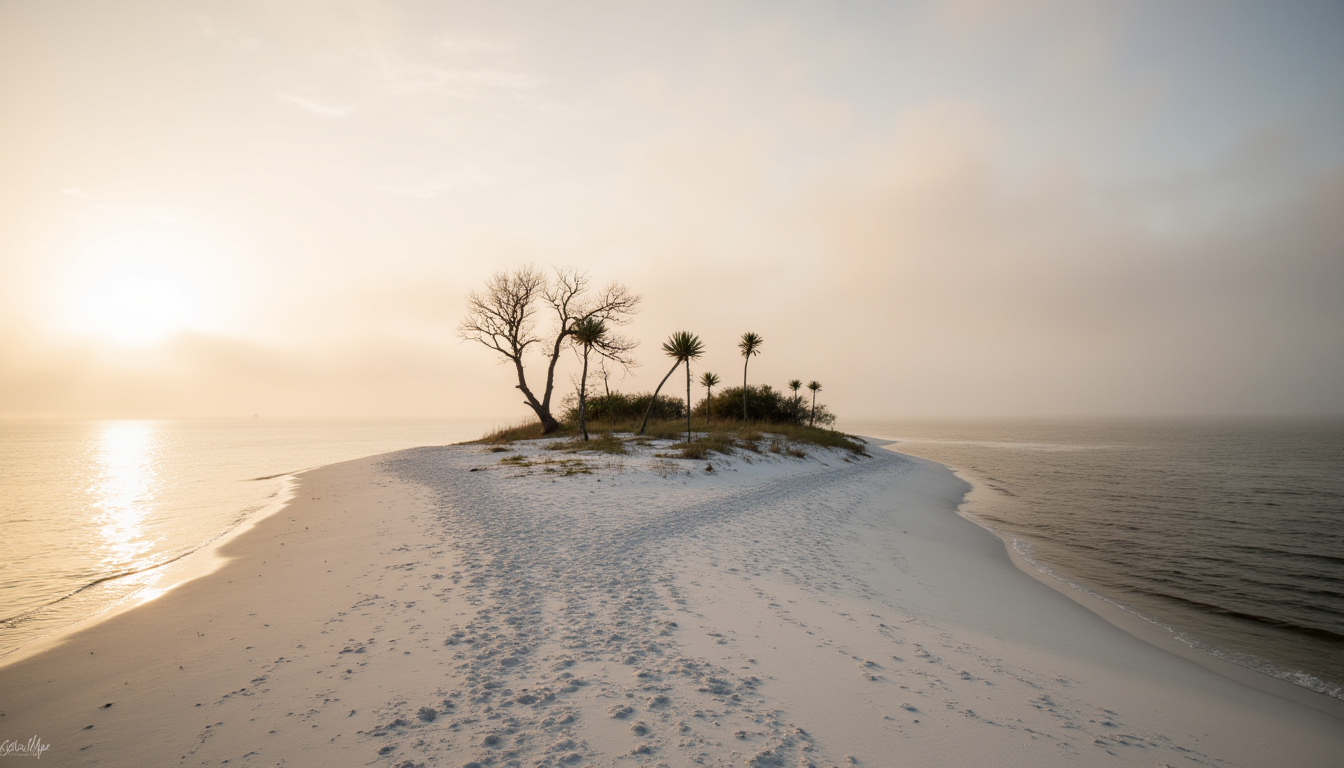
The Vanishing Island
There are places in Florida that don’t show up on maps — not because they’re forgotten, but because they don’t want to be found.
Old fishermen talk about one in particular, an island tucked somewhere between the Ten Thousand Islands and the edge of common sense.
They say it appears when it wants company and vanishes when it doesn’t.
Most folks call it Driftwood Key, though the name changes as often as the tides.
What never changes is the warning:
If the island starts to fade, you’d better leave before it finishes.
Body Sections
The First Sightings
Long before GPS and satellite images, the backwaters of Southwest Florida were a maze of mangroves,
oyster bars, and shifting sand spits. Early settlers navigating the area swore there was an island that wasn’t always there.
Some days it rose from the water like a promise — a strip of white sand, a few crooked palms,
and a patch of shade that felt like mercy in the summer heat.
Other days, the island was gone, replaced by open water as if it had never existed.
Fishermen chalked it up to tides.
Sailors blamed bad charts.
Locals just shook their heads and said, “That island’s got a mind of its own.”
The Island With a Temper
Driftwood Key wasn’t just unpredictable — it was moody.
Old-timers claimed the island reacted to people. If you came ashore with respect,
the sand felt firm beneath your feet, and the palms rustled like they were welcoming you.
But if you arrived with greed — looking for treasure, land, or anything you could claim — the island shifted. Literally.
One man said he watched the shoreline slide away from him like a receding wave. Another swore the trees moved,
inch by inch, pushing him back toward his boat.
A third insisted the island shrank under his boots until he was standing ankle‑deep in water.
Nobody ever stayed long enough to test the limits.
The Settler Who Tried to Claim It
The most famous story comes from 1894, when a stubborn homesteader named Elias Mercer decided he’d had enough of the island’s games.
Elias was the kind of man who believed anything could be tamed with enough sweat and mule power.
He found Driftwood Key on a calm morning, solid as any other island. He planted a flag, built a lean‑to, and declared it his new home.
By sundown, the island had other plans.
Elias noticed the tide creeping in faster than usual. The sand under his boots felt softer.
The palms leaned away from him, their fronds rattling like warning whispers.
By midnight, the island had shrunk to half its size.
Elias woke to water lapping at his bedroll.
He packed up and left before dawn, rowing hard for the mainland.
When he looked back, the island was already dissolving into mist.
He never found it again.
The Lighthouse That Wouldn’t Stay Lit
In the 1920s, the Coast Guard tried to chart the area and install a small beacon to help boats navigate the tricky channels.
They set up a temporary light on Driftwood Key — or what they believed was Driftwood Key — and left it burning through the night.
By morning, the light was gone.
Not stolen.
Not knocked over.
Gone.
The crew found the buoy floating a mile away,
the lantern still lit, the rope cleanly severed as if the island had slipped out from under it.
The Coast Guard quietly removed the island from official charts.
Some things, they decided, weren’t worth arguing with.
The Island That Saved a Life
Not all stories paint Driftwood Key as dangerous.
Some say the island had a protective streak.
In 1967, a teenage boy named Tommy Rourke got lost during a storm while fishing alone. His boat capsized, and he clung to a cooler,
drifting in the dark. He swore he heard someone calling his name — a woman’s voice,
soft and steady, guiding him toward a faint glow.
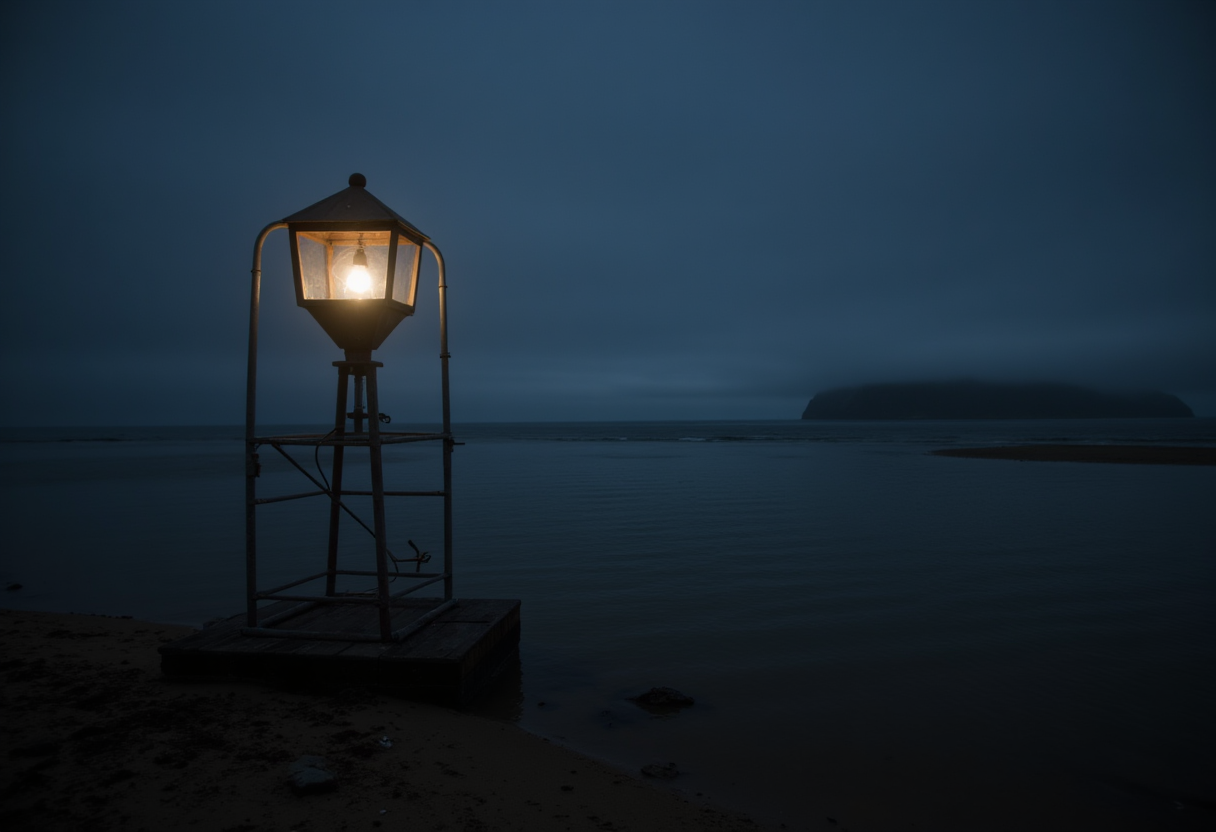
beacon on a lonely sandbar at night
When the sun rose, Tommy found himself lying on a small island he’d never seen before.
His cooler was beside him. His boat was nowhere in sight.
A passing charter captain spotted him and brought him home.
When Tommy returned with his father the next day, the island was gone.
Tommy never forgot the voice.
He said it sounded like the sea itself telling him to hold on.
Why the Island Tried to Disappear
Locals have theories — dozens of them.
• Some say the island is alive, shifting to protect itself from those who would carve it up or claim it.
• Others believe it’s a ghost island, the last remnant of a Calusa village swallowed by storms centuries ago.
• A few insist it’s a mirage, a trick of heat and tide that fools the eyes but not the soul.
• And then there are the storytellers, who say the island disappears because it remembers what happened to the places that didn’t.
Florida has a habit of paving paradise.
Maybe Driftwood Key just refuses to be paved.
Modern Encounters
Even today, kayakers and backcountry anglers report strange sightings — a patch of sand where none should be,
a cluster of palms that vanish when you look away, a shimmer on the horizon that feels like an invitation.
One guide swears he saw footprints on a sandbar that disappeared before he reached it.
Another claims he anchored on a small island for lunch, only to find his boat floating in open water when he turned around.
GPS glitches.
Compass spins.
Sudden fog.
The island still plays its games.
Why the Legend Endures
Driftwood Key is more than a Tall Tale. It’s a reminder that Florida’s wild places still have secrets — and boundaries.
Not everything is meant to be owned. Not every corner of the state wants to be found.
Some places stay hidden because they’re dangerous.
Others stay hidden because they’re sacred.
And a few — like Driftwood Key — stay hidden because they’re tired of being chased.
If you ever find yourself deep in the backwaters and see an island that wasn’t there yesterday, step lightly.
And if the sand starts to fade beneath your feet, don’t panic.
Just leave before the island finishes disappearing.
Some places vanish to protect themselves. Others vanish to protect us.
Driftwood Key may be both — a reminder that not every mystery in Florida wants to be solved.
Florida Unwritten runs on stories, sunburn, and caffeine.
If you enjoyed this, you can buy me a coffee. No pressure.”
Earl Lee
