Big Cypress National Preserve: Where the Swamp Watches Back
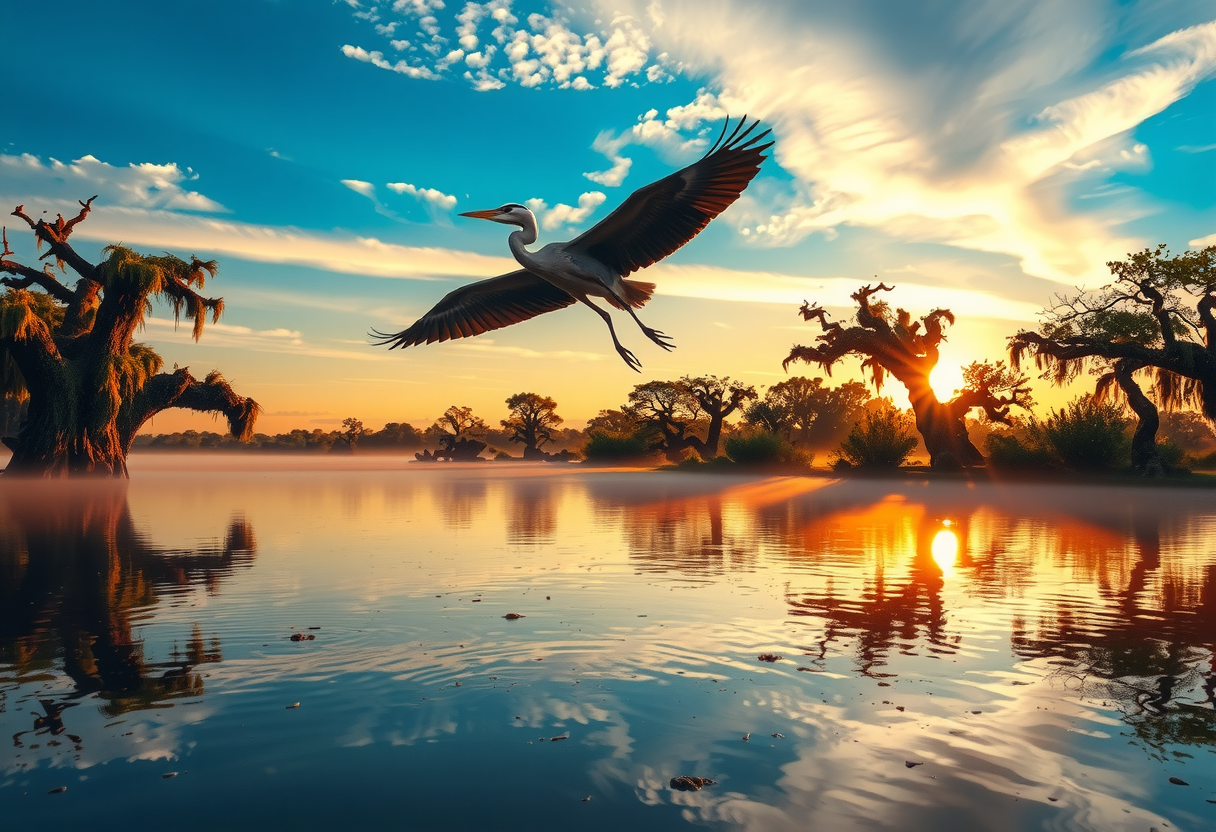
great blue heron in mid-flight, soaring above the misty, sun-dappled waters of a serene swamp
Ochopee, FL
Morning mist is settling over the dwarf cypress forest.
There is a specific kind of quiet that only exists in deep water. It isn't the absence of sound, but rather a heavy, humid stillness that swallows the noise of the outside world whole.
When you cross the invisible boundary into Big Cypress National Preserve, the cell service drops,
The radio turns to static, and you are suddenly very aware that you are a guest in a house that has stood for thousands of years.
Leaving the Neon Behind: Entering the Heart of the Swamp
Driving west from Miami on the Tamiami Trail, the transition is jarring.
One minute you are navigating the concrete arteries of a sprawling metropolis, and the next, the horizon flattens out into an endless sea of sawgrass and skeletal, moss-draped trees.
Big Cypress isn't the Everglades, though they are neighbors and share a watershed.
While the Everglades is a "river of grass," Big Cypress is a forested swamp—a mosaic of pine flatwoods, hardwood hammocks, and deep, dark sloughs.
I pulled my car over at the Oasis Visitor Center, the air immediately hitting me like a warm, wet blanket. The smell here is distinct: a rich, earthy perfume of decaying peat, blooming orchids,
and ancient mud. It smells like the beginning of time.
I unfolded a crinkled paper map—a necessity out here where GPS goes to die—and traced the jagged line of the Loop Road.
"Out here, you don't watch the swamp. The swamp watches you. And it has all the time in the world."
The Loop Road: Where the Logs Have Eyes
If you want to truly understand Big Cypress, you have to drive the Loop Road (County Road 94).
It's a 24-mile scenic detour that is mostly unpaved, entirely unpredictable, and absolutely magical.
The trees canopy over the dirt road, creating a tunnel of green light that feels distinctly prehistoric.
It didn't take long to spot the locals. About two miles in, I slowed down for what looked like a discarded truck tire in the canal beside the road. The tire blinked.
Alligators in Big Cypress possess a level of unbothered confidence that borders on arrogance.
They line the banks like scaly solar panels, soaking up the afternoon heat. I watched a family of tourists from Ohio, excitedly pointing at a particularly massive bull gator.
The gator slowly opened one eye, gave them a look of profound, ancient judgment, and slid silently into the black water without a splash. It's a gentle, humorous reminder that we are merely the day's entertainment.
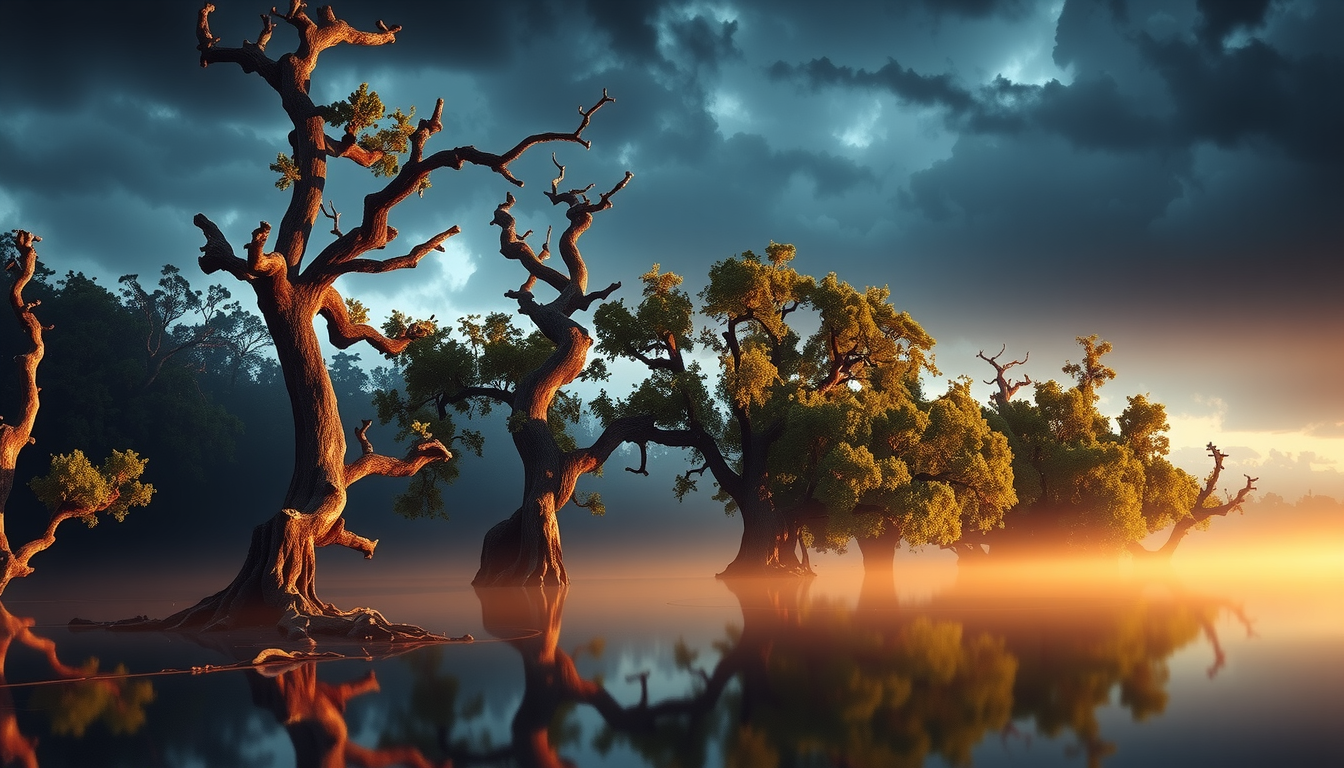
Great blue heron taking flight over swamp water
Ancient Giants and the Ghosts of Old Florida
Wading into the swamp—literally, on a guided swamp walk—is where the real magic happens. The water is surprisingly cool and clear, stained the color of strong tea by the tannins of the cypress trees.
Looking up, the canopy is a chaotic masterpiece. Bromeliads cling to the bark like spiky green urchins, and Spanish moss hangs in ghostly curtains.
If you are incredibly lucky and visiting at exactly the right time of year, you might spot the elusive ghost orchid, suspended in the shadows like a floating white phantom.
There is a deep nostalgia here. You can almost hear the echoes of the old Florida pioneers,
the plume hunters, and the Seminole and Miccosukee people who have navigated these waters for generations.
It’s a landscape that stubbornly resists the paving over of the modern world.
When the Silence Looks Back
As the sun began to dip below the tree line, casting long, golden shadows across the water, the silence deepened. But again, it wasn't empty.
A Great Blue Heron took flight with a prehistoric croak. Somewhere in the distance, a splash indicated a meal being caught.
And then, there was the feeling. Anyone who has spent time in deep wilderness knows it. The prickle on the back of your neck.
The sudden urge to look over your shoulder. Big Cypress is one of the last strongholds of the Florida Panther. While I didn't see one—almost no one does—I felt entirely certain that one could see me.
It wasn't a feeling of fear, but of profound respect. You are part of the food chain out here, a small piece of a very large, very wild puzzle.
Key Stops in Big Cypress National Preserve
Big Cypress National Preserve
A vast, protected swamp ecosystem spanning over 700,000 acres of raw Florida wilderness.Loop Road Scenic Drive
A rugged 24-mile backroad where gators, wading birds, and silence rule the landscape.Oasis Visitor Center
One of the best places to safely view alligators up close is along the canal.Tamiami Trail
The historic road slicing through Miami and the swamp, offering a dramatic transition into wild Florida.
Big Cypress doesn't offer the manicured trails of a city park or the predictable thrills of a theme park. It offers something much rarer: raw, unfiltered reality.
It is a place that doesn't want to be tamed, understood, or conquered. It just wants to be respected.
And as I drove back toward the glow of the city lights, my boots caked in ancient mud, I felt a deep, abiding gratitude that places like this still exist in the dark, quiet corners of the map.
If you made it this far, you get it.
This isn’t the postcard version.
Florida Unwritten: A weekly dispatch from the state’s quieter side.
From ice-cold springs to forgotten backroads, we explore the places you only find when you slow down. One good Florida story every Friday morning. Jump on in and ride with us.
If you want to help keep the wild parts on the page, you can toss a little coffee into the pot.
2026 Florida Unwritten. All rights reserved.
Earl Lee
Florida Unwritten
