The Only Place on Earth Where Gators and Crocs Cross Paths
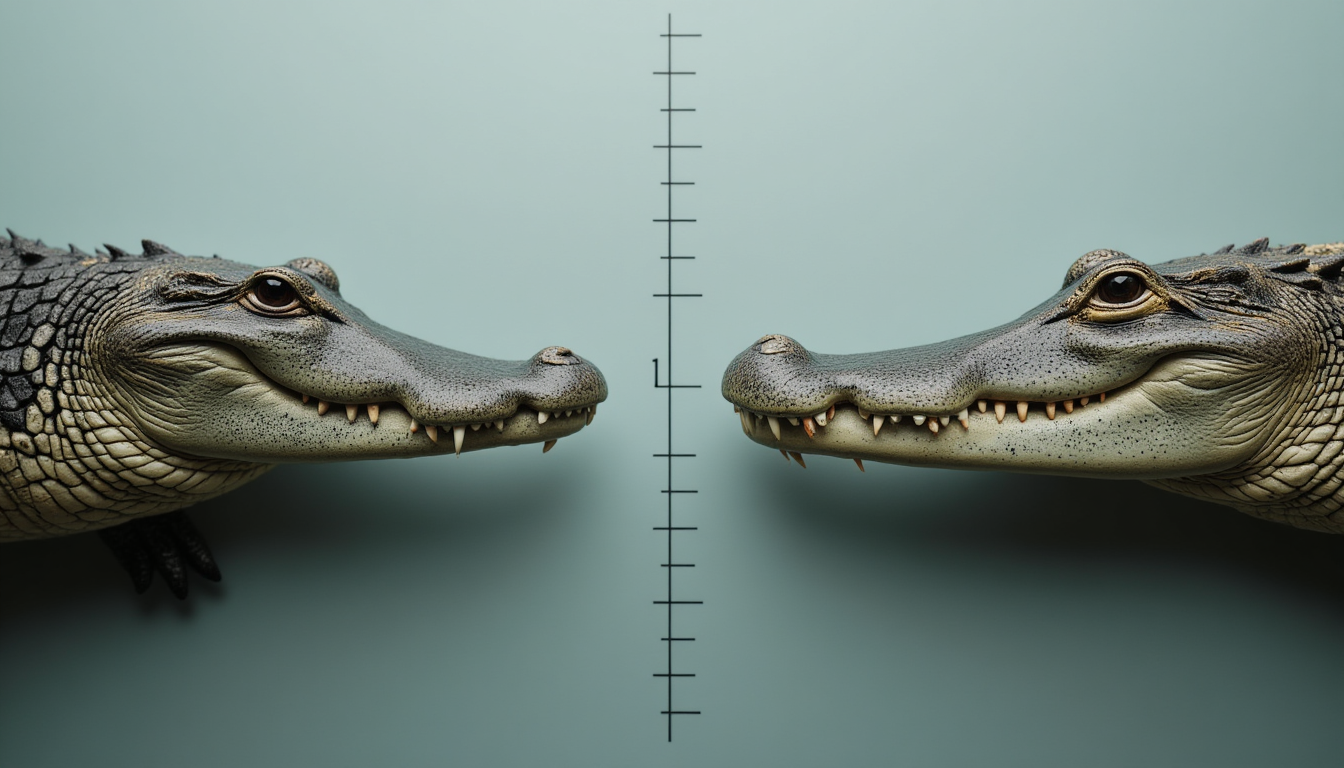
side-by-side comparison of the snouts of an American alligator and an American crocodile
There are places in Florida where the map feels finished. Sidewalks poured. Palm trees trimmed. HOA letters mailed with polite menace.
And then there is the Florida Everglades.
The Everglades is not finished. It is still thinking and still breathing and still rearranging itself in slow, watery sentences.
It is the only place on Earth where the American alligator and the American crocodile live side by side in the wild. Not in a zoo enclosure with a fence and a sign.
Not in separate wings of a reptile house. Out here. In the same marsh. Under the same moon.
Two ancient reptiles. One swamp. No moderator.
First, Let’s Clear the Water
Most folks think “gator” and “croc” are just different accents for the same animal.
That is like saying sweet tea and motor oil are the same because they’re both liquids.
The American alligator is Florida’s oldest resident. Broad snout. Dark armor. Built like a floating log that decided one day to develop opinions.
They thrive in freshwater. Marshes, swamps, ponds that look like they’ve been holding secrets since 1847.
The American crocodile, though, is more tropical in temperament.
Narrower snout. Lighter, olive-gray coloring. A little more angular. If the gator looks like a retired linebacker,
the croc looks like it still does yoga.
Crocodiles prefer brackish and saltwater habitats. Mangrove edges. Coastal estuaries.
Places where the water tastes like it can’t decide what it wants to be.
And that indecision?
That’s where the Everglades comes in.
The River That Isn’t in a Hurry
The Everglades has been called a “river of grass,” and that’s accurate if your idea of a river is something that moves at the speed of patience.
Water slides south from Lake Okeechobee so slowly it feels like it’s reconsidering its life choices.
Freshwater drifts. Tides push back. Salt creeps inland. The land sits low and shrugs.
That mixture of fresh and brackish water creates a strange ecological handshake zone.
It is here, particularly in the southern reaches near Florida Bay, that gators and crocs overlap.
Imagine two old ranchers tipping hats to each other across a fence line that keeps drifting.
They do not form a committee. They do not exchange recipes. But they do share territory. And that makes this place singular in the world.
Built for Different Jobs
Alligators are masters of freshwater real estate. They even dig “gator holes,” depressions that hold water during dry spells.
Those holes become survival hubs for fish, turtles, birds, and anything else smart enough to show up.
Crocodiles are more tolerant of salt, thanks to specialized glands that help them excrete excess salt.
They can slip between estuaries and coastal waters with the ease of someone who owns both boots and boat shoes.
Where the waters blend, their ranges overlap.
They are not identical competitors. They occupy slightly different niches.
They prefer different salinity levels. They eat similar prey but often hunt in different microhabitats.
Nature, when it works well, is less a boxing ring and more a shifting mosaic.
That said, if you are a mullet in the wrong place at the wrong time, these distinctions are academic.
Ancient Neighbors
Both species are survivors from a lineage that has been around for more than 200 million years.
They have seen continents drift, climates shift, and mammals get ambitious.
And now they share a swamp in South Florida.
There is something humbling about that. While we debate zoning codes and argue over parking,
these reptiles conduct their lives with prehistoric calm. They bask. They slide into the water. They wait.
If patience were currency, they’d own the bank.
A Conservation Comeback Story
It was not always guaranteed that you would see either one.
Alligators were once hunted heavily for their hides. Crocodiles suffered from habitat loss and human disturbance.
By the mid-20th century, both species faced serious decline.
Legal protections, habitat conservation, and the establishment of places like Everglades National Park changed that trajectory.
Today, alligator populations are stable, and American crocodiles, once listed as endangered,
have made a significant recovery in Florida.
Their coexistence is not just a biological curiosity. It is a quiet conservation success story.
The swamp, when given breathing room, knows how to heal itself.
How to Tell Them Apart Without Becoming a Snack
If you are ever fortunate enough to see one in the wild, a few differences stand out:
Snout shape is the classic clue. Alligators have a broader, U-shaped snout.
Crocodiles have a narrower, V-shaped snout.
Color matters too. Gators are typically darker. Crocs trend lighter, grayish-green.
There is also the matter of teeth. When a crocodile closes its mouth, you can often see some of its lower teeth sticking out.
With alligators, the upper jaw tends to hide the lower teeth.
Helpful knowledge. Best applied from a respectful distance.
And by respectful, I mean far enough away that you are not part of the food web’s decision tree.
The Mood of the Place
To understand why they coexist here, you have to understand the Everglades itself.
This is not a place of dramatic mountain peaks or crashing surf. It is flat. Vast. Quiet in a way that presses gently on your ears.
The sawgrass ripples in the wind that smells faintly metallic and green. Herons stand like punctuation marks.
The sky feels bigger than it has any right to be.
At dusk, the water turns to ink. Ripples widen and disappear. Somewhere out there,
a gator floats with just its eyes and nostrils above the surface.
Somewhere else, a crocodile slips through brackish shallows near mangroves.
They are not enemies. Not allies. Just co-inhabitants of a complicated, watery neighborhood.
“We specialize in the Florida you won't find on a postcard. Keeping these stories 'unwritten'—but not forgotten—takes plenty of caffeine and even more bug spray. If you loved today's tale, you can buy me a brew to help keep the lights on. I'm glad you're here for the
Why It Matters
In a country full of superlatives, this one feels earned.
The only place on Earth where these two species share habitat in the wild.
It is easy to think of Florida as beaches and billboards. But down here, in the slow water and shifting grass,
something older persists. Something that predates our highways and subdivisions.
The Everglades is not merely scenery. It is infrastructure for life.
It filters water, buffers storms, nurtures fisheries,
and hosts species that cannot simply relocate when the rent goes up.
When we protect it, we are not just saving reptiles. We are preserving a rare ecological overlap that the rest of the planet does not get to witness.
Two Shadows at Sundown
Stand on a boardwalk at sunset and watch the light thin out over the marsh.
The air hums with insects. The horizon blurs into lavender and rust.
You may not see both species at once. You may not see either.
But know this: somewhere out there, in water that tastes like both river and sea, a gator and a croc occupy the same wild expanse.
Two ancient lineages. One restless landscape.
And Florida, as usual, refuses to be ordinary. 🐊
Florida Unwritten is a weekly letter about the quieter side of the state.
Springs that stay cold in July, towns the highway forgot, and the kind of places you only find by slowing down.
Every Friday morning, one good Florida story.
Earl Lee
Florida Unwritten
