The Battle of the Florida Straits
The Florida Straits is a vital maritime passage connecting the Gulf of Mexico to the Atlantic Ocean.
Florida straits
Its strategic importance has been a crucial factor in shaping the history of the region.
This passage has witnessed numerous historical battles, with various nations vying for control over this critical waterway.
The significance of the Florida Straits extends beyond its historical importance, as it remains a crucial route for international trade and commerce.
Florida straits
The strategic importance of this passage is undeniable, and its impact on the global economy is substantial.
Understanding the history and significance of the Florida Straits is essential for grasping its role in shaping the world we live in today.
Key Takeaways
The Florida Straits is a critical maritime passage.
It connects the Gulf of Mexico to the Atlantic Ocean.
The passage has significant strategic importance.
Historical battles have taken place in the Florida Straits.
The passage remains crucial for international trade and commerce.
The Strategic Importance of the Florida Straits
With its strategic location connecting the Atlantic Ocean to the Gulf of Mexico, the Florida Straits have been a focal point for maritime activities.
This significance is rooted in its geographical features and historical role as a maritime passage.
Geographical Location and Features
The Florida Straits are situated between the Florida Keys and Cuba, creating a narrow passage that connects two major bodies of water.
This unique geography makes it a critical route for international shipping and naval operations.
The straits are characterized by strong currents and challenging navigation conditions, which have historically made it a difficult but important passage.
The geographical features of the Florida Straits include:
Narrow passage between the Florida Keys and Cuba
Connection between the Atlantic Ocean and the Gulf of Mexico
Strong currents and challenging navigation
Historical Significance as a Maritime Passage
The Florida Straits have played a crucial role in various historical events, including colonial conflicts,
naval battles, and trade operations. Its historical significance as a maritime passage is underscored by its role in shaping regional and global events.
Some key historical aspects of the Florida Straits include:
Role in colonial conflicts and naval battles
Importance in trade and commerce operations
Impact on regional and global historical events
The strategic location and maritime significance of the Florida Straits have made it a focal point throughout history,
influencing various aspects of regional and global affairs.
Naval Skirmishes of the 18th Century
Early Colonial Conflicts in the Region
As European colonization expanded, the Florida Straits became a focal point for conflicts between Spain, Britain, and America.
The region's strategic importance and rich resources made it a prized possession for these colonial powers.
Spanish Control and Piracy
Spain initially controlled much of the Florida Straits, establishing colonies and trade routes.
However, this control was challenged by pirates who used the straits as a hiding place and a route for plundering ships.
Piracy became a significant issue, with pirates targeting Spanish galleons carrying gold and other precious commodities.
British and American Challenges
As British and American influence grew, they began to challenge Spanish control over the Florida Straits.
The British, in particular, sought to expand their colonial territories, leading to conflicts with Spanish forces.
Naval warfare became a key component of these conflicts, with both sides engaging in battles to control the strategic waterway.
Naval Skirmishes of the 18th Century
The 18th century saw numerous naval skirmishes between Spanish, British, and American forces. These battles were often small but intense,
with ships on both sides suffering significant damage. One notable example is the British capture of Havana in 1762,
which gave them temporary control over a key Spanish port.
The legacy of these early colonial conflicts continues to shape the history of the Florida Straits, highlighting the region's importance in the broader context of colonial and naval history.
The War of 1812 and Naval Engagements
During the War of 1812, the Florida Straits became a critical theater for naval warfare, highlighting the strategic importance of the region. The war saw significant naval engagements that tested the capabilities of both the American and British navies.
American Naval Strategy
The American naval strategy during the War of 1812 focused on disrupting British supply lines and challenging their control over the seas. The U.S. Navy employed a mix of frigates and privateers to attack British merchant ships, weakening their enemy's economic grip.
"The American naval commanders showed remarkable bravery and strategic acumen,
often outmaneuvering their British counterparts in the Florida Straits."
British Blockade Operations
The British Navy, in response, implemented a blockade to strangle American trade and commerce.
This blockade had significant implications for the American economy and led to several key naval engagements.
Naval Engagement Outcome Significance USS Constitution vs. HMS Guerriere American Victory Boosted American Morale HMS Macedonian vs. USS United States American Victory Demonstrated American Naval Power
War of 1812 Naval Engagements
The War of 1812 highlighted the importance of naval power and the strategic significance of the Florida Straits.
The engagements during this period set a precedent for future maritime conflicts in the region.
Civil War Naval Operations in the Florida Straits
The American Civil War saw the Florida Straits become a significant theater for naval engagements between the Union and Confederate navies.
The strategic importance of this waterway cannot be overstated, as it served as a critical route for the import and export of goods,
particularly for the Confederate states.
Union Blockade Tactics
The Union Navy implemented a comprehensive blockade strategy to cripple the Confederate economy.
The Florida Straits were a key area of focus for this blockade, with Union warships patrolling the waters to intercept Confederate blockade runners.
Blockade Tactics: The Union employed various tactics to enforce the blockade, including the use of fast steam-powered ships, the deployment of naval mines, and the establishment of coaling stations to support their fleet.
Confederate Blockade Runners
Despite the Union blockade, Confederate forces continued to operate in the Florida Straits, using fast ships to evade capture and maintain supply lines.
These blockade runners played a crucial role in the Confederate war effort, bringing in vital supplies and exporting cotton.
Notable Ship Captures and Escapes
Several notable incidents highlight the cat-and-mouse game between Union blockaders and Confederate blockade runners.
One such example is the capture of the CSS Florida by the USS Winslow in 1864.
Here is a summary of key naval engagements in the Florida Straits during the Civil War:
YearShipAffiliationOutcome1862CSS Confederate USS Hatteras1864CSS FloridaConfederateCaptured by USS Winslow1863USS Stars and StripesUnionCaptured CSS Queen of the West
Discover the Stories Florida Never Put on the Map.
Hidden places. Strange history. Stories the brochures forgot. Explore Florida Unwritten and see the Sunshine State differently.
Civil War naval operations in the Florida Straits
The naval operations in the Florida Straits during the Civil War underscore the strategic importance of this maritime passage. The Union blockade and Confederate blockade runners engaged in a complex and dynamic conflict that had significant implications for the outcome of the war.
The Spanish-American War: Battle for Control
The Spanish-American War brought the Florida Straits into the global spotlight, highlighting its strategic importance.
The conflict between the United States and Spain was not just about territorial control but also about naval supremacy.
blockade Spanish ports.
Naval Deployments and Strategies
The U.S. Navy played a crucial role in the war, with the Florida Straits serving as a vital passage for naval deployments.
The U.S. adopted a strategy of blockading Spanish ports, effectively crippling their ability to respond.
Key Naval Deployments:
The U.S. North Atlantic Squadron was deployed to blockade Spanish ports.
The U.S. Navy utilized the Florida Straits to mobilize forces towards Cuba.
Key Engagements and Their Outcomes
One of the significant naval engagements during the Spanish-American War was the Battle of Santiago de Cuba. Although not directly in the Florida Straits, this battle was influenced by the naval strategies employed in the region.
Engagement Outcome: Battle of Santiago de Cuba: Decisive U.S. victory, leading to the surrender of Spanish forces in Cuba.
The blockade of Spanish Ports was effective in crippling Spanish naval capabilities.
As Theodore Roosevelt, then Assistant Secretary of the Navy, noted,
"The Navy is the first line of defense for the United States, and its role in the Spanish-American War was pivotal."
"The Navy is the first line of defense for the United States, and its role in the Spanish-American War was pivotal." - Theodore Roosevelt
World War II: The U-Boat Threat in the Florida Straits
As World War II raged on, the Florida Straits emerged as a key location for naval warfare, with German U-boats posing a significant threat. The strategic importance of this waterway, connecting the Atlantic Ocean to the Gulf of Mexico,
made it a critical area of conflict.
German Submarine Campaign
The German submarine campaign in the Florida Straits was part of a larger effort to disrupt Allied supply lines. German U-boats targeted merchant ships carrying vital goods, including oil and military equipment.
According to historical records, the German submarine campaign resulted in significant losses for the Allies.
A notable example is the sinking of the SS Lachish, which was torpedoed by a German U-boat in the Florida Straits.
"The U-boat threat in the Florida Straits was a serious concern for the Allies, requiring immediate attention and strategic countermeasures."
Admiral Harold R. Stark, USN
American Defense Operations
American defense operations in response to the U-boat threat involved a multi-faceted approach, including convoy systems and anti-submarine warfare tactics.
Merchant ship losses were a significant concern, with many vessels being sunk by German U-boats. The table below summarizes some of the notable incidents:
Ship Name Date Location SS Lachish February 1942 Florida Straits SS City of Atlanta January 1942 Off the coast of Florida
Anti-Submarine Warfare Tactics
To counter the U-boat threat, the US Navy employed various anti-submarine warfare tactics, including:
Sonar technology to detect submerged submarines
Convoy escort carriers to provide air support
Depth charges and other anti-submarine weapons
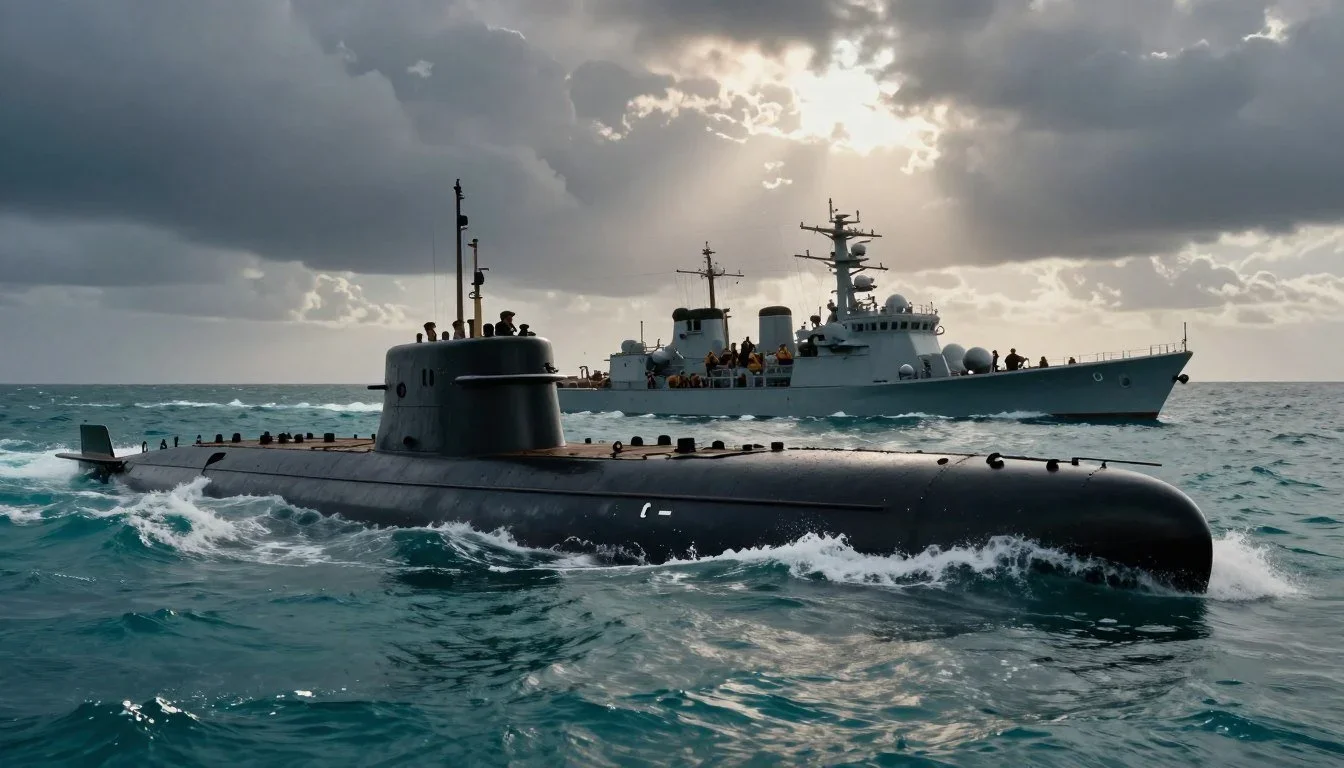
navy ships
These efforts ultimately contributed to the reduction of merchant ship losses and the mitigation of the U-boat threat in the Florida Straits.
Cold War Naval Confrontations
The Cold War brought the world to the brink of nuclear conflict, with the Florida Straits playing a pivotal role in the naval confrontations between the United States and the Soviet Union. This period was marked by intense military and political tensions, with the Florida Straits being a critical location due to its proximity to Cuba and the United States.
During the Cuban Missile Crisis, the United States implemented a naval blockade around Cuba to prevent any further Soviet missile deliveries.
The Florida Straits became a key area for this blockade, with U.S. naval forces closely monitoring Soviet ships. This confrontation brought the world close to nuclear war, highlighting the strategic importance of the Florida Straits.
The naval blockade was a significant demonstration of U.S. resolve, showcasing its capability to project power into the region.
The crisis was eventually resolved when the Soviet Union agreed to dismantle its missile sites in Cuba, but not before the world witnessed the potential for catastrophic conflict.
Soviet submarines played a crucial role in the Cold War, often operating in the Florida Straits and other nearby waters.
These submarines were equipped with nuclear missiles, posing a significant threat to the United States. The U.S. Navy engaged in extensive anti-submarine warfare operations to counter the Soviet submarine threat.
American Surveillance Operations
The United States conducted extensive surveillance operations to monitor Soviet naval activities, including submarine operations in the Florida Straits.
The U.S. employed a range of technologies, from sonar arrays to spy planes, to gather intelligence on Soviet naval movements.
Operation Year Description Naval Blockade 1962 U.S. naval blockade during the Cuban Missile Crisis Submarine Surveillance 1960s-1980s U.S. surveillance operations against Soviet submarines
The Cold War naval confrontations in the Florida Straits were a critical aspect of the broader conflict between the United States and the Soviet Union.
The intense military activities and the potential for nuclear confrontation underscored the region's strategic importance.
The Cuban Exodus Across the Florida Straits
For decades, the Florida Straits have been a pathway for Cuban refugees seeking freedom and a better life. The journey across these straits has been fraught with danger, yet it has also symbolized hope for many. One of the most significant events in this context was the Mariel Boatlift Crisis of 1980.
The Mariel Boatlift Crisis was a mass migration event that took place in 1980, when Fidel Castro's government allowed thousands of Cubans to leave the island from the port of Mariel. This crisis resulted in over 125,000 Cubans making the journey to the United States, many of whom traveled across the Florida Straits.
Key Statistics of the Mariel Boatlift Crisis:
CategoryNumberTotal Refugees125,000Refugees Processed by Coast Guard100,000+Crisis DurationMay - October 1980
The U.S. Coast Guard played a crucial role during the Mariel Boatlift Crisis, undertaking extensive rescue operations to save Cuban refugees from the dangers of the sea. Their efforts were pivotal in ensuring the safety of those making the perilous journey across the Florida Straits.
Humanitarian Challenges and Responses
The Mariel Boatlift Crisis highlighted significant humanitarian challenges, including the processing and resettlement of refugees.
The U.S. government, along with various humanitarian organizations, worked to address these challenges, providing aid and support to those affected.
The Cuban exodus across the Florida Straits is a testament to the enduring quest for freedom and a better life. It underscores the importance of continued humanitarian efforts and the need for comprehensive policies to address the complexities of refugee crises.
Drug Trafficking Battles in Modern Times
Maritime drug trafficking
in the Florida Straits is a complex issue that requires a multifaceted response.
The region's strategic location makes it a critical pathway for drug cartels smuggling narcotics into the United States.
Cartels utilize sophisticated maritime tactics, including the use of fast boats and semi-submersibles, to evade detection. These operations pose significant challenges to law enforcement agencies tasked with interdicting drug shipments.
US Law Enforcement Interdiction Efforts
The US has implemented robust interdiction strategies, including enhanced surveillance and intelligence gathering. Key efforts include:
Advanced radar and sensor technologies to detect and track suspicious vessels
Intelligence sharing between agencies to anticipate and prepare for cartel movements
Coordinated operations with international partners to disrupt cartel supply chains
Joint Task Forces (JTFs) play a crucial role in combating drug trafficking. By combining resources and expertise from various agencies, JTFs enhance the effectiveness of interdiction efforts.
Patrolling high-risk areas to deter and detect drug trafficking
Conducting boarding and inspections of suspicious vessels
Collaborating with international partners to share intelligence and best practices
The ongoing battle against drug trafficking in the Florida Straits requires sustained vigilance and cooperation among law enforcement agencies. By leveraging advanced technologies and collaborative strategies, the US can continue to disrupt and deter cartel operations in the region.
Environmental Challenges and Conservation Efforts
Conservation efforts are crucial to mitigate the environmental challenges impacting the Florida Straits. The region is facing significant ecological stress due to various human activities and natural changes.
Oil Drilling Controversies
One of the major environmental concerns is the controversy surrounding oil drilling in the area. Drilling operations pose a significant risk of oil spills, which can devastate the local marine ecosystem.
Marine Ecosystem Protection
Protecting the marine ecosystem is vital for maintaining biodiversity in the Florida Straits. Conservation initiatives include establishing marine protected areas and regulating fishing practices.
Climate Change Impacts
Climate change is another significant threat, causing rising sea levels and ocean acidification. Addressing these challenges requires coordinated conservation efforts.
Conclusion: The Continuing Strategic Significance of the Florida Straits
The Florida Straits have been a crucial maritime passage throughout history, playing a significant role in various conflicts and naval operations. From early colonial conflicts to modern-day environmental challenges, the straits have remained a vital waterway.
The strategic significance of the Florida Straits is evident in its geographical location, connecting the Atlantic Ocean to the Gulf of Mexico. This passage has facilitated trade, naval operations, and, unfortunately, piracy and drug trafficking.
Throughout the article, we have explored the various challenges and opportunities presented by the Florida Straits. From the War of 1812 to the Cuban Missile Crisis, the straits have been a focal point of naval confrontations and strategic maneuvering.
Today, the Florida Straits continue to be an important maritime passage, with ongoing efforts to address environmental challenges and combat drug trafficking. The strategic significance of this waterway will endure, requiring continued vigilance and cooperation among nations to ensure its safe and sustainable use.
FAQ
What is the significance of the Florida Straits?
The Florida Straits is a crucial maritime passage between the Gulf of Mexico and the Atlantic Ocean, playing a vital role in international trade and commerce.
What were the major naval battles fought in the Florida Straits?
The Florida Straits have witnessed numerous naval battles throughout history, including those during the War of 1812, the American Civil War, and World War II.
How did the Cuban Missile Crisis affect the Florida Straits?
The Cuban Missile Crisis led to a naval blockade of Cuba, with the US Navy patrolling the Florida Straits to prevent Soviet ships from reaching the island.
What is the current state of environmental conservation in the Florida Straits?
Efforts are underway to protect the marine ecosystem of the Florida Straits, including initiatives to prevent oil drilling and mitigate the impacts of climate change.
How does the US Coast Guard operate in the Florida Straits?
The US Coast Guard conducts rescue operations, interdiction efforts against drug trafficking, and other activities in the Florida Straits to ensure maritime safety and security.
What is the Mariel Boatlift Crisis, and how did it affect the Florida Straits?
The Mariel Boatlift Crisis was a mass migration of Cubans to the United States, with many refugees crossing the Florida Straits, leading to a significant humanitarian crisis.
How do cartels operate in the Florida Straits?
Cartels use the Florida Straits to smuggle illicit goods, including narcotics, into the United States, prompting US law enforcement agencies to conduct interdiction efforts.
What is the role of the Florida Straits in global trade?
The Florida Straits is an important shipping lane, with many vessels passing through it to transport goods between the Gulf of Mexico and the Atlantic Ocean.
Stay Unwritten. Share the story.
Earl Lee
Florida Unwritten
