Florida Geography: A State That Refused to Sit Still
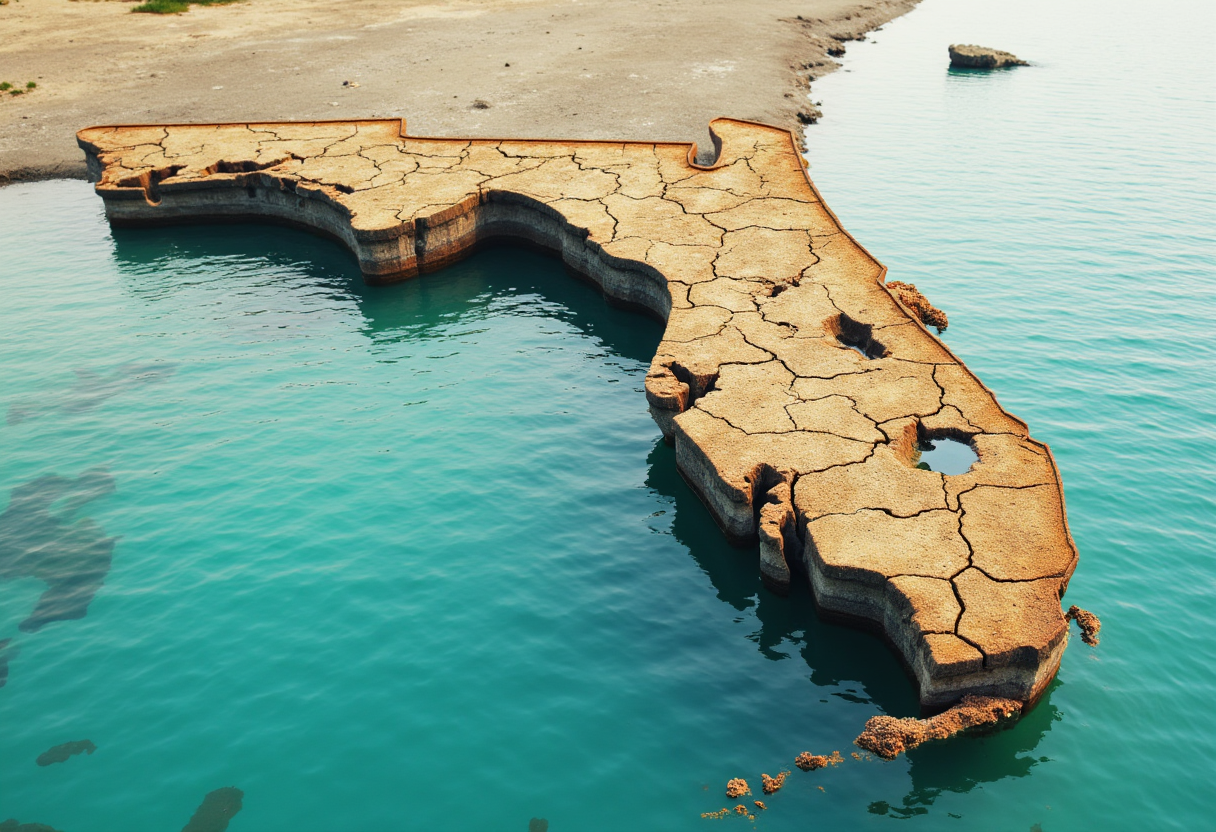
Florida shaped like a long peninsula, partially detached from the mainland
Florida looks innocent on a map. A long peninsula. A familiar shape. Easy to recognize even by people who can’t point out Wyoming on a good day.
But geography-wise, Florida is not a well-behaved state. It is a geological shrug emoji. A place that drifted in from elsewhere, picked up a swamp, misplaced a mountain range, and decided beaches were more important than elevation.
Florida’s geography explains almost everything about Florida culture, weather, wildlife, and headlines. To understand the state, you have to understand the land it’s standing on, and sometimes slowly sinking into.
Florida Is Not Really Attached to America (Emotionally or Geologically)
Let’s start with a fun fact that makes geologists smile politely and Floridians squint suspiciously.
Florida did not originate where it currently lives.
The southern portion of Florida once hung out near Africa. Over millions of years, tectonic plates shuffled things around, and Florida drifted over to North America like it was late to the continental meeting but brought snacks.
This explains why Florida often feels culturally adjacent rather than fully committed. It’s North America’s guest who never quite unpacked.
Geologically, Florida is made mostly of limestone, which is important because limestone dissolves in water. This is not ideal for a place that rains daily, sits at sea level, and is surrounded by ocean on three sides.
The Flattest State With the Loudest Weather
Florida is famously flat. Not “looks flat from the highway” flat. More like “you can watch your dog run away for three days” flat.
The highest natural point in Florida is Britton Hill, standing at a proud 345 feet above sea level. That’s less hill and more optimistic speed bump. People from mountainous states sometimes climb it accidentally while tying their shoes.
This lack of elevation means weather systems have nothing to bump into, slow down, or reconsider. Storms enter Florida with confidence.
Hurricanes do not weaken on mountains
Thunderstorms form daily like clockwork
Heat settles in and refuses to leave
Florida doesn’t have seasons so much as moods.
Water, Water Everywhere (Including Where It Shouldn’t Be)
Florida is basically a conversation between land and water where water does most of the talking.
Over 1,300 miles of coastline
Thousands of lakes
Rivers that sometimes flow backward
Wetlands that refuse to choose sides
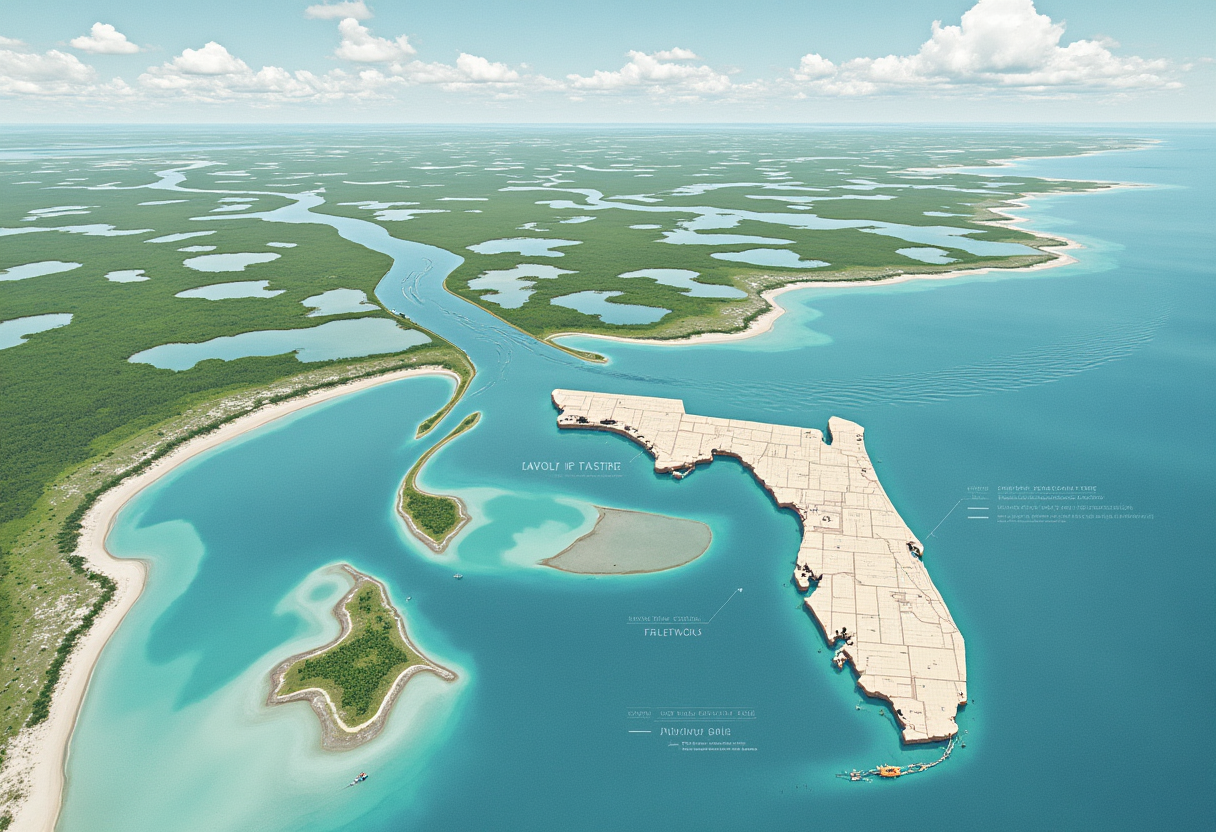
The Everglades is not a swamp, not a river, and not entirely solid. It’s a slow-moving sheet of water so wide and flat that early explorers assumed it was broken.
Water shapes Florida life. It determines:
Where cities exist
What animals wander into backyards
Why roads flood during “a little rain”
And because Florida is porous limestone underneath, water doesn’t just sit on the surface. It disappears underground, carving out caves, sinkholes, and surprise swimming pools in inconvenient places.
Sinkholes: Florida’s Trapdoors
Sinkholes deserve their own section because nowhere else treats them as casually.
A sinkhole happens when groundwater dissolves limestone below the surface until gravity decides enough is enough. Then the ground gives up.
Florida residents respond to sinkholes the way others respond to potholes.
Mild concern
Brief news coverage
Then everyone keeps driving
Sinkholes have swallowed:
Cars
Houses
A Wendy’s (moment of silence)
They are not rare events. They are geological reminders that Florida is held together by optimism and insurance policies.
The Everglades: Florida’s Slow-Motion Wilderness
The Everglades is one of the most misunderstood landscapes in America.
It is not a swamp.
It is not a jungle.
It is not safe to wander into with confidence.
The Everglades is a river that forgot how to hurry. It moves south at a pace best measured in inches per day. This creates a habitat where:
Alligators sunbathe casually
Birds migrate with enthusiasm
Mosquitoes operate like a small air force
limestone landmass
This ecosystem filters water for much of South Florida, supports rare species, and quietly ignores human attempts to control it.
Florida tried to drain it. Florida tried to redirect it. Florida learned the Everglades does not negotiate.
Florida’s Wildlife Has No Sense of Boundaries
Because Florida is warm, wet, and biologically generous, animals flourish. Then they wander.
It’s normal in Florida to encounter:
Alligators in golf course ponds
Manatees blocking boat ramps
Iguanas falling from trees during cold snaps
Panthers quietly judging you from a distance
Geography made this possible. Mild winters mean nothing ever fully leaves. Subtropical conditions invite species from the Caribbean, Central America, and anywhere else that doesn’t mind humidity.
Florida’s ecosystem is diverse, crowded, and slightly chaotic, much like a family reunion with reptiles.
Beaches Built From Other Places
Florida’s beaches are famous, but many are not entirely native.
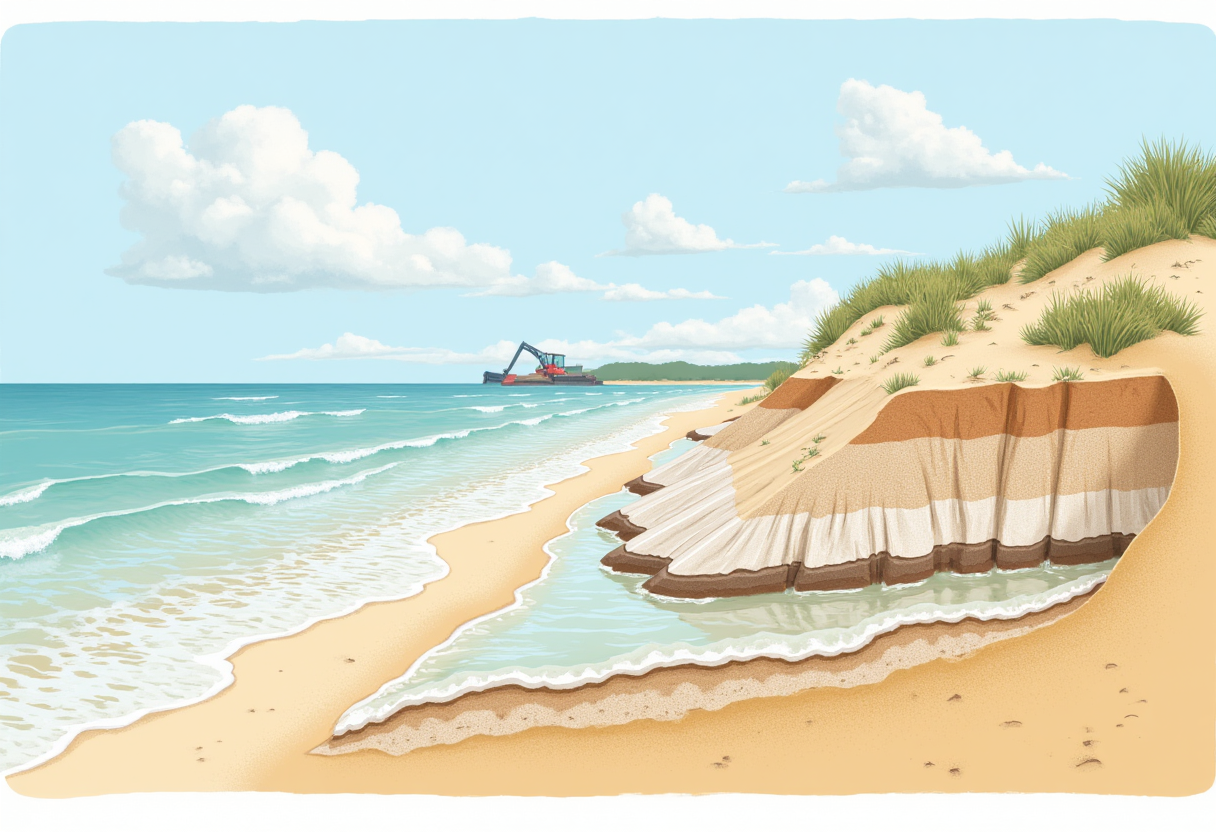
Sand moves. Currents steal it. Storms rearrange it. So Florida imports sand from offshore deposits, other states, and sometimes places no one wants to talk about too loudly.
This is called beach nourishment. It’s why beaches sometimes:
Look different year to year
Feel oddly coarse
Smell faintly of geology
Florida rebuilds beaches the way other states fix sidewalks. Constantly.
The Panhandle Is a Different Personality Entirely
Florida’s panhandle exists in a separate cultural and geological reality.
Red clay instead of limestone
Rolling hills instead of flat sprawl
Seasons that at least pretend to exist
This area is more closely related to Alabama and Georgia, both geologically and spiritually. Pines replace palms. Rivers move with intent. People say “y’all” without irony.
It’s still Florida, technically. But everyone agrees it feels like a cousin.
Why Geography Explains Florida Headlines
Florida geography produces:
Heat
Water
Wildlife
Flat land
Sudden storms
Add people, and outcomes get interesting.
When you see a headline involving:
An alligator
Flooded streets
A boat where it shouldn’t be
Someone underestimating nature
That’s geography doing character development.
Florida does not provide natural barriers. It offers opportunity. And temptation.
Conclusion: Florida Is Exactly Where It Meant to Be
Florida’s geography is not a mistake. It’s a personality.
Flat land invites expansion. Water invites movement. Heat invites creativity. Wildlife invites caution, occasionally ignored.
The state exists in a constant negotiation between land and sea, human and nature, permanence and erosion. Nothing here is entirely fixed. Everything shifts a little.
Florida is not stable. It is resilient.
And that’s why it keeps producing stories worth telling.
