Sinkholes: Florida’s Trapdoors
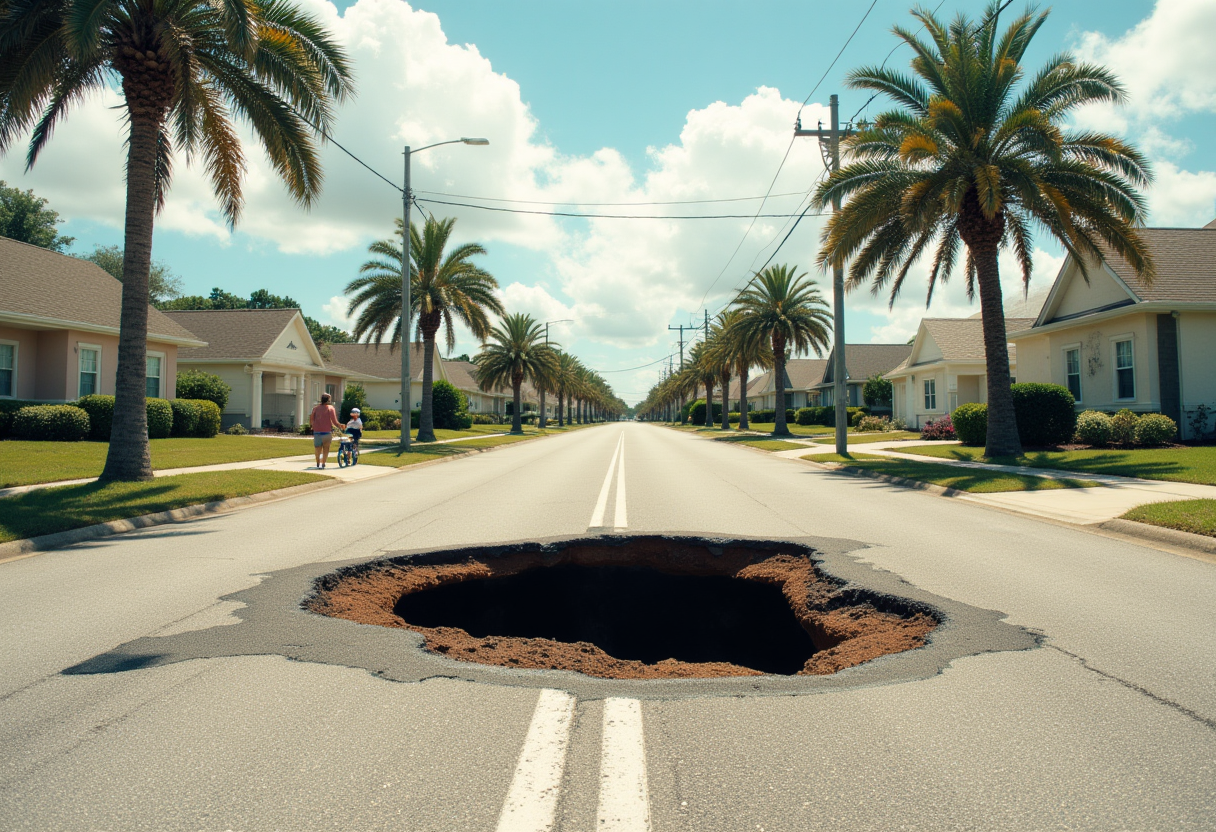
“Sinkhole in a Florida suburban neighborhood”
Florida has many natural features that inspire awe. Beaches. Wetlands. Storm systems with names.
Sinkholes inspire something else entirely. A quiet recalculation of one’s relationship with solid ground.
In most states, the earth is dependable. In Florida, the earth occasionally resigns without notice.
Sinkholes are not disasters here. They are interruptions. Geological pop quizzes. The state’s way of reminding everyone that the land beneath their feet is more of a suggestion than a promise.
To understand Florida, you must understand sinkholes. Or at least accept that they exist, could happen anywhere, and are not considered a reason to cancel plans.
What Is a Sinkhole (And Why Florida Has So Many)
A sinkhole forms when water dissolves limestone beneath the surface. Eventually, gravity looks down, sighs, and pulls everything inward.
Florida is made mostly of limestone. Limestone dissolves easily. Florida also has:
Constant rain
A high water table
Millions of people watering lawns with enthusiasm
This combination is less than ideal for structural certainty.
Over time, underground cavities grow. The surface thins. Then one day, a driveway, road, or living room decides it has had enough.
The result is a hole where something used to be.
Why Sinkholes Feel Personal in Florida Geography
Sinkholes do not roar. They do not warn. They do not give the courtesy of a countdown.
They simply appear.
This makes them feel intimate. Hurricanes arrive with press conferences. Sinkholes arrive with silence.
One moment, you have a backyard. The next moment, you have a feature.
Florida residents respond to this with a unique calm that confuses outsiders. The reaction usually follows this pattern:
Mild surprise
A phone call to insurance
A shrug
“Yeah, that happens.”
This is not denial. It’s experience.
Sinkholes and Suburbs: A Close Relationship
Florida suburbs are often built on land that looks stable, feels stable, and photographs well.
Underneath, however, the limestone is busy.
Subdivisions, roads, retention ponds, and swimming pools all change how water moves through the ground. Water finds new paths. Limestone obliges by dissolving.
Sinkholes have swallowed:
Cars
Portions of houses
Swimming pools
A Wendy’s (remembered fondly)
The fact that this list is delivered without panic tells you everything you need to know.
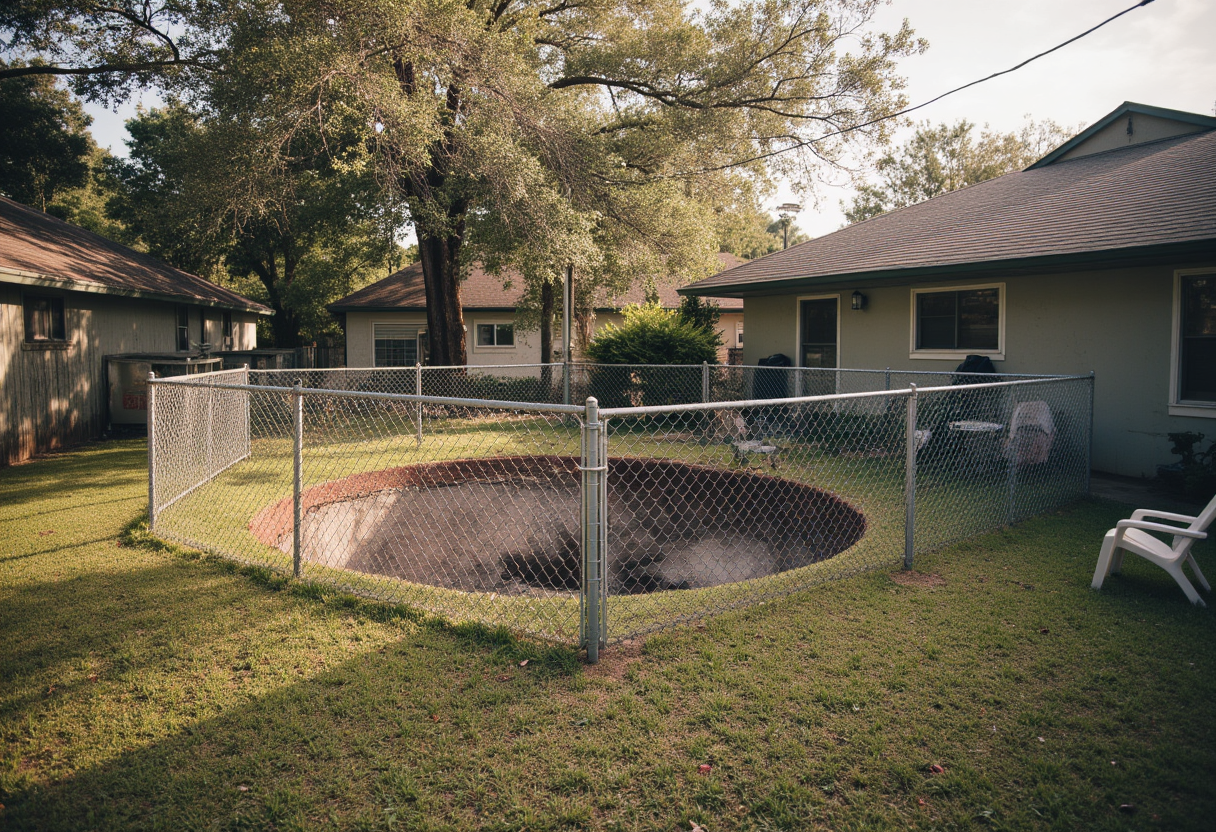
A Florida backyard with a fenced-off sinkhole
The Insurance Conversation Everyone Eventually Has
In Florida, homeowners insurance comes with footnotes. Sinkholes live in those footnotes.
Coverage varies. Definitions matter. Words like “catastrophic ground cover collapse” are used with impressive seriousness.
At some point, every Florida homeowner learns:
What is covered
What is excluded
What is “under review”
This knowledge is passed along casually, like advice about mosquitoes or roof age.
Sinkholes are not feared. They are budgeted for emotionally.
Sinkholes Don’t Discriminate
Sinkholes do not care if a structure is old or new. They do not respect zoning laws.
They appear in:
Parking lots
Golf courses
Highways
Living rooms
They are equal opportunity voids.
This randomness adds to their legend. A sinkhole is never someone else’s problem until it very suddenly is.
Why Florida Treats Sinkholes Casually
Part of Florida’s relaxed response comes from exposure. When something is common enough, it becomes background noise.
But there’s also perspective.
Florida deals with:
Hurricanes
Flooding
Extreme heat
Wildlife encounters
Compared to an approaching storm system, a hole that already happened feels manageable. It’s done. The surprise is over.
Now it’s just logistics.
The Science Behind the Shrug
Geologists understand sinkholes well. They are not mysterious. They are predictable in theory and unpredictable in location.
Florida’s limestone bedrock formed millions of years ago when the area was underwater. That porous foundation was never meant to support heavy development without consequences.
Sinkholes are not failures of nature. They are nature continuing to operate as designed.
Humans just built on top of it.
Sinkholes as Florida Folklore
Every Florida town has sinkhole stories.
Someone’s cousin lost a shed. A road collapsed overnight. A lake drained itself quietly into the ground and never came back.
These stories are told calmly, often mid-sentence, often without dramatic emphasis.
Sinkholes are not anomalies. They are anecdotes.
Living With Trapdoors
Florida residents adapt.
They learn to:
Watch for cracks
Pay attention to drainage
Accept that the ground has moods
Sinkholes become part of the mental map, filed somewhere between weather apps and wildlife warnings.
You don’t live in fear of them. You live in awareness.
Why Sinkholes Belong to Florida
Sinkholes match Florida’s personality.
They are:
Unexpected
Quietly dramatic
Mildly inconvenient
Entirely natural
They do not announce themselves. They do not apologize.
They appear, do their thing, and become part of the story.
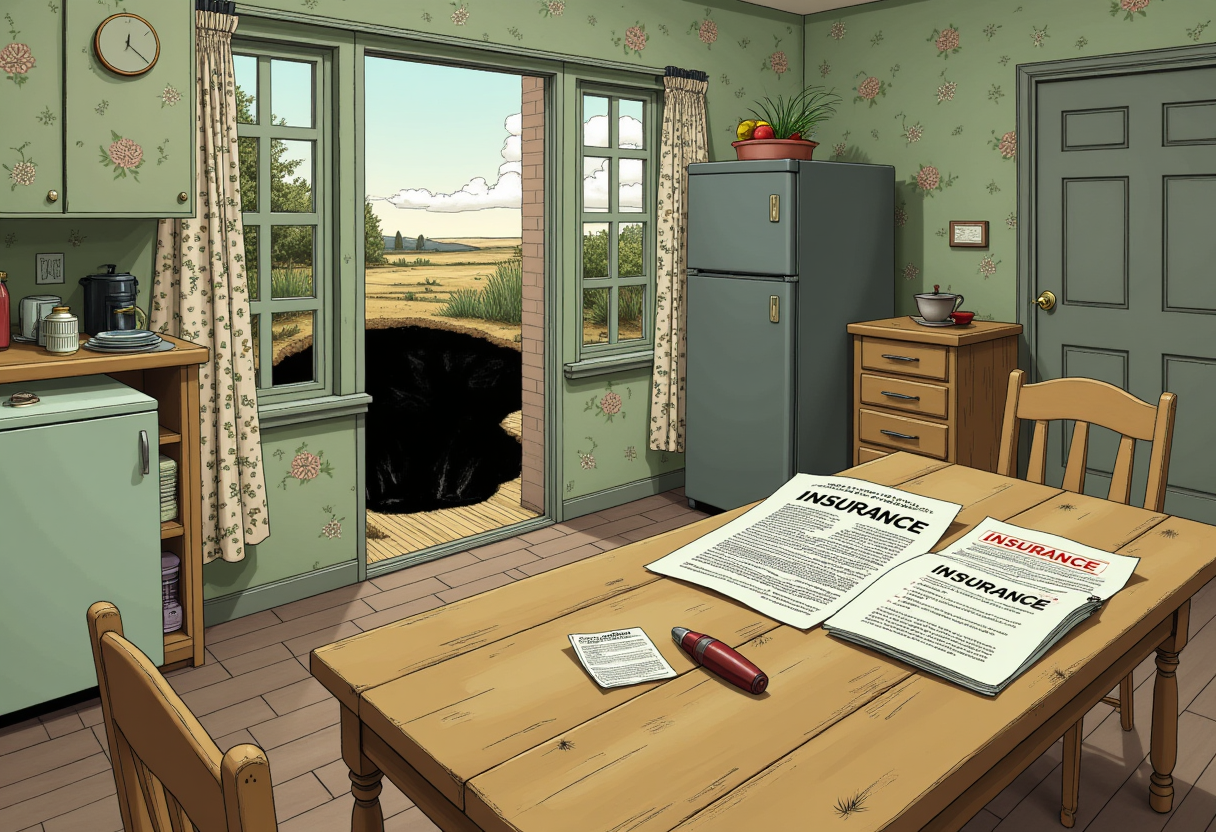
A conceptual illustration of paperwork labeled “Insurance”
Conclusion: Solid Ground Is a Concept
In Florida, “solid ground” is aspirational.
Sinkholes are reminders that stability is relative, permanence is temporary, and the land itself participates in Florida’s ongoing unpredictability.
They are not flaws. They are features.
And like most Florida features, they come with a story, a shrug, and a surprisingly quick return to normal life.
Stay Unwritten. Share the story.
— Earl Lee
