Where Dolphins Still Teach Us How to Be Human
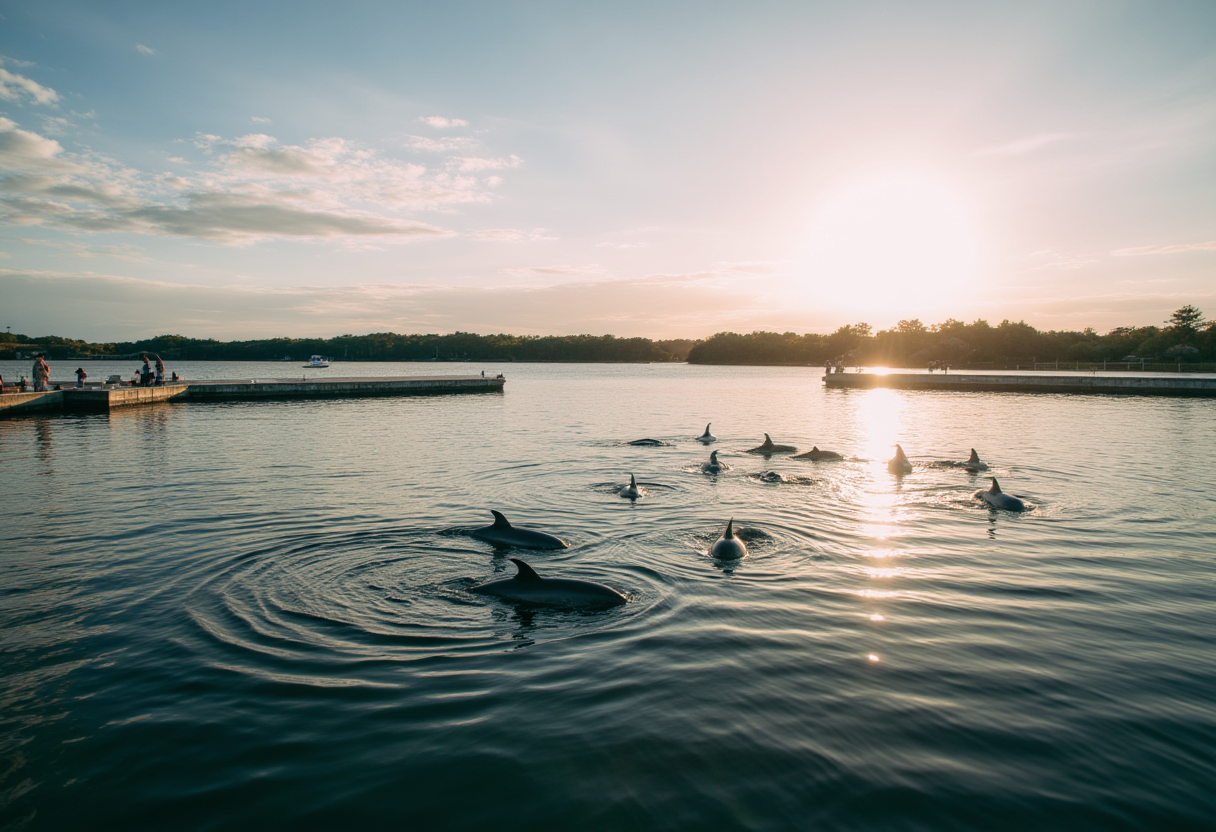
Dolphin lagoon at Dolphin Research Center
Two Florida Keys places that shaped a lifetime
There are places you visit once.
And there are places that quietly adopt you.
Long before smartphones documented every sunset and long before the Overseas Highway became a ribbon of rental cars and GPS directions,
I began making a pilgrimage south. Late 1980s. Windows down.
Salt air slipping through the car before you even crossed the Seven Mile Bridge.
Somewhere between turquoise water and roadside fruit stands,
the Florida Keys stopped feeling like a destination and started feeling like a memory.
Two stops along that road stayed with me more than any postcard view.
The first sits on Grassy Key.
The second farther south in Key Largo.
Both revolve around dolphins.
But neither is really about entertainment.
They are about connection.
The Place Where Flipper Once Lived
The Dolphin Research Center does not announce itself loudly.
You turn off the highway, palms lean overhead, and suddenly the noise of U.S. 1 fades into the sound of moving water and whistles carrying across lagoons.
The center officially opened as a nonprofit in 1984, but its story reaches further back into Florida folklore.
The property began life in 1958 as Santini’s Porpoise School, one of the earliest dolphin training facilities in the country.
And yes, this is where Mitzi lived.
Mitzi was the dolphin who played Flipper in the original television series and films that helped define America’s fascination with intelligent marine life.
Long before conservation messaging became mainstream,
millions of viewers watched a dolphin portrayed not as a spectacle, but as a partner.
After several ownership changes, the facility evolved into what it is today thanks to Jayne Shannon-Rodriguez and Armando “Mandy” Rodriguez, who reshaped it with a different mission.
Research.
Education.
Rescue.
Not performance.
Walking through the center feels different from traditional marine parks.
The lagoons are natural seawater environments connected to Florida Bay.
Trainers speak more like teachers than entertainers. Visitors lean quietly over docks instead of crowding stadium seating.
You begin to notice something subtle.
The dolphins are participating.
Not performing.
Many of the animals here could never survive in the wild due to injury or human interaction.
Some were rescued after entanglements. Others were born under professional care. Every dolphin has a biography,
and staff members tell those stories the way historians talk about important figures.
Because, in a way, they are.
For someone visiting since the late ’80s, the change over time becomes visible. Science replaced showmanship.
Conservation replaced novelty. The experience matured alongside the visitors who kept returning year after year.
Including me.
Growing Up Along the Docks
When you return to a place across decades, you measure time differently.
You notice which buildings stayed the same.
Which dolphins grew old?
Which trainers became directors?
You realize you grew older, too.
Trips that once felt like family vacations slowly turned into personal rituals.
Stop the car.
Walk the docks. Watch dolphins glide beneath the surface like living shadows shaped from sunlight.
There is a calm there that feels almost instructional.
Dolphins do not rush.
They surface, breathe, disappear, and return again, perfectly comfortable with rhythm instead of urgency.
Watching them has always felt like being reminded that intelligence does not require noise.
Sometimes learning happens quietly.
The Keys Learn to Rescue Their Own
Farther south in Key Largo, another chapter of dolphin history unfolded.
What began decades ago as Dolphins Plus evolved into something far more urgent and necessary.
Today, the organization operates as Dolphin Life,
a group focused not on interaction but survival.
Its roots trace back to 1987, when a small volunteer response team known as the “Pod Squad” formed to help stranded dolphins and whales throughout the Florida Keys.
At the time, organized marine mammal rescue in the region barely existed.
If an animal were stranded, survival often depended on whoever happened to show up first.
The Pod Squad changed that.
Over the years, the effort expanded into the Keys’ first coordinated marine mammal response organization,
handling strandings, medical emergencies, disentanglements, and rehabilitation.
And in April 2025, that mission took a major leap forward.
Ground broke on The Protect Center Whale & Dolphin Hospital in Islamorada,
a dedicated facility designed specifically for rescue, treatment, and recovery of injured marine mammals.
It represents something remarkable.
Florida is learning from its past.
Tourism Meets Responsibility
The Florida Keys have always balanced two identities.
Paradise and pressure.
Millions visit each year seeking clear water and close encounters with wildlife. But increased boat traffic,
fishing gear, pollution, and coastal development also create risks for the animals that define the region.
Organizations like Dolphin Research Center and Dolphin Life exist in that narrow space between fascination and responsibility.
They remind visitors that admiration carries obligation.
A dolphin struck by a propeller.
A calf separated from its pod.
An animal weakened by environmental stress.
These are not rare stories anymore.
They are ongoing ones.
And behind every rescue headline are trained responders launching boats at sunrise,
veterinarians working through heat and storms, and volunteers who chose stewardship over convenience.
Why These Places Matter
People often ask why certain destinations stay meaningful long after flashier attractions appear.
The answer is simple.
Authenticity ages well.
Neither of these facilities promises spectacle. They offer understanding.
They allow visitors to witness intelligence that evolved long before highways crossed the Keys.
Standing on those docks today feels surprisingly similar to standing there decades ago.
Same water.
Same horizon.
Same quiet moment when a dolphin surfaces nearby and locks eyes with you for half a second longer than expected.
It is impossible not to feel noticed.
And maybe evaluated.
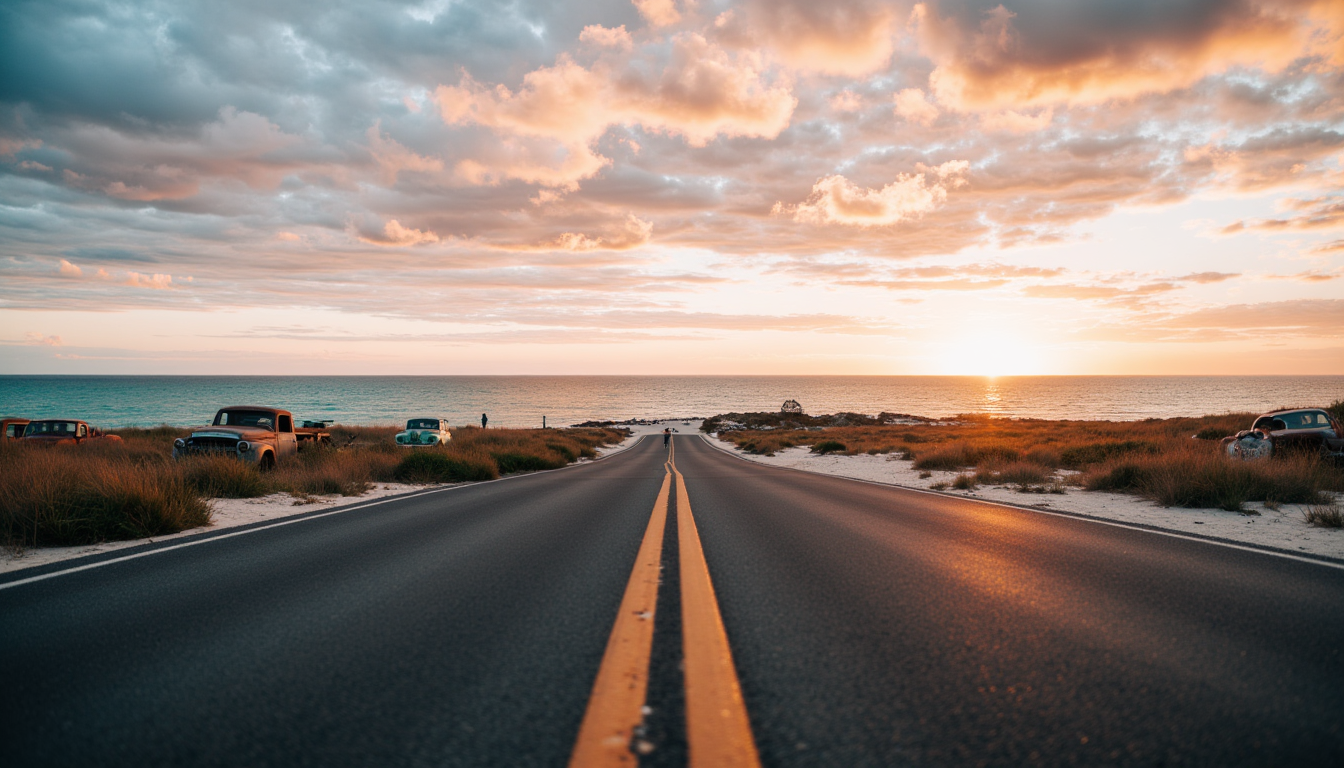
a driving view along the Overseas Highway in the Florida Keys, with the sun setting low on the horizon, casting a warm, golden glow across the landscape.
Returning Again and Again
Since the late 1980s, every trip south has included at least one of these stops. Sometimes both.
Life changes. Careers shift. Families grow. Florida itself is constantly.
But Grassy Key and Key Largo remain emotional landmarks along the Overseas Highway.
Proof that some places do more than entertain us.
They shape us.
They teach patience. Curiosity. Respect for creatures sharing the same fragile coastline.
And they remind us that conservation is not an abstract idea debated somewhere else.
It happens here.
Dock by dock. Rescue by rescue. Generation by generation.
“We specialize in the Florida you won't find on a postcard.
Keeping these stories 'unwritten'—but not forgotten—takes plenty of caffeine and even more bug spray.
If you loved today's tale, you can buy me a brew to help keep the lights on. I'm glad you're here for the
Ride.
The Real Legacy of the Keys
The Florida Keys are famous for sunsets, bridges, fishing stories, and roadside legends.
But beneath all of that lives another legacy.
Care.
Care for ecosystems still recovering.
Care for wildlife adapting to human presence.
Care for the ocean that makes Florida possible in the first place.
The dolphins are ambassadors, yes.
But they are also mirrors.
How we treat them says something about who we are becoming.
Every time I leave the Keys and head north again, I carry the same feeling I first had decades ago.
That somewhere between Grassy Key and Key Largo, Florida, still remembers how to coexist with the wild instead of conquering it.
And that may be the most important lesson the dolphins ever taught.
Earl Lee
Florida Unwritten
