The Emerald Tide: Embracing Nature's Green Superfood
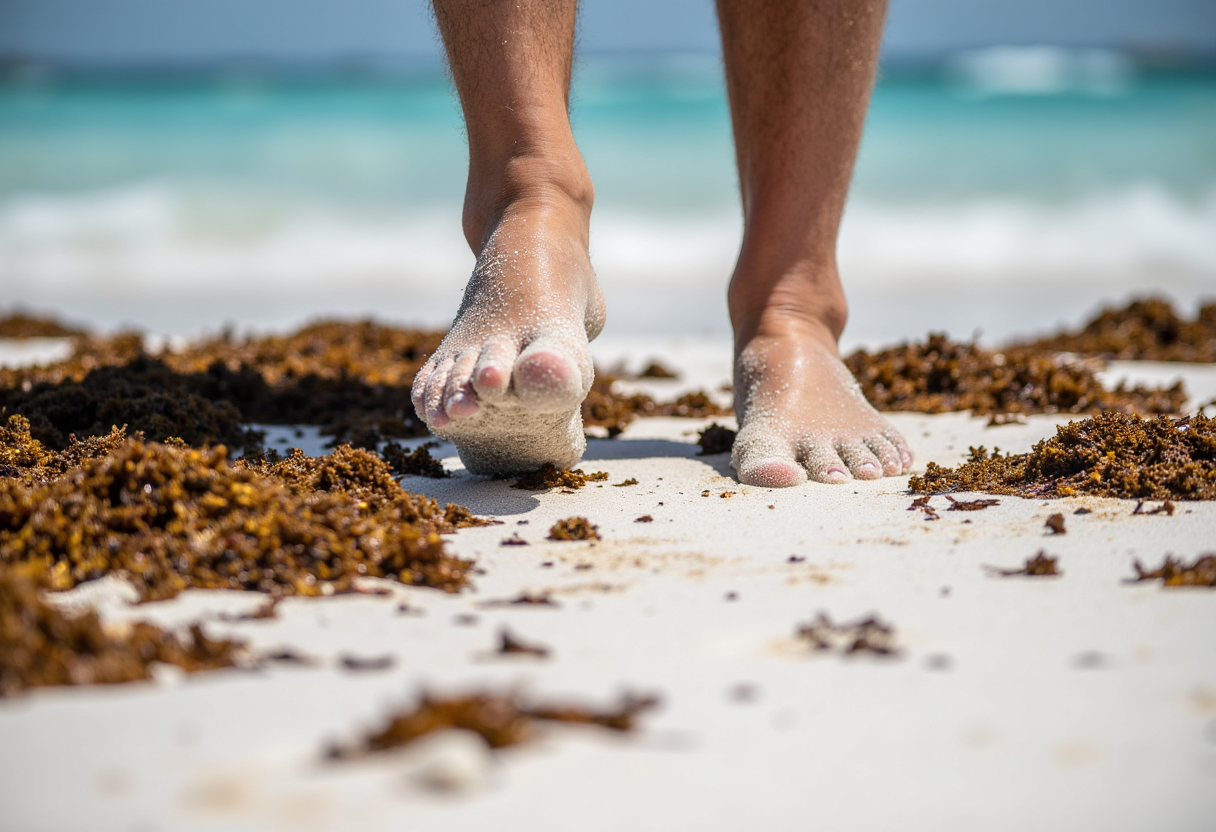
The Sargassum Shuffle
We've all done the "Sargassum Shuffle" to avoid it. But what if the squishy stuff we're dodging on the beach is actually the ocean's greatest gift?
Earl Lee
Florida Unwritten
Published March 19, 2026 · 8 min read
The wrack line along the Space Coast, where the ocean delivers its daily harvest.
The smell hits you before your toes even touch the sand. It’s that unmistakable, sea salt perfume of the Florida coast after a summer squall—a pungent mix of salt spray,
crushed shells, and the slightly sulfurous tang of decaying marine life. For most tourists visiting our sun-drenched peninsulas, this scent is the first warning sign.
The second is the visual: a thick, tangled brown-and-green ribbon stretching for miles along the high-tide line.
They call it the wrack line. And if you grew up in Florida, you know exactly what it means. It means it’s time to perform the ancient, undignified dance known as the "Sargassum Shuffle."
You know the move. It involves high-stepping like a startled blue heron, arms flailing for balance, eyes darting frantically to find a patch of pristine white quartz sand amidst the squishy, alien-looking mounds of seaweed.
Heaven forbid a stray frond brushes against your ankle in the surf—that’s an immediate, involuntary shriek, followed by a frantic scramble to dry land. We are taught from a young age that the beach is for lounging,
And the seaweed is an uninvited guest crashing our tropical paradise.
But lately, as I’ve traded my neon-pink boogie board for a deeper appreciation of the wild, untamed Florida, I’ve realized something profound.
We’ve got it all wrong. That "gross" stuff we’ve been dodging our whole lives?
It’s not a nuisance. It’s the ocean’s lifeblood. And more surprisingly, it’s one of the most potent, nutrient-dense superfoods on the planet.
"We are taught that the beach is for lounging, and the seaweed is an uninvited guest. But we've got it all wrong."
The Nostalgia of the Wrack Line
Before we talk about eating it, we have to talk about living with it. My childhood memories of St. Pete Beach in the late 1990s are inextricably linked to seaweed.
I remember my grandfather, a man whose skin was the texture and color of an old leather wallet, sitting in a scratchy nylon beach chair.
While my brother and I complained about the "yucky stuff" ruining our sandcastle real estate, my grandfather would just laugh.
"That's the grocery store for the birds, kiddo," he’d say, pointing a calloused finger at the sandpipers darting in and out of the tangled mess.
He was right, of course. The wrack line is a bustling metropolis. It provides shelter for ghost crabs, a buffet for shorebirds,
and crucial nutrients that eventually break down and stabilize the very dunes that protect our coastal homes from hurricanes.
Without seaweed, Florida’s beaches would literally wash away. It’s a humbling thought. The very thing we pay resorts to rake away each morning is the glue holding our state together.
What Makes Seaweed Nature's Green Superfood?
So, how did we go from viewing seaweed as beach litter to recognizing it as a culinary marvel?
The truth is, the rest of the world has known about this for centuries.
From the rich kelp forests of Japan to the dulse-harvesting shores of Ireland, coastal communities have long relied on marine algae for sustenance.
It’s only here, in the land of drive-thru burgers and imported kale, that we’ve ignored the bounty washing up at our feet.
Nutritionally speaking, seaweed is a heavyweight champion.
Because it absorbs nutrients directly from the ocean water, it is packed with a concentration of minerals that land-based vegetables simply cannot match.
We’re talking about massive doses of iodine (crucial for thyroid health), calcium, magnesium, iron, and a full spectrum of vitamins including A, C, E, and K.
But the real magic lies in its unique compounds.
Seaweed contains fucoidans and alginates—complex carbohydrates that have been shown in studies to reduce inflammation, support gut health, and even help regulate blood sugar.
It’s also one of the few plant-based sources of Vitamin B12 and Omega-3 fatty acids. Move over, spinach. The ocean has you beat.
Foraging the Florida Coast: Sea Lettuce and Beyond
Now, a gentle disclaimer: I am not suggesting you march down to Miami Beach, scoop up a handful of brown, sun-baked Sargassum that’s been sitting next to a discarded flip-flop,
and toss it into your morning smoothie. Please, do not do that.
Foraging for seaweed requires a bit of knowledge, a lot of respect, and a keen eye for water quality.
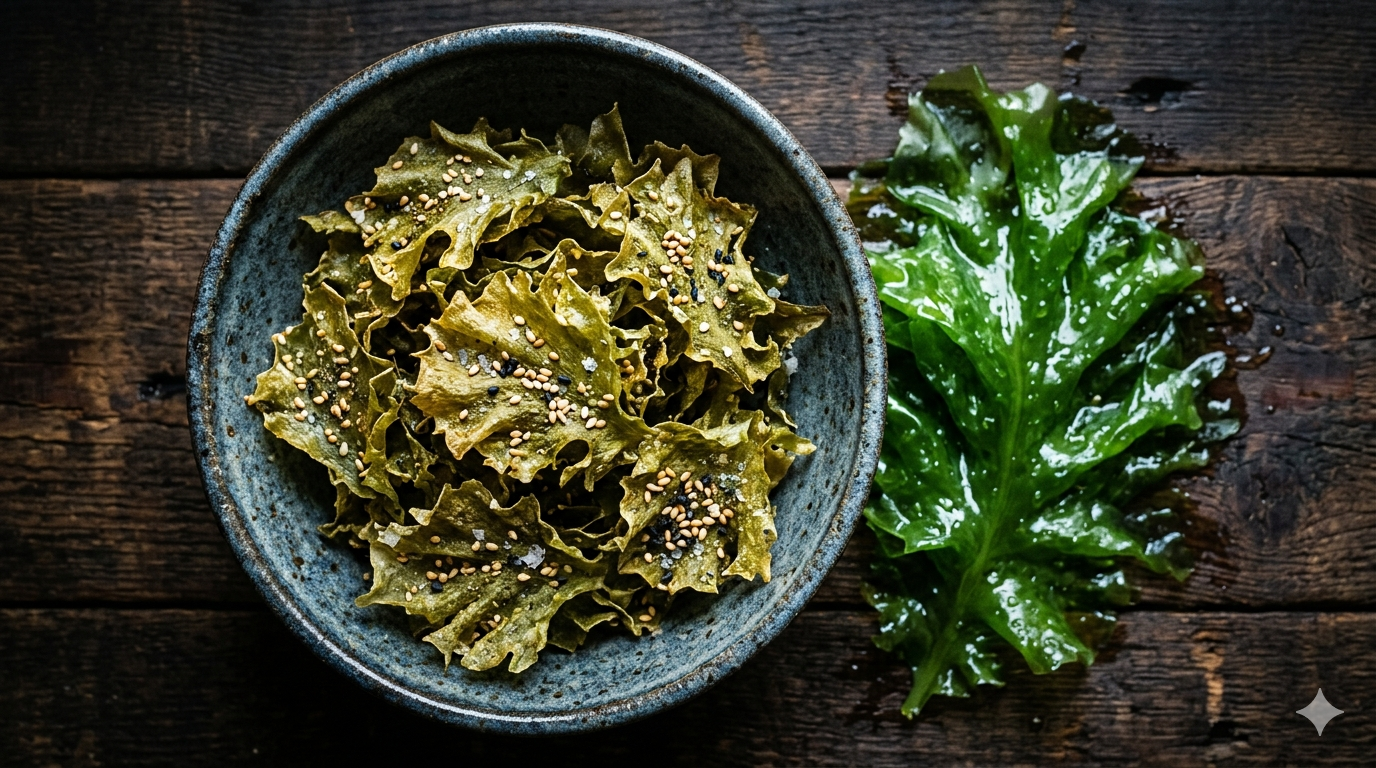
In Florida, our most accessible and delicious edible seaweed is Ulva lactuca, commonly known as Sea Lettuce. True to its name, it looks like vibrant, translucent green leaves of butter lettuce undulating in the shallows.
You can often find it clinging to rocks, oyster beds, or mangrove roots in the Indian River Lagoon or along the Gulf Coast.
When foraging, the golden rule is to harvest only from pristine, unpolluted waters (check local advisories!), and to only take what is actively growing and attached—never the dead stuff washed up on the sand.
Snip the top two-thirds of the plant with scissors, leaving the "holdfast" intact so it can regenerate. It’s the ultimate sustainable harvest.
From Ocean to Oven: The Kitchen Experiment
My first foray into cooking with Florida sea lettuce was, admittedly, a comedy of errors.
I brought home a bucket of vibrant green fronds, feeling very much like a pioneer woman of the sea. I rinsed it in the sink, which immediately made my kitchen smell like a low-tide pier in August.
My golden retriever, usually a garbage disposal on four legs, took one sniff and left the room in disgust.
But I persevered. I patted the delicate leaves dry, tossed them lightly with toasted sesame oil, a pinch of sea salt, and a dash of chili flakes, and spread them on a baking sheet.
Ten minutes in a 300-degree oven later, the alchemy occurred.
The slightly slimy texture vanished, replaced by a shatteringly crisp, paper-thin chip. I took a tentative bite.
It was a revelation. It was salty, deeply savory, and packed with that elusive "umami" flavor that makes you immediately reach for another.
It tasted like the ocean, but in the best possible way—clean, bright, and intensely satisfying. I ate the entire tray standing over the stove.
Since then, I’ve gotten bolder. I’ve chopped fresh sea lettuce into vibrant, sesame-ginger salads. I’ve dried it and ground it into a nutrient-dense seasoning powder to sprinkle over popcorn and avocado toast. I’ve even added it to hearty coastal stews, where it acts as a natural thickener and flavor enhancer.
The Beginner's Seaweed Seasoning
Want to dip your toes in without a full foraging expedition? Try making a simple coastal sprinkle.
1 cup dried sea lettuce (or store-bought kelp flakes)
2 tbsp toasted sesame seeds
1 tsp flaky sea salt
Pulse in a blender until coarse. Sprinkle on everything.
Embracing the Messy Magic
Living in Florida means accepting that nature is rarely neat. It’s humid, it’s buggy, and yes, sometimes the beaches are covered in a tangled,
smelly mat of marine vegetation. But that messiness is exactly what makes this peninsula so vibrantly, stubbornly alive.
Learning to see seaweed not as a nuisance, but as a vital ecosystem and a nutritional powerhouse, changes how you experience the coast. It shifts the perspective from consumer to participant.
So, the next time you find yourself at the beach after a storm, and you see that dark green line stretching down the shore, don't just do the Sargassum Shuffle.
Pause for a moment. Take a deep breath of that briny air. Marvel at the tiny crabs scurrying through the fronds.
Recognize that you are looking at the lungs of the ocean, the foundation of the food web, and perhaps, the secret ingredient to your next great meal.
Florida’s true beauty isn't found on a manicured, raked resort beach. It’s found in the wild, salty, emerald tide.
If the stories made you smile, learn something new, or remember old Florida, you can support the project with a small coffee.
Every cup helps keep the stories coming.
Join the Unwritten Story
Have you ever tried foraging on the Florida coast, or do you have a favorite seaweed recipe?
Drop a comment below, or subscribe to get more hidden Florida gems delivered to your inbox.
Subscribe to Newsletter Leave a Comment
Florida Unwritten
