
The Coast Guard Rescue That Shouldn’t Have Been Possible
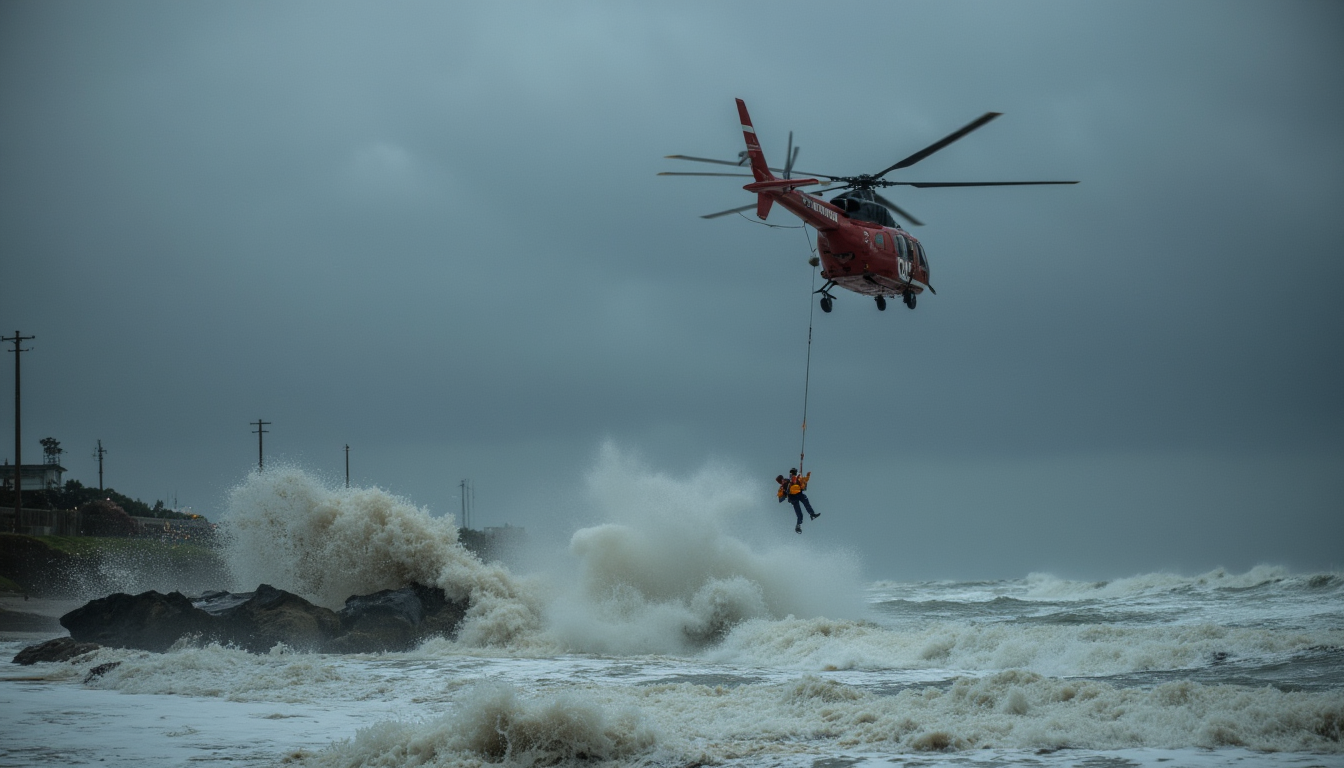
The Hoist
A True Florida Storm Story of Courage, Chaos, and a Miracle in the Eyewall
When a hurricane hits Florida, most people hunker down, board up, or get out.
But there’s one group that does the opposite — they fly straight into the storm.
This is the story of a rescue that should’ve been impossible: a Coast Guard crew who launched into winds no helicopter was built to handle, searching for a family trapped in a house that was already underwater.
It happened during a storm that tore roofs off homes, snapped power poles like toothpicks, and pushed the Gulf inland for miles.
But what people remember most isn’t the destruction — it’s the rescue that defied every rule, every warning, and every limit of human endurance.
The Call No Crew Wants to Hear
The Coast Guard station had been running nonstop for 36 hours. Calls were coming in faster than they could answer them — boats overturned,
roofs gone, people stranded in attics. But one call cut through the chaos.
A family of four was trapped in a one‑story home as storm surge rose around them. The father had climbed onto the kitchen counters,
holding his two children above the water. The mother was clinging to a ceiling beam. The water was still rising.
The problem?
They were directly under the eyewall — the most violent part of the storm.
No helicopter should’ve been in the air.
No pilot should’ve even considered it.
But the crew launched anyway.
Into the Teeth of the Storm
The HH‑60 Jayhawk lifted off into winds that shoved the aircraft sideways before it even cleared the runway.
Rain hit the windshield so hard it sounded like gravel. Lightning flashed in every direction.
The pilot later said it felt like “flying a brick through a blender.”
Visibility: zero.
Wind: over 100 mph.
Fuel: limited.
Time: running out.
The crew flew low, skimming over flooded neighborhoods where street signs were underwater and cars floated like toys.
They followed the GPS coordinates until the signal began to flicker — the storm was scrambling everything.
Then the radio crackled:
“We’re losing the beacon. We’re flying blind.”
But they kept going.
The House That Shouldn’t Have Been There
When they reached the neighborhood, nothing looked like the map.
Houses were gone.
Trees were gone.
Landmarks were gone.
But then the flight mechanic spotted something — the faint outline of a roof barely above the waterline.
“That’s them,” he said.
“It has to be.”
The pilot hovered as best he could, fighting winds that kept trying to flip the helicopter.
The rescue swimmer prepared to drop, but the downdraft from the rotors churned the water violently.
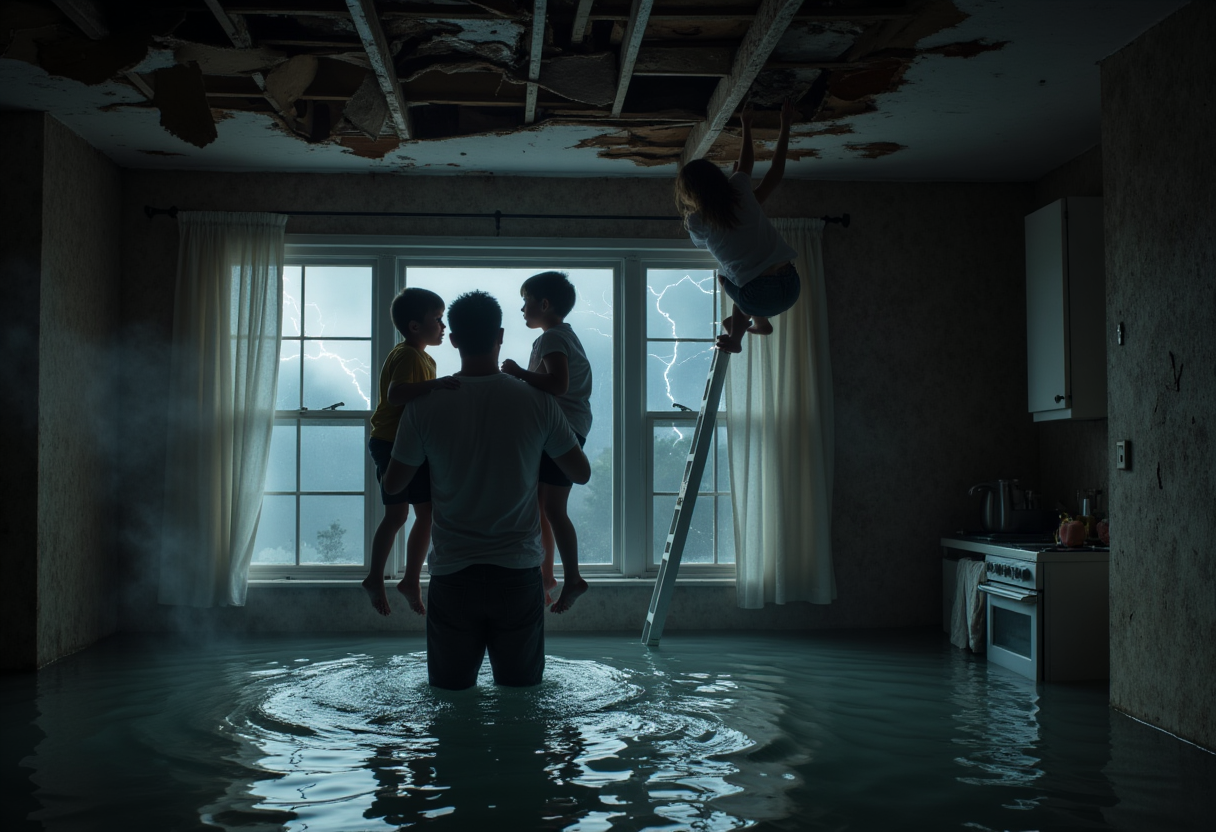
A father holding two children above rising floodwater
Fuel gauge: near empty.
Visibility: nonexistent.
Wind: relentless.
The pilot aimed for the nearest safe landing zone — a high school football field that was now half underwater.
They touched down hard, skidding across the turf.
The engines sputtered.
Then died.
They had made it with less than a minute of fuel left.
The family survived.
The crew survived.
And the rescue became one of those stories whispered in Coast Guard circles — the kind that shouldn’t have been possible,
but happened anyway.
Why This Rescue Still Matters
Florida storms reveal the worst of nature — but also the best of people.
This rescue wasn’t about luck.
It was about:
• training
• instinct
• courage
• and a refusal to give up
The Coast Guard doesn’t call itself heroes.
But Florida does.
Because when the wind howls, the surge rises, and the world goes dark — they’re the ones who fly toward the danger.
Some storms take everything.
Some storms reveal everything.
And some storms show us what courage really looks like.
“Florida Unwritten runs on stories, sunburn, and caffeine.
If you enjoyed this, you can buy me a coffee. No pressure.”
Earl Lee
