Florida’s Unexpected GeographySinkholes, Springs,
Most people think they know Florida
They picture beaches, palm trees, theme parks, and maybe a pelican stealing a sandwich when nobody’s looking. But beneath the sunscreen and souvenir shops lies a landscape that feels less like a flat peninsula and more like a collection of geological plot twists.
Florida has the only Everglades on Earth. It has ancient coral reefs that became islands.
It has crystal-clear springs that seem imported from another planet. And it has sinkholes that occasionally decide a perfectly good front yard would look better as a crater.
For a state that appears simple from 30,000 feet, Florida is wonderfully weird once you start looking closer.
The Everglades: A River That Forgot How to Hurry
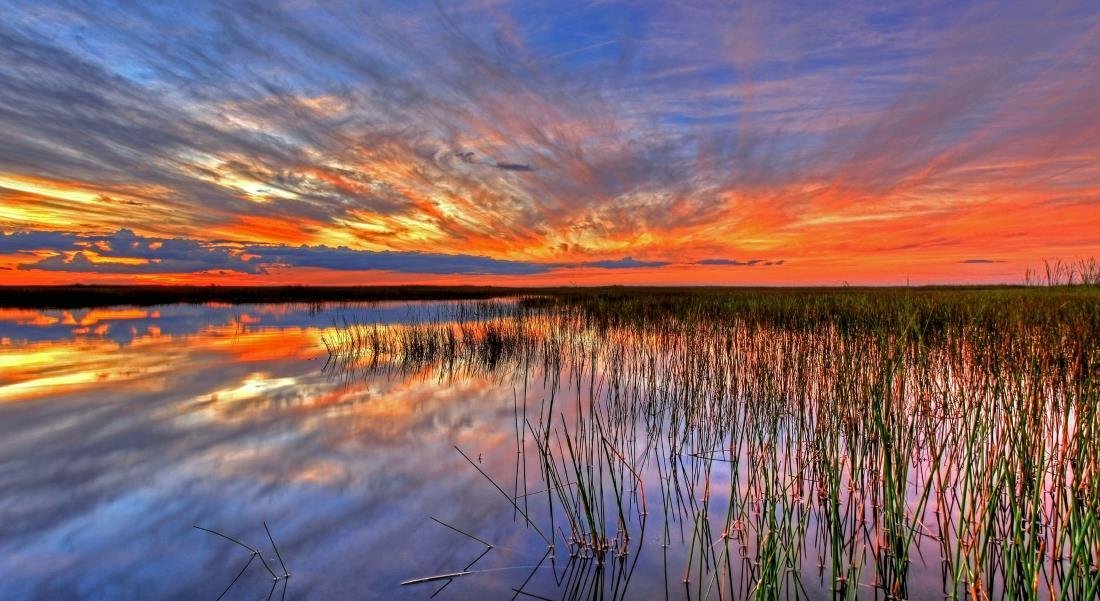
Everglades
Let’s start with the heavyweight champion of Florida geography.
The Everglades is not a swamp in the traditional sense. It is a slow-moving river, often described as a “river of grass,” flowing from Lake Okeechobee toward Florida Bay. Water moves through this landscape so gradually that a patient heron could probably walk beside it and keep pace.
What makes the Everglades truly remarkable is that it exists nowhere else on Earth. This vast wetland supports alligators, crocodiles, manatees, panthers, wading birds, and countless other species that depend on its delicate balance of fresh and salt water.
Old Florida families have long treated the Everglades with a mixture of respect and caution. It is beautiful, mysterious, and fully capable of reminding humans that we are not the ones in charge.
Spend an evening there, and you’ll understand why so many local stories begin with the phrase, “You won’t believe what happened out in the Glades…”
Sinkholes: Florida’s Surprise Remodeling Program
Then there are the sinkholes.
Florida sits on a foundation of limestone, a rock that slowly dissolves when exposed to slightly acidic groundwater. Over thousands of years, underground cavities form. Most of the time they remain hidden. Occasionally, gravity decides the suspense has gone on long enough.
That’s when a sinkhole appears.
Some are small enough to ignore. Others are large enough to make the evening news. A few have swallowed cars, swimming pools, and parts of houses, creating stories that get retold at bait shops and backyard barbecues for decades.
What many visitors don’t realize is that some of Florida’s most beautiful lakes began as sinkholes. The same geological process that creates dramatic collapses can also create stunning natural basins filled with clear water.
In true Florida fashion, a feature that sounds alarming often ends up becoming a scenic attraction.
The Big Bend: Where the Coastline Changes Its Mind
Ask someone to describe Florida’s Gulf Coast, and they’ll usually imagine white-sand beaches stretching in a neat line. Then they visit the Big Bend.
Here, the shoreline bends dramatically, creating one of the most productive estuarine ecosystems in the country. Saltwater from the Gulf mixes with freshwater flowing from rivers and springs, producing nutrient-rich habitats that support fish, oysters, scallops, and an astonishing variety of birds.
The Big Bend feels different from much of Florida. The development thins out. The marshes widen. The sunsets seem to take their time.
It’s the kind of place where you can paddle a kayak through quiet tidal creeks in the morning and watch dolphins feeding near the shore in the evening. Locals often joke that the Big Bend is what Florida looked like before everyone started putting gift shops every hundred yards.
The Florida Keys: Ancient Coral Reefs Turned Into Islands
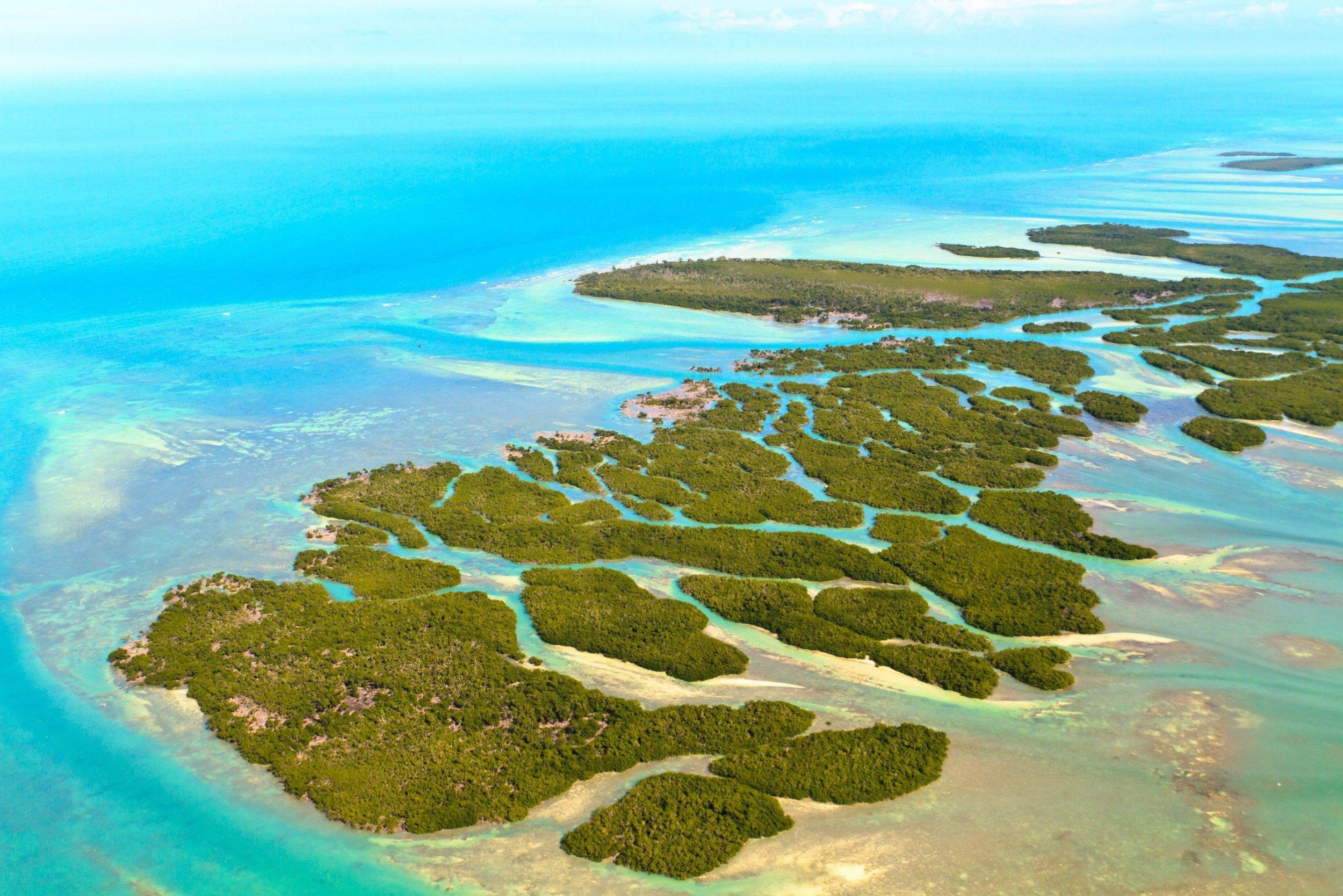
Perhaps the biggest geographical surprise is that the Florida Keys were not built from ordinary sand.
They were formed from ancient coral reefs.
Millions of years ago, much of South Florida lay beneath a shallow tropical sea. Coral organisms built massive reef structures that eventually became exposed as sea levels changed. Today, those fossilized reefs form the backbone of islands stretching from Key Largo to Key West.
This geological history explains why the Keys feel so different from the mainland. The water is clearer, the marine life is richer, and the underwater world remains the main attraction.
Snorkeling over a living reef in the Keys is a little like swimming through Florida’s prehistory. Bright corals, tropical fish, sea fans, and sponges create a landscape that seems almost impossible to belong to the same state known for cattle ranches and orange groves.
Florida’s Springs: Windows Into the Underground
If the Everglades are Florida’s slow river, the springs are its hidden plumbing.
More than 700 freshwater springs bubble up from the Floridan Aquifer, delivering crystal-clear water at a constant temperature of around 72 degrees year-round. Places like Wakulla Springs and Ichetucknee Springs have become famous for swimming, tubing, kayaking, and wildlife viewing.
But these springs are more than recreational spots.
For centuries, Indigenous peoples, including the Seminole Tribe of Florida, lived near these reliable sources of fresh water. Early settlers gathered there as well. The springs became meeting places, trading locations, and landmarks long before Florida had highways or theme parks.
Slip into one of these clear pools and you can often see straight to the sandy bottom dozens of feet below. It feels less like swimming in a lake and more like floating in liquid glass.
The Florida Most Visitors Never Expect
What makes Florida fascinating isn’t just that it has beaches. Plenty of places have beaches.
It’s that the same state contains:
A world-famous wetland found nowhere else
An underground landscape capable of creating sinkholes overnight
A remote coastal wilderness in the Big Bend
Islands built from ancient coral reefs
Hundreds of crystal-clear springs connected to a vast aquifer
That’s a remarkable amount of geological variety packed into one peninsula.
Florida has a habit of disguising itself. At first glance it looks flat and simple. Spend a little time exploring backroads, paddling quiet marshes, diving into springs, or wandering the Keys, and the disguise falls away.
Suddenly you realize this isn’t just a beach state.
It’s a place where rivers crawl, coral becomes land, fresh water erupts from underground caverns, and the earth occasionally opens up just to keep everybody paying attention.
And honestly, that feels like the most Florida thing of all.
Thanks for spending part of your day with Florida Unwritten.
If this story felt familiar, salty, strange, or a little too Florida to explain at dinner, share it with someone who’d understand.
👉 More stories live at https://surl.lu/uilyob📬Subscribe for weekly Florida stories, coastlines, wildlife, weirdness, and the kind of local moments tourists usually miss.
Florida Unwritten is a labor of love dedicated to the places the brochures forget.
Earl lee
Florida Unwritten
