The River of Grass: 10 Surprising Facts About the Everglades
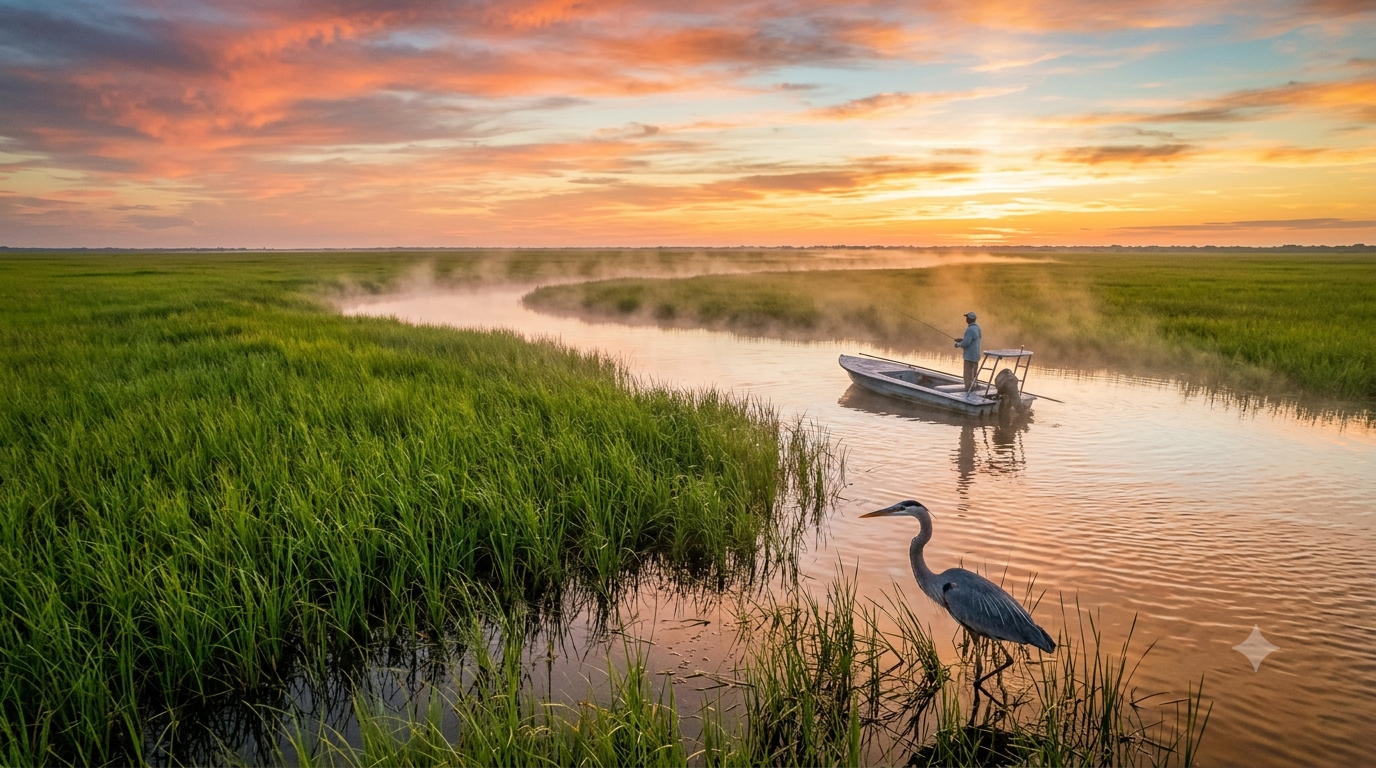
golden sunrise over the vast, untouched expanse of the Florida Everglades
If you haven’t spent a sunrise sitting in a skiff in the middle of the River of Grass, listening to the world wake up—or more accurately, watching it prepare for battle—you haven't truly seen the Everglades.
Most people see the "glades" as a stagnant, mosquito-ridden obstacle on the way to the Keys. But to those of us who carry a fishing rod like a rosary, this is our cathedral.
The Everglades isn't just a swamp; it’s a sprawling, humid, high-stakes theater that makes your favorite prime-time soap opera look like a lullaby.
Here, the drama is real, the predators are ancient, and the casting call is always open.
The Cathedral of Sawgrass
There is a specific kind of silence that happens just before a strike. It’s a holy, heavy quiet.
You’re anchored in a shallow, tea-colored run, the sawgrass whispering secrets against the hull of your boat.
The air is so thick with humidity you could drink it, and the mosquitoes are providing a steady, high-pitched soundtrack to your meditation.
In this moment, fishing transcends the sport. It becomes a religion. It’s an exercise in faith—believing in the unseen presence beneath the lilies, trusting the rhythm of the cast, and surrendering to the patience required to be a disciple of the water.
You aren't just fishing for bass or snook; you’re engaging in a sacred, primal dialogue with the wilderness. When that line finally goes taut, it’s not just a catch—it’s an answered prayer.
Nature’s Daily Telenovela
Forget the scripted plot twists of reality TV.
The Everglades is where the real action happens, 24/7. One minute you’re watching a Great Blue Heron standing statue-still, posing like a bored understudy, and the next, a gator slides off the bank with such oily, calculated precision that the water barely ripples.
It’s a world of constant, low-budget thrills.
You’ll see a raccoon trying to outsmart a juvenile alligator, or a pair of ospreys locked in a mid-air dispute over a shimmering tilapia. The "villains" here aren't mustache-twirling antagonists;
They are prehistoric survivors who don’t care about your plot—they care about the next meal. It’s brutal, it’s beautiful, and it’s entirely unscripted.
Pro-tip: If you think you’re the most important thing in the marsh, just wait until a ten-foot bull gator decides he likes the look of your drift boat. You’ll find humility real quick.
👉 Florida always has another story
Before Google: How Storytelling Built Florida's Identity
“The Bait Shop That Knows More Than Google Ever Will”
Ancestors of the River
Before the tourists with their iPhones arrived, this land was already a storied stage.
The Seminole and Miccosukee tribes didn't just survive here; they wove their lives into the very fabric of the sawgrass. To them, the Everglades was, and remains, a life-giving spirit.
When you drift through these waters, you’re moving through a library of human history.
The winds that push the sawgrass tell tales of resilience and rebellion, of people who knew how to thrive when the rest of the world saw nothing but a wasteland.
Their presence is a reminder that this isn't just an ecosystem—it’s a home, a refuge, and a living, breathing testament to those who stood their ground when the water rose.
The Storms That Shape the Story
We can't talk about the 'Glades without mentioning the hurricanes. These storms are the season finales that force the showrunners to rewrite the script entirely.
A single hurricane can reshape the topography of the mangroves, turning forests into open water and clearing the stage for a new act.
Yet, after the fury fades and the skies clear, the resilience of this place is enough to give you chills.
You’ll see the green shoots fighting back through the debris, the birds returning to their nesting grounds, and the cycle restarting with a fierce, stubborn determination.
It’s a brutal reminder that in Florida, everything is temporary, yet everything endures. It’s the ultimate cliffhanger, and the show never gets canceled.
A Prayer for the Preservation
As we navigate the waters of the future, the Everglades needs more than just our admiration—it needs our devotion. This place is the beating heart of our state, filtering the water we drink and housing the creatures that make Florida, well, Florida.
Conservation here isn't just about politics or policy; it’s about protecting the cathedral. We owe it to the panthers, the spoonbills, and the generations of anglers yet to come to keep this stage set for the drama. When we protect the 'Glades, we’re protecting a part of our own soul.
New Story Every Friday
10 Things You Might Not Know About the Everglades
If you’ve spent any time poking around the "River of Grass," you know it’s full of surprises. It’s more than just a big patch of wet weeds; it’s a living, breathing machine with a personality all its own. Here are ten things you might not know about our favorite dramatic landscape:
It’s Actually a Slow-Moving River: While most people think of it as a stagnant swamp, the Everglades is technically a shallow, slow-moving river about 60 miles wide and 100 miles long. The water flows southward from Lake Okeechobee toward Florida Bay at a speed of about a quarter-mile per day.
The "River of Grass" Has a Name: The term "River of Grass" was coined by writer Marjory Stoneman Douglas in her 1947 book, The Everglades: River of Grass. Her work was the catalyst for the modern conservation movement that saved the region from being drained entirely.
It’s a UNESCO World Heritage Site: The Everglades is so unique that it’s one of the few places on Earth to be designated a World Heritage Site, an International Biosphere Reserve, and a Wetland of International Importance all at once.
It’s the Only Place Where Crocs and Gators Coexist: The Everglades is the only place in the world where you can find both American alligators and American crocodiles living in the same environment. They usually stick to different water salinities, but they’ve been known to cross paths.
The "Tree Islands" are Man-Made: Many of the "tree islands"—small, elevated patches of hardwood forest—were actually created by indigenous peoples over thousands of years. They built up these mounds to stay dry and cultivate plants, and they still serve as critical habitats today.
Fire is Necessary: It might sound counterintuitive, but fire is essential for the Everglades. Lightning-caused wildfires help clear out invasive vegetation and rejuvenate the sawgrass, which thrives after a controlled burn.
It Once Was Much Larger: Before the massive drainage projects of the 20th century to create farmland and housing, the Everglades covered nearly double the area it does today. We’re currently in the middle of one of the largest ecological restoration projects in human history to try to undo that damage.
Ghost Orchids Live Here: The rare and elusive Ghost Orchid, made famous by the book The Orchid Thief, calls the deep cypress swamps of the Everglades home. They are notoriously hard to find and bloom only in remote, protected areas.
It’s Not Just One Ecosystem: The Everglades is actually a mosaic of different environments, including mangrove forests, cypress swamps, pinelands, and freshwater marshes. Each "room" in this massive house has its own unique cast of characters.
The Mosquitoes are a Food Source: We love to hate them, but mosquitoes are actually a vital part of the food web here. They provide a massive, reliable food source for the millions of birds and bats that call the 'Glades home during their migrations.
See You on the Water
The Everglades is waiting for you. It’s loud, it’s quiet, it’s terrifying, and it’s profoundly peaceful—often all within the same hour. Whether you’re here to fish, to photograph, or just to lose yourself in the sawgrass, remember that you’re stepping into something much larger than yourself.
Thanks for spending part of your day with Florida Unwritten.
If this story felt familiar, salty, strange, or a little too Florida to explain at dinner, share it with someone who’d understand.
👉 More stories live at https://surl.lu/uilyob
📬 Subscribe for weekly Florida stories, coastlines, wildlife, weirdness, and the kind of local moments tourists usually miss.
Florida Unwritten is a labor of love dedicated to the places the brochures forget.
Earl lee
Florida Unwritten
Ready to experience the drama for yourself? Pack your bug spray, grab your polarized sunglasses, and book a guided swamp tour today. Come see why this "swamp" is the most captivating show in Florida.
