Florida Fishing Etiquette: The Unwritten Rules
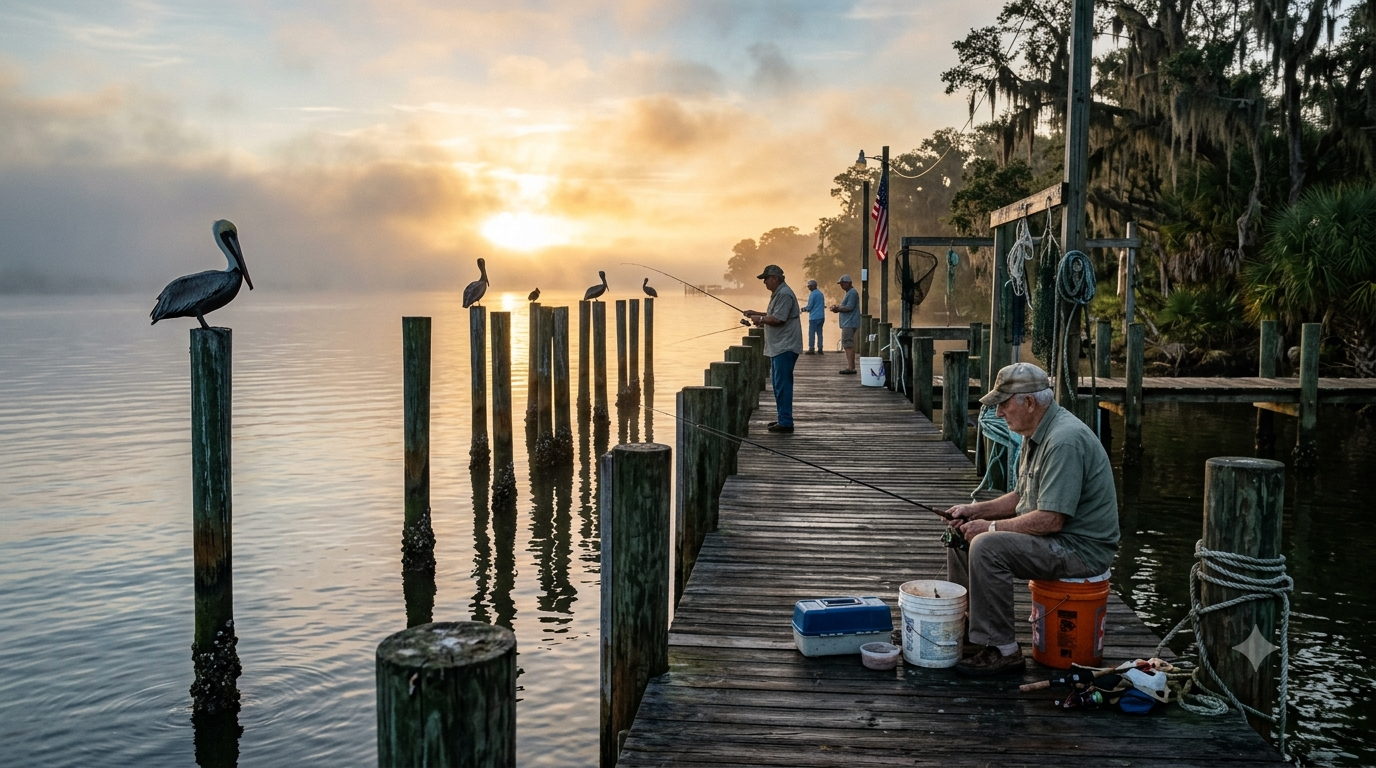
A weathered wooden fishing dock stretching into calm Florida coastal waters at sunrise, golden morning light breaking through sea fog, several local anglers quietly fishing
If you’ve ever walked down a sun-bleached wooden pier in Florida just as the morning fog is lifting, you’ve probably heard it.
It’s not the cry of an osprey or the rhythmic slap of brackish water against the pilings.
It’s the low, murmured soundtrack of the coastline: dock talk.
To the untrained ear, it sounds like simple banter about bait and the rising tide.
But to anyone who has ever cast a line into the Sunshine State’s waters, it’s a masterclass in a sacred, unwritten code.
In Florida, fishing isn’t just a weekend hobby; it's a subculture governed by etiquette passed down through generations over coolers of melting ice and gas station Cuban sandwiches.
If you want to blend in with the locals and keep your hooks wet, you need to know the rules they don't print on the back of your saltwater license.
The Geometry of the Honey Hole (And Why You Don't Crowd It)
There is an invisible, mathematical radius around every angler in Florida, and breaching it is the ultimate cardinal sin.
Whether you are wading through the mosquito-heavy mangroves of the Indian River Lagoon or lining up along the rail of a crowded pier in Destin, spacing is everything.
The rule is simple: if you can hear the click of the other person's reel engagement, you are probably standing too close.
Locals call this "lowholeing" or "crowding the honey hole." When someone is pulling in snook after snook, human nature begs you to edge closer, slide your shrimp into their slipstream, and hitch a ride on their good fortune.
Don't do it.
Instead, watch the veterans. They acknowledge a hot bite with a slow, respectful nod from fifteen feet away.
They wait for the angler to offer up a piece of advice—which they will, eventually, once you’ve proven you aren’t there to tangle their line. Florida fish move, and so does the luck. Keep your distance, watch the patterns, and earn your own tight lines.
The Delicate Art of "Bait Shop Diplomacy."
Every great morning starts at a bait shop that smells exclusively of brine, outboard motor oil, and stale coffee. This is the inner sanctum of Florida fishing. Here, information is the currency, but it’s heavily regulated.
When you ask the salt-crusted clerk behind the counter,
"What are they biting on?"
You are entering a delicate negotiation. They will never give you the exact coordinates of yesterday's massive redfish school.
If they did, it wouldn't be a secret by noon. Instead, they will give you riddles: "They're hitting silver spoons near the third mangrove island north of the bridge, right as the tide flips."
The unwritten rule of bait shop diplomacy is to accept the riddle with grace, buy a half-dozen more jigs than you actually need as a tribute, and never press for a GPS coordinate.
The journey to finding the spot based on a cryptic tip is half the fun anyway, and it preserves the mystique that keeps these local shops alive.
The Unspoken Law of the Boat Ramp Spectacle
If you want to see a live-action theater piece filled with high stakes, raw tension, and accidental comedy, look no further than a Florida boat ramp at 2:00 PM on a sizzling Saturday.
The ramp is a high-pressure zone where friendships are tested, and truck transmissions go to die.
The etiquette here is ironclad and unforgiving.
You do not back your trailer down the ramp until your boat is completely unstrapped, your gear is loaded, your plug is turned tight, and your key is in the ignition.
Preparing your vessel while sitting on the actual concrete ramp—while a line of ten idling trucks bakes in the 95-degree heat behind you—is a guaranteed way to draw the collective glare of a dozen sunburned captains.
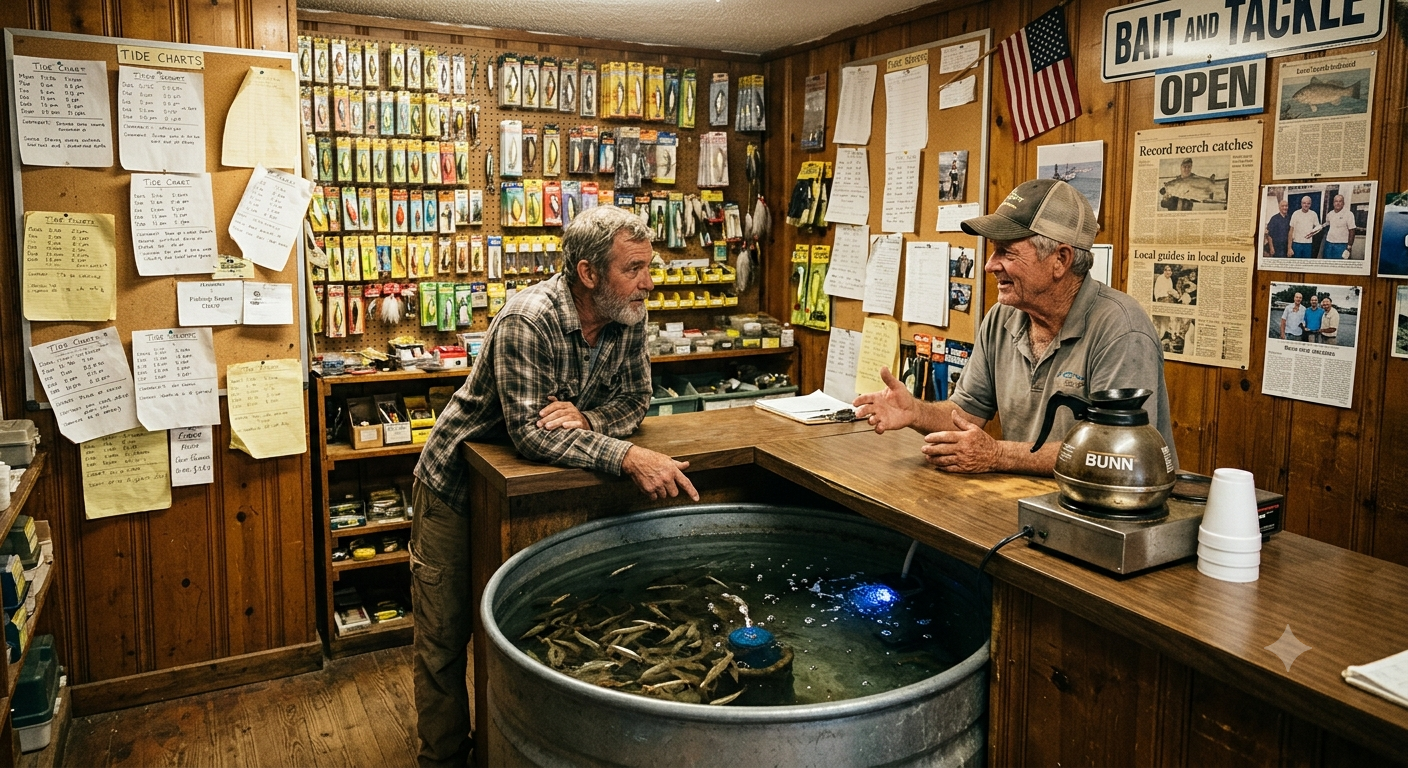
Inside a classic Old Florida bait shop
True pros treat the boat ramp like a pit stop in Formula 1.
It’s a blur of synchronized motion: back down, float off, pull the truck away.
If someone struggles, the unwritten rule dictates that you don't mock them openly; instead, you offer a helping hand, hold their dock line, and pretend you didn't see them leave the truck in reverse.
The Pelican Tax and Pier Etiquette
If you are fishing off a pier or a coastal bridge, you are sharing the space with a native population that has been honing its fishing skills for a few million years longer than you: the brown pelican.
These feathered locals are the self-appointed tax collectors of the Florida waterways.
The unwritten rule here is vigilantly protecting your catch—and your bait—without causing harm.
A rookie mistake is leaving a bucket of live greenbacks uncovered; a pelican will scoop them up in a heartbeat and leave you fishing with bare hooks.
Worse yet is tossing a filleted carcass or a small fish with a hook still in it to a waiting bird.
Florida insiders know that respecting the wildlife means keeping your workspace clean.
We slice our bait on cutting boards, hide our shrimp under wet towels, and safely release undersized catches directly into the water, well out of reach of the hovering shadows overhead. It keeps the birds wild and keeps your fingers intact.
Catch and Release: Leaving a Legacy in the Sand
There was a time decades ago when every fishing trip in Florida ended with a massive, heavy stringer of fish hanging from a rusty nail for a photo op.
Times have changed, and the modern unwritten code places heavy emphasis on stewardship.
The true measure of a Florida angler isn't how many fish they stack in the cooler, but how safely they release the ones that keep the ecosystem thriving.
When you hook into a monster snook or a silver-sided tarpon, the adrenaline is unmatched. But the code dictates that the fish’s survival comes before your social media feed.
We keep them in the water while removing the hook, revive them against the current until their tails slap against our palms, and watch them swim back into the shadows of the flats.
It’s a nostalgic nod to the anglers who did the same for us years ago, ensuring the next generation gets to feel that same electric tug on the line.
Keeping the Code Alive
The beauty of Florida’s unwritten fishing rules is that they aren’t meant to exclude outsiders; they are designed to protect the peace, the environment, and the shared joy of being out on the water.
When we follow these quiet guidelines, we honor the captains, characters, and coastal guides who built the state's legendary fishing culture from the ground up.
Next time you head out to the coast, pack your patience along with your tackle box.
Leave a little extra space for your neighbor, listen closely to the whispers at the bait shop counter, and treat the water like the treasure it is.
What’s the best piece of fishing advice a local has ever shared with you down at the docks?
Drop your favorite stories in the comments below, and don’t forget to share this post with your favorite fishing buddy before your next launch!
Thanks for spending part of your day with Florida Unwritten.
If this story felt familiar, salty, strange, or a little too Florida to explain at dinner, share it with someone who’d understand.
👉 More stories live at https://surl.lu/uilyob📬 Subscribe for weekly Florida stories, coastlines, wildlife, weirdness, and the kind of local moments tourists usually miss.
Florida Unwritten is a labor of love dedicated to the places the brochures forget.
Earl lee
