The Ultimate Guide to Seasonal Fishing in Florida
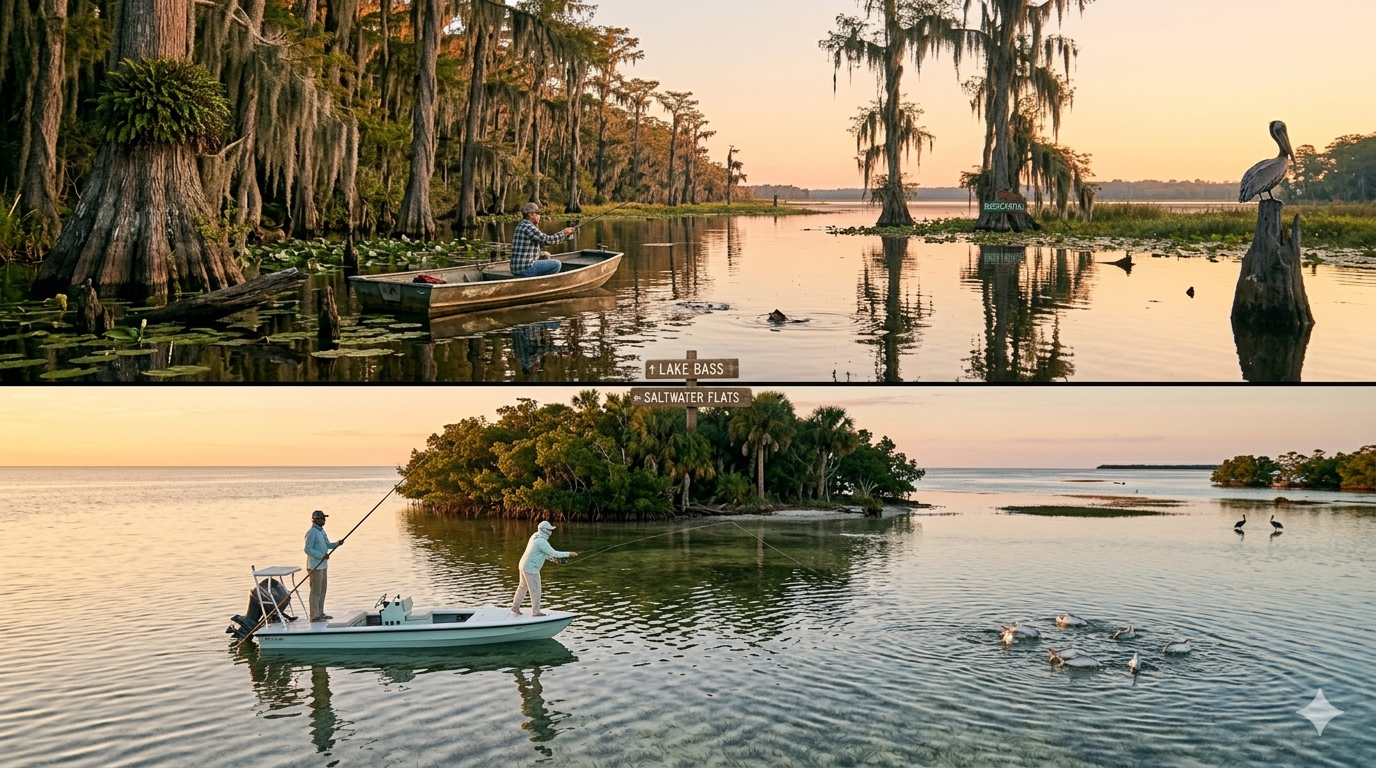
A split-scene Florida fishing landscape showing freshwater bass fishing on one side and saltwater flats fishing on the other, sunrise lighting, anglers casting from boats,
Spring in Florida is when the water wakes up hungry.
The days get longer, the temperatures climb, and suddenly every bass, snook, and panfish in the state seems ready to fight something. For anglers,
It’s one of the best seasons of the year to be on the water.
In freshwater, spring means spawning season. Bass move shallow around grass lines, pads, and sandy banks, especially in places like Lake Okeechobee and smaller farm ponds across the state.
This is the time for lighter tackle, soft plastics, live shiners, and patient sight fishing.
Fish are aggressive, territorial, and a whole lot less shy than they’ll be later in the year.
Saltwater tells a different story but follows the same rhythm.
Tarpon, snook, and redfish begin pushing closer to shore and into the backwaters.
Early mornings and sunset tides are prime time,
especially around mangroves, docks, passes, and jetties. Spring bait runs also fire everything up along the coast, turning quiet flats into feeding frenzies.
The biggest difference between freshwater and saltwater fishing in spring is what you’re paying attention to. Lake anglers watch spawning beds and water temperature.
Coastal anglers watch tides, bait movement, and wind direction. Either way, spring rewards anglers willing to adapt.
More than anything, spring fishing in Florida feels alive.
It’s topwater explosions at sunrise, muddy boots at the boat ramp, and the smell of salt and sunscreen mixing in the air before breakfast.
Missed something? more here →
Summer Fishing Strategies
Summer fishing in Florida is a battle against heat, humidity, and fish that suddenly become smarter around noon.
In freshwater, bass and panfish often slide into deeper, cooler water once the sun starts cooking the surface. The best strategy is simple: fish early or fish late.
Dawn and dusk become your best friends during Florida summers.
Topwater frogs, buzzbaits, and live bait can produce explosive strikes before the heat settles in.
Look for shaded structure, deeper ledges, hydrilla edges, and submerged timber.
Midday fishing can still work, but slower presentations usually win the fight.
Saltwater anglers deal with similar patterns. Snook stack under docks and bridges looking for shade and moving water,
while tarpon and redfish often feed harder during lower-light periods.
Fishing passes, inlets, and current-heavy areas become especially productive during summer.
This is also the season where Florida reminds you it’s basically a sauna with lightning.
Hydration matters. Lightweight clothing, sunscreen, and keeping an eye on afternoon thunderstorms are just as important as lure selection.
Summer fishing may require sweat equity, but it also produces some of the most exciting action of the year.
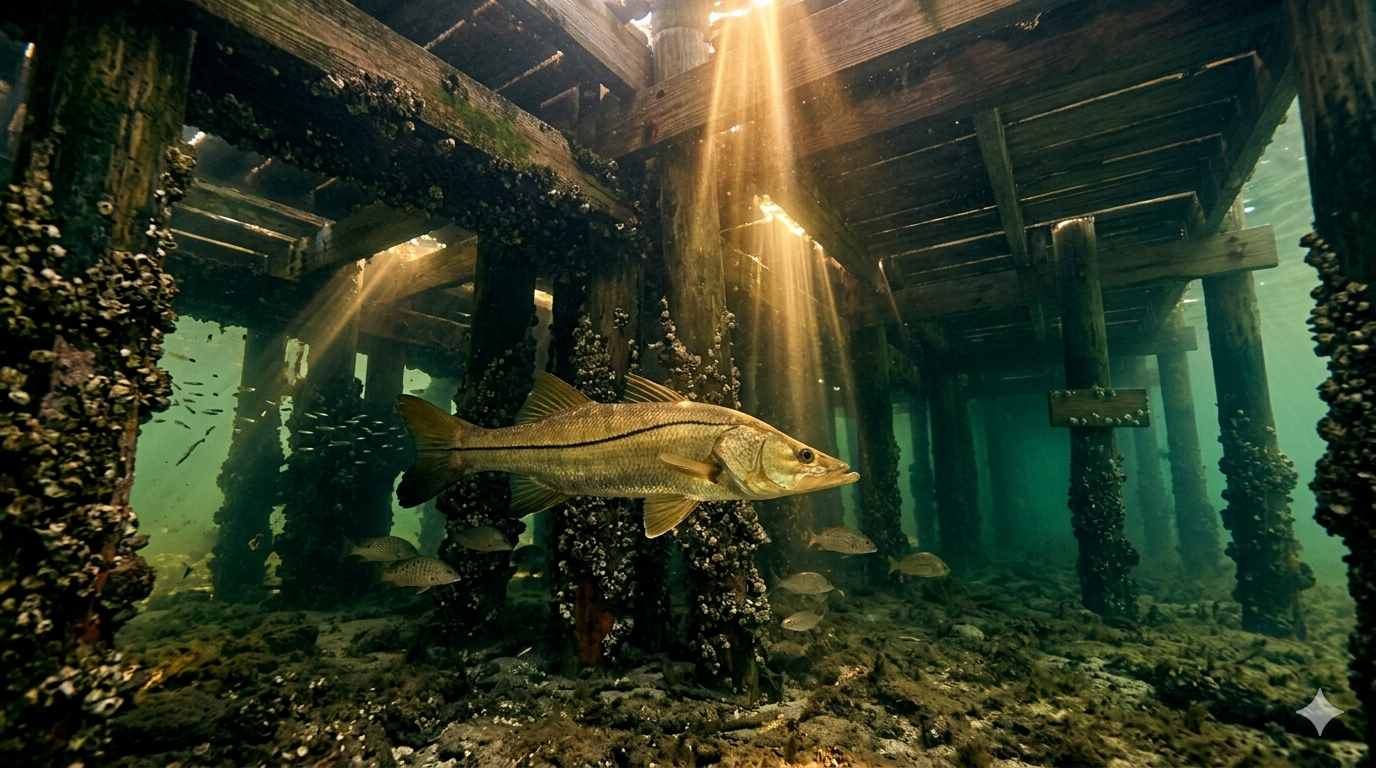
Snook Under the Dock
Autumn Fishing Strategies
Fall is one of Florida’s most underrated fishing seasons. The crowds thin out, temperatures ease up, and fish start feeding heavily ahead of winter.
In freshwater, bass move shallower again and become more active around weed edges,
fallen trees, canals, and shoreline cover. Spinnerbaits, soft plastics, and crankbaits all become reliable tools as fish chase bait more aggressively.
Saltwater fishing turns especially strong during the fall bait migrations.
Schools of mullet moving down the coast trigger feeding activity from snook, redfish, trout, and tarpon.
If you see nervous water, diving birds, or bait spraying across the surface, something big is probably underneath it.
Fall is also the season when cold fronts start creeping into Florida.
A front can completely change fish behavior overnight. Often, the best fishing happens just before one arrives,
when fish feed heavily ahead of dropping temperatures and changing pressure.
For many Florida anglers, fall hits the sweet spot. The water cools down just enough, the mosquitoes calm down slightly, and the fish seem eager to make bad decisions.
Winter Fishing Strategies
Winter fishing in Florida slows down, but it doesn’t shut down.
In fact, some of the best fishing of the year happens during the colder months if you adjust your approach.
Freshwater fish like bass and crappie become less aggressive in winter and usually hold near deeper structure,
vegetation, or drop-offs. Slow presentations matter. Jigs, soft plastics, and live minnows, worked patiently, can turn a slow day into a productive one.
Timing matters too.
Winter mornings can be sluggish, but once the afternoon sun warms the water a few degrees, fish often become noticeably more active.
Saltwater fishing changes with the temperatures as well.
Snook, redfish, and trout look for warmer water near canals, creeks, power plant outflows,
and shallow dark-bottom areas that hold heat. Outgoing tides can be especially productive because bait gets flushed into predictable feeding zones.
Winter fishing rewards patience more than speed.
You’re not usually covering water fast or power fishing every shoreline. You’re slowing down, watching conditions carefully, and making each cast count.
And honestly, winter fishing in Florida has its own kind of magic.
Quiet boat ramps. Fog lifting off the water at sunrise.
A thermos of gas-station coffee balanced beside the tackle box.
No summer crowds. No blistering heat. Just calm water and the chance that the next cast might save the whole day.
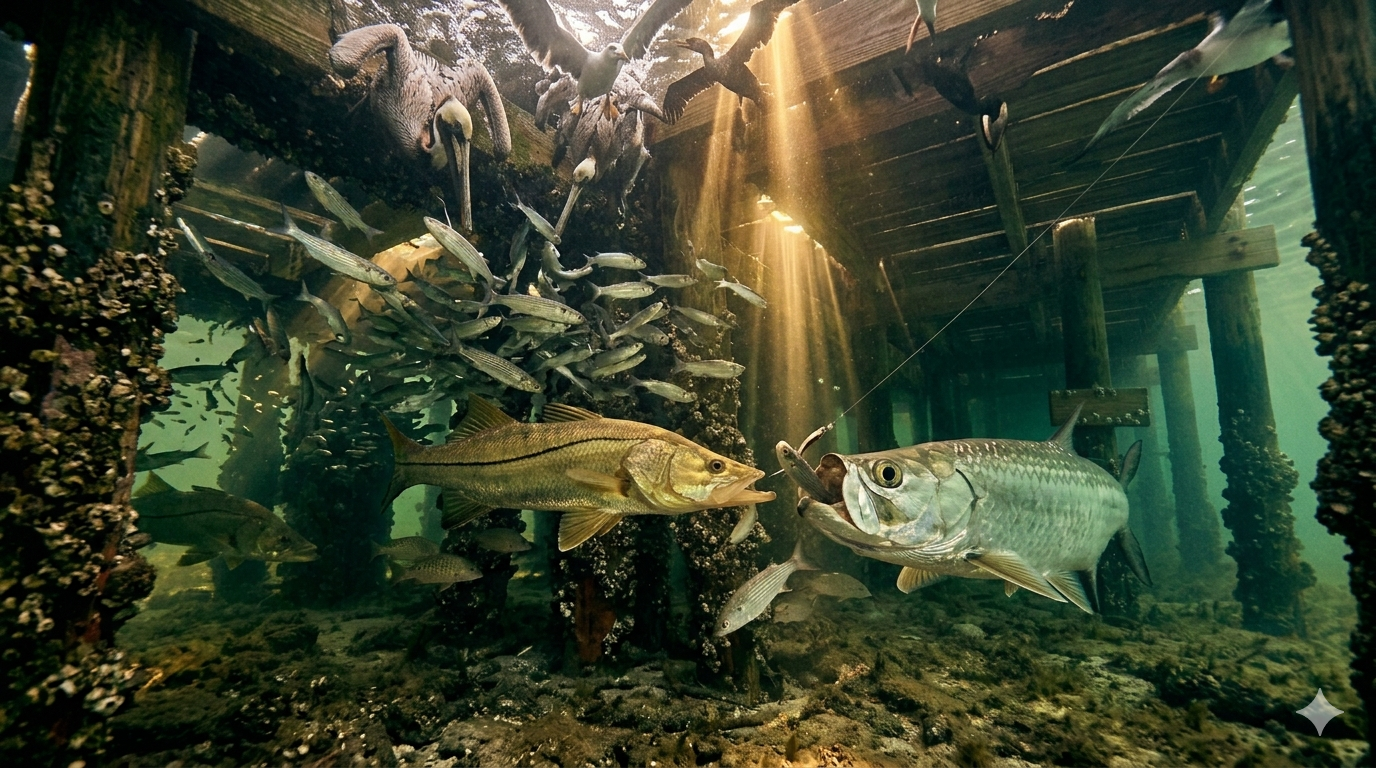
Massive mullet bait run along
Final Thoughts
Fishing in Florida changes with every season, and the anglers who succeed are usually the ones who adjust instead of forcing the same approach year-round.
Spring is aggressive and energetic.
Summer demands timing and endurance. Fall rewards anglers chasing bait movement and feeding patterns.
Winter belongs to patience and precision.
Whether you’re casting into a freshwater lake or drifting a mangrove shoreline at sunrise,
Florida always has something biting somewhere.
The trick is learning how the seasons move the water, the bait, and the fish.
Because down here, fishing isn’t just a hobby. It’s part weather report, part local folklore, and part excuse to spend another day outside staring at water that looks too beautiful to leave.
Thanks for spending part of your day with Florida Unwritten.
If this story felt familiar, salty, strange, or a little too Florida to explain at dinner, share it with someone who’d understand.
👉 More stories live at https://surl.lu/uilyob
📬 Subscribe for weekly Florida stories, coastlines, wildlife, weirdness, and the kind of local moments tourists usually miss.
Florida Unwritten is a labor of love dedicated to the places the brochures forget.
Earl lee
Florida Unwritten
