Wewahitchka
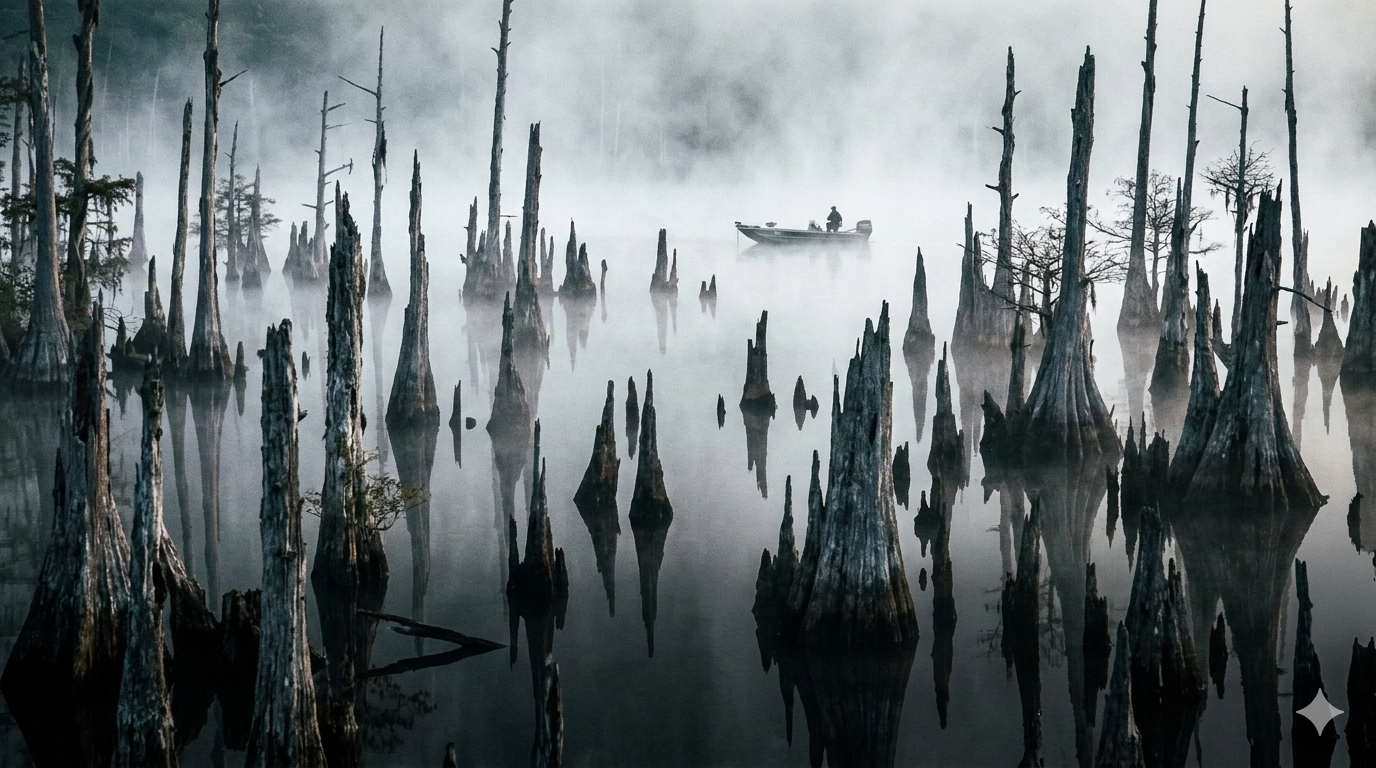
The dead lakes
Where the River Bends and the Honey Runs Dark
Some Florida towns sparkle like postcards.
Wewahitchka hums.
It sits inland from the Gulf, tucked into Gulf County’s quiet middle, where the land loosens its collar, and the rivers wander without apology. If you blink on Highway 71, you might miss the turn. If you stop, you might stay longer than you meant to.
Locals call it “Wewa.” Outsiders attempt the full pronunciation once, bravely, and then surrender. ( wee·wuh·hich·kuh) The name comes from a Creek word often translated as “water eyes” or “water looking back.” Which feels appropriate. This is a town reflected in slow water and long memory.
The Dead Lakes That Refuse to Be Dead
Just west of town spreads the dark, glassy sprawl of Dead Lakes.
Despite the name, the lakes are very much alive. Cypress trunks rise from the water like a cathedral built by accident. Some are silver and bare, ghostlike in morning fog. Others still wear green crowns. The water is tannin-dark, steeped in leaf and time, turning every reflection into ink.
Early light here feels borrowed from another century.
Fishermen launch aluminum boats before sunrise, their motors coughing softly. The surface ripples just enough to disturb the mirrored sky. Cast a line, and you might pull up bass thick as rumor. Or you might drift and let the quiet rearrange your thinking.
The Dead Lakes are not dramatic. They are patient.
They teach you how to look longer.
Honey That Tastes Like the Swamp
If High Springs runs on limestone clarity, Wewahitchka runs on tupelo, honey.
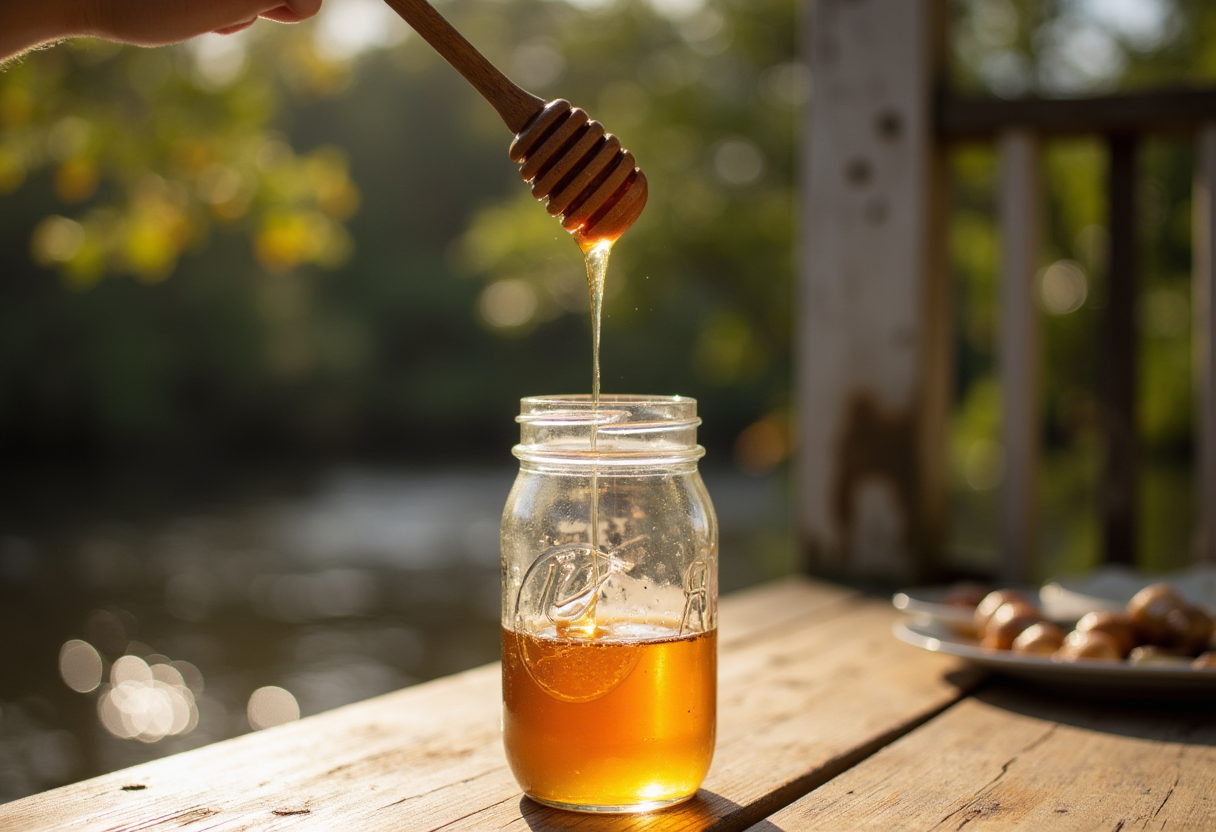
This town is famous for it. Not the polite, pale honey you squeeze from a bear-shaped bottle. Tupelo honey is something else entirely. It flows slowly and golden, gathered from blossoms that bloom along the Apalachicola River floodplain.
Wewa hosts an annual Tupelo Honey Festival that smells faintly of fried dough and wildflowers. There are jars lined up like trophies. Some beekeepers speak about nectar flow the way sommeliers speak about wine notes.
Taste it, and you understand.
Light but complex. Sweet without being loud. Lingering in a way that makes you reconsider every other honey you’ve known.
Like the town itself.
The River That Shapes It
The nearby Apalachicola River threads through this region like a storyteller who refuses to skip details. It feeds wetlands, carries history, and reminds everyone that inland Florida is not empty. It is layered.
Wewahitchka exists because of water. Logging once floated downriver. Fishing still feeds families. The rhythm of rising and falling water levels sets the pace more than any calendar does.
In the rainy season, the world here feels saturated. In dry spells, the air smells like sun-warmed earth and pine.
Either way, the river is in charge.
Main Street Without the Performance
Downtown Wewahitchka does not stage itself for tourists. There are no curated photo ops or pastel storefronts begging for hashtags. What you will find are practical buildings, a courthouse, a handful of shops, and people who nod when you pass.
It is the kind of place where someone might ask who your people are, not out of suspicion but curiosity. Lineage still counts here. So does character.
The conversations happen at gas stations, bait shops, and folding tables at local events. You might overhear debates about fishing spots, high school football, or whether the river will rise again this year.
Even the traffic light seems contemplative.
Cypress Shadows and Long Afternoons
Drive the backroads outside town, and the landscape stretches into pine flatwoods and low wetlands. Turkey vultures circle lazily. Sandhill cranes step through ditches like careful philosophers.
Afternoons in Wewa expand.
Heat settles in layers. Cicadas start their mechanical chorus. Somewhere, a screen door slaps shut. Someone’s grandmother is likely shelling peas into a metal bowl, telling a story that starts with “You remember that storm back in…”
Time does not disappear here. It accumulates.
Football, Family, and Familiar Faces
Small towns orbit around certain pillars. In Wewahitchka, high school football sits near the center. On Friday nights, lights blaze over the field, and the stands fill with neighbors who have known each other for decades.
Generations overlap easily. Grandparents who once played on the same turf now cheer from aluminum bleachers. The team colors are worn with sincerity, not irony.
Community here is not an abstract idea. It is a weekly appointment.
The Sound of It
Every town has a soundtrack.
Wewahitchka’s is the hum of insects at dusk. The splash of a fish breaking the surface. The distant rumble of a truck rolling down a two-lane road. The buzz of bees in tupelo blossoms when the season is right.
There is space between sounds.
That space matters.
In bigger places, noise stacks on noise until it becomes a wall. In Wewa, you can hear the gaps. You can hear wind move through cypress needles. You can hear yourself think without interruption.
“We specialize in the Florida you won't find on a postcard. Keeping these stories 'unwritten'—but not forgotten—takes plenty of caffeine and even more bug spray. If you loved today's tale, you can buy me a brew to help keep the lights on. I'm glad you're here for the
Ride.
A Different Kind of Coast
Though only about thirty minutes from the Gulf beaches near Port St. Joe, Wewahitchka feels worlds away from sunscreen commerce and vacation rentals.
It is Florida without the brochure gloss.
Here, the beauty hides in stained water and crooked tree lines. In honey jars labeled by hand. In a name that takes practice to pronounce.
It does not try to compete with emerald waves or sugar sand. It offers something quieter.
Depth.
Why Wewa Matters
In a state that grows louder every year, towns like Wewahitchka serve as ballast.
They anchor.
They remind.
They hold onto rhythms older than subdivisions and traffic studies.
You may not see it trending online. You may not find a line of influencers waiting for the perfect swamp reflection. What you will find is authenticity that does not know it is being observed.
And that is rare.
Leaving the Bend
When you drive out of Wewahitchka, the road curves gently, flanked by pine and sky. The river continues its slow work. The bees continue theirs.
You carry with you the taste of tupelo honey. The image of cypress trunks rising from dark water. The feeling that you have stepped briefly into a place where the pace is set by bloom cycles and fishing seasons rather than notifications.
Wewahitchka does not chase you.
It lets the river bend.
And if you ever find yourself craving quiet that feels earned, honey that tastes like a floodplain in spring, and water that looks back at you thoughtfully, you will know which turn to take.
Just follow the river inland.
Wewa is waiting. 🌾🍯
Florida Unwritten is a weekly letter about the quieter side of the state.
Springs that stay cold in July, towns the highway forgot, and the kind of places you only find by slowing down.
Every Friday morning, one good Florida story.
Earl Lee
Florida Unwritten
