How Chickens Took Over Key West Without Firing a Single Shot
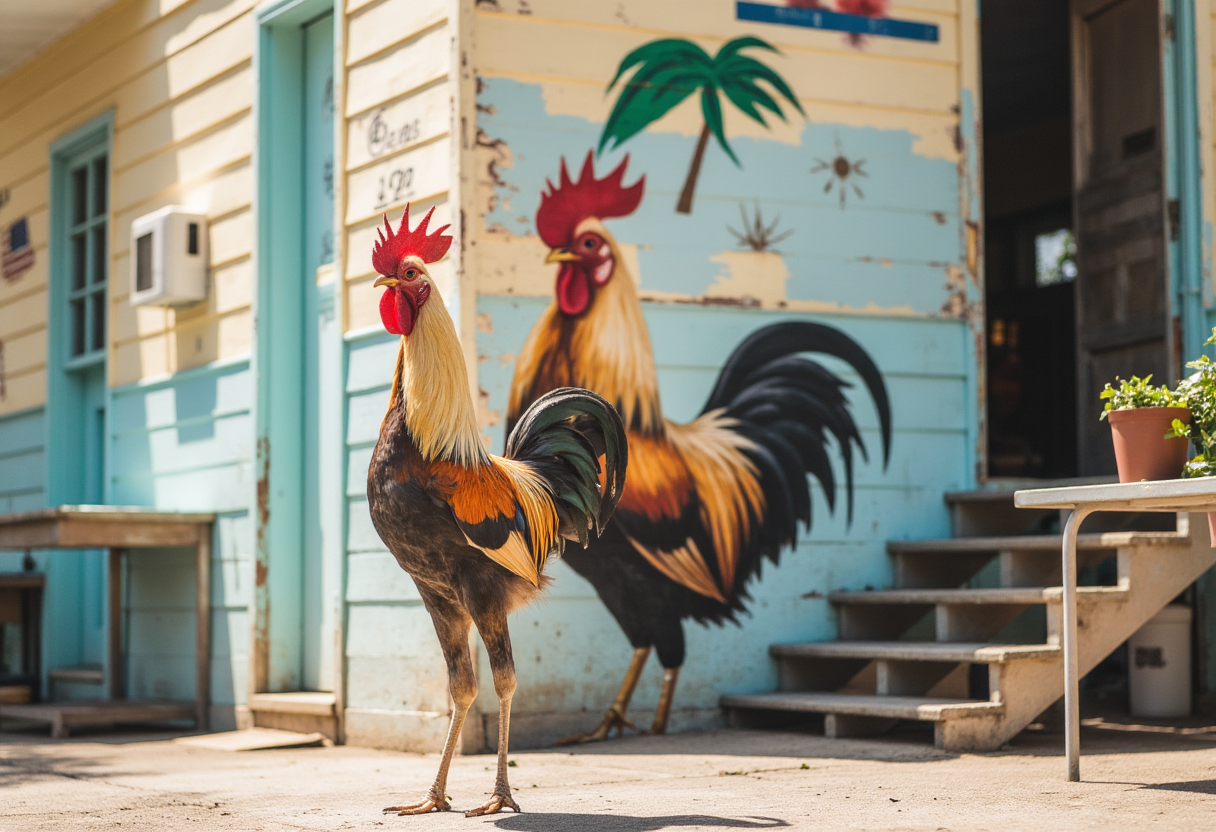
In Key West, the chickens don’t pose for photos. They assume you’re already taking them.
Key West wakes up to roosters long before the first coffee is poured. They crow from sidewalks, parking lots, and palm-shaded corners, utterly uninterested in zoning laws or human sleep cycles. No fences. No owners. Just chickens conducting loud, confident business.
At first, it feels like an elaborate island prank. Surely no city accidentally ends up with this many free-range birds strolling through its main tourist strip.
But after a day or two, you realize the truth: the chickens aren’t lost. They live here. They cross Duval Street as it belongs to them, pause for photos without permission, and seem vaguely amused by the people who came all this way to see sunsets, not poultry.
This is the story of how Key West became one of the few places in America where chickens rule the streets, the locals mostly shrug, and the island would feel strangely incomplete without them.
Key Takeaways
The chickens of Key West are a beloved part of the island's culture.
These birds have become local celebrities, roaming freely around the island.
Their presence reflects the laid-back and quirky nature of Key West.
The chickens have a special place in the hearts of residents and visitors.
They symbolize the island's charm and its ability to embrace the unusual.
The Feathered Monarchs of America's Southernmost City
In Key West, chickens are more than just backyard birds; they're the undisputed kings and queens of the streets. Their confident struts and vibrant calls are a hallmark of the island's unique charm.
A Typical Day in the Life of Key West's Boldest Residents
The day for Key West's chickens begins early, with a chorus of crowing that echoes through the streets.
Morning Crowing Rituals
As the sun rises, the roosters take center stage, their loud crowing a wake-up call for the island. This morning ritual is a cherished tradition, setting the tone for a day filled with adventure and exploration.
Afternoon Struts Down Duval Street
By afternoon, the chickens are out in full force, strutting down Duval Street with an air of confidence that's hard to ignore. Tourists and locals alike enjoy watching these feathered monarchs as they go about their day.
a diverse flock of chickens (featuring a mix of bright, sun-kissed roosters and hens with feathers in shades of iridescent blue, emerald green, and burnished copper) strolling nonchalantly across a busy street in the heart of Key West, Florida.
Prime Locations for Chicken-Spotting Adventures
For those eager to catch a glimpse of Key West's famous chickens, there are several prime locations. Duval Street, the heart of Key West's shopping and dining scene, is a hotspot for chicken sightings. Visitors can also explore the surrounding neighborhoods, where chickens often roam freely.
Key West's chickens have become an integral part of the island's identity, attracting visitors from all over the world. Whether you're a seasoned birdwatcher or just a curious tourist, the chickens of Key West are sure to leave a lasting impression.
A Clucking History: How Chickens Invaded Paradise
The presence of free-roaming chickens in Key West traces back to the island’s maritime and cultural ties across the Straits of Florida — especially historic trade and travel with Cuba.
Over decades, escapees from backyard coops, shipboard stock,
and intentionally kept hens and roosters adapted to the tropical environment and reproduced,
creating small feral flocks that spread through Old Town and beyond.
Rather than a sudden invasion, the birds’ rise was gradual: favorable weather,
Plentiful foraging opportunities and limited predators helped populations stabilize in residential neighborhoods.
Historical records and local reporting suggest several likely sources: chickens brought ashore by sailors,
Animals kept by Cuban immigrants and set loose during economic or social upheavals, and domestic birds that escaped or were abandoned.
Local historians often point to the island’s longstanding connection to Caribbean and maritime cultures as a logical pathway for these birds to arrive and mix with domestic breeds
While precise timelines vary by account, most sources agree that the population grew incrementally across the 20th century rather than appearing all at once.
The reason they’re here isn’t random — and it says a lot about the island.
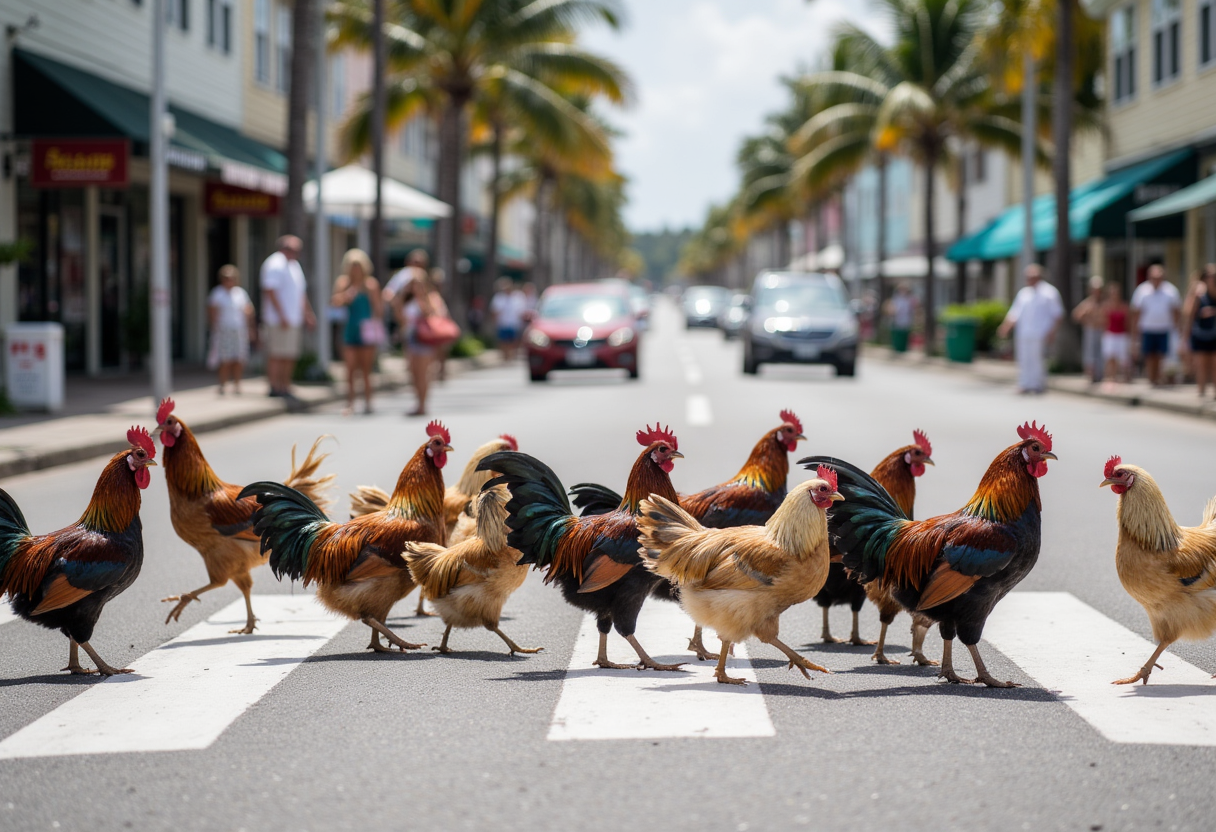
Rush hour, Key West style.
How the Community Responds
Key West residents and officials have taken a range of approaches to the chickens.
Many locals appreciate the birds as part of the island’s quirky identity and tolerate their presence in yards and alleys.
At the same time, practical concerns arise: stray eggs appearing in gardens, manure on sidewalks, and occasional conflicts with pets or people.
Animal control and community groups sometimes step in to trap, rehome, or advise on humane management;
The city has grappled with balancing tourism interest and public-health considerations.
There are also conversations about responsible coop practices for residents who keep chickens intentionally:
adequate space in coops and runs, fresh water, proper feed to meet protein and grit needs, safe bedding, and measures to deter predators.
These steps help improve flock quality, reduce nuisance issues, and limit disease risk in warm months and winter alike.
Questions Visitors Ask — and Practical Answers
Will I see chickens on Duval Street? Often, especially late afternoon, when confident birds wander into tourist areas.
Can I feed them? No — feeding can change their diet, attract pests, and cause dependency; avoid leaving scraps or bird feed in public spaces.
Are they dangerous? Rarely — these are generally non-aggressive birds, though roosters can be territorial; give them space and avoid cornering them.
What about eggs I find in a yard? Report unexpected eggs to local animal control or the property owner rather than handling them yourself.
Final Takeaway and How to Visit Responsibly
Key West’s chickens are part natural history, part cultural emblem — they show how animals and people can coexist in urban island environments.
If you visit, enjoy the sight of these colorful birds, but be mindful: observe from a distance, do not feed or chase them, and respect neighborhood rules about wildlife and coops.
For more information on local policies or humane rehoming programs, check the Key West tourism board or contact municipal animal control.
By treating the chickens with common-sense respect — and by supporting good house and coop practices among residents,
Visitors, and locals can keep Key West’s streets lively, safe, and uniquely memorable for years to come.
