Florida’s First Air Conditioner: John Gorrie’s Cooling Revolution

“Before air conditioning, Florida medicine fought heat as much as disease.”
Florida did not invent heat.
But it did invent the urgent need to escape it.
Long before ceiling fans hummed and thermostats bossed us around, Florida summers were a full-contact sport. The air didn’t move. The humidity clung like an unpaid debt. Sleep was optional. Patience was seasonal.
Then, in the mid-1800s, a doctor in Apalachicola looked at the swampy air, the yellow fever patients, and the general state of human misery and thought:
“There has to be a better way.”
That doctor was John Gorrie, and his quiet, stubborn idea would eventually cool the entire modern world.
This is the true Florida story of how air conditioning was born not in a lab, not in a luxury hotel, but out of desperation, compassion, and one man’s refusal to accept sweaty suffering as destiny.
Florida Before Air Conditioning: A Hot Mess by Design
To understand why John Gorrie mattered, you have to understand Florida before air conditioning.
Homes were built for airflow because there was no other option. Windows stayed open. Porches were mandatory. Ice was rare, expensive, and fleeting. Summers weren’t endured so much as survived.
Diseases like yellow fever and malaria thrived in the heat and humidity. At the time, many believed bad air, called “miasma,” caused illness. Gorrie wasn’t entirely wrong when he suspected heat played a role.
Florida wasn’t just uncomfortable. It was medically dangerous.
And Apalachicola, a bustling port town, sat right in the thick of it.
Meet John Gorrie: Doctor, Dreamer, Florida Problem-Solver
John Gorrie was a physician, scientist, and inventor. He wasn’t chasing comfort. He was chasing survival.
Working in Apalachicola in the 1830s and 1840s, Gorrie treated patients suffering from tropical diseases. He noticed something important. Patients cooled with ice had better outcomes.
The problem was ice.
Florida doesn’t make it. Ice had to be shipped from the North, stored carefully, and rationed like treasure. It melted faster than hope in August.
So Gorrie did the most Florida thing possible.
He decided to make cold air.
The Radical Idea: Cooling the Air to Heal the Body
Gorrie believed that cooling hospital rooms could reduce suffering and save lives. His theory wasn’t widely accepted, but he trusted his observations.
He began experimenting with ways to mechanically produce ice.
In 1851, John Gorrie was granted a U.S. patent for a machine that used compressed air to create cooling. It worked by expanding air to lower its temperature, producing ice.
This was not modern air conditioning yet, but it was the conceptual ancestor of every AC unit humming across Florida today.
Gorrie didn’t invent comfort. He invented possibility.
Florida’s First Air Conditioner (Sort Of)
Let’s be honest. Gorrie’s machine wouldn’t survive a Home Depot return desk.
It was bulky. It was experimental. It required precision and patience. But it worked.
For the first time, humans could control indoor temperature, even in Florida.
This mattered far beyond one doctor’s office.
If heat could be tamed, cities could grow. If buildings could be cooled, Florida could expand beyond seasonal visitors. If comfort became predictable, life could flourish.
The modern Florida we know begins right here.
Why John Gorrie Was Ignored (and Undermined)
This is where the story turns very Florida.
Gorrie needed funding to scale his invention. But ice companies saw him as a threat. Natural ice was a business, and Gorrie’s machine challenged it.
He was mocked. Investors backed away. Support dried up.
When his financial backer died suddenly, Gorrie’s project collapsed.
He died in relative obscurity in 1855, poor and largely forgotten.
Florida, once again, failed to appreciate something important until much later.
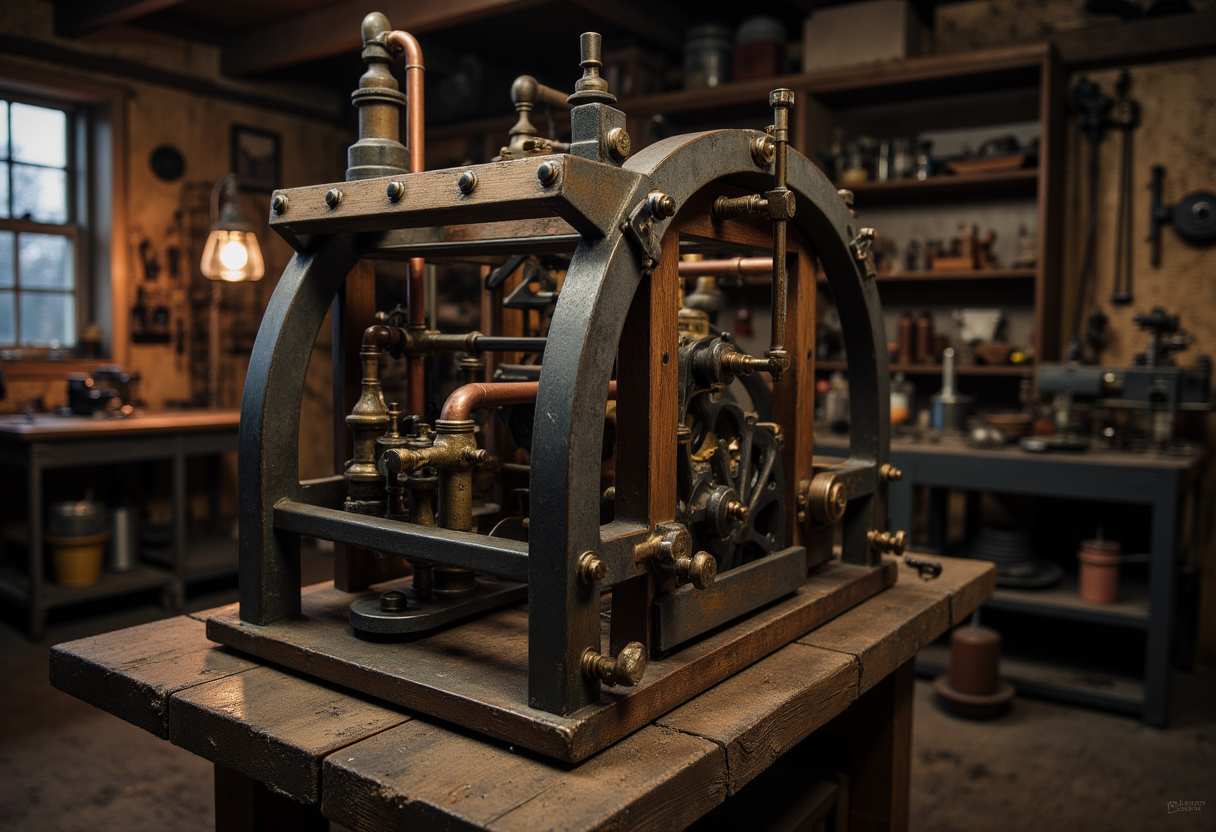
“Cooling rooms was once a medical experiment, not a luxury.”
The Long Shadow of a Cool Idea
Although Gorrie never saw success in his lifetime, his ideas didn’t disappear.
Engineers and inventors later refined mechanical cooling. By the early 20th century, air conditioning systems appeared in factories, theaters, and eventually homes.
And Florida changed.
The population boomed. Tourism exploded. Swamps became suburbs. Summer became livable instead of legendary.
None of that happens without cooling the air.
John Gorrie didn’t just invent a machine. He changed the trajectory of an entire state.
How Air Conditioning Shaped Modern Florida
It’s impossible to imagine Florida without air conditioning.
Theme parks. Skyscrapers. Hospitals. Retirement communities. Summer weddings. All of it depends on controlled indoor air.
Air conditioning allowed:
Year-round residency
Medical advancements
Economic expansion
Florida’s modern identity
Without it, Florida would still be a seasonal experiment.
John Gorrie made permanence possible.
Why This Story Still Matters
Gorrie’s story reminds us that innovation often comes from necessity, not luxury.
He wasn’t trying to sell comfort. He was trying to save lives.
His failure wasn’t technical. It was social, financial, and political. A pattern Florida knows well.
And today, as climate, heat, and energy consumption dominate conversations, Gorrie’s work feels newly relevant.
Cooling the air changed the world. Managing it wisely may shape the next one.
Florida Legacy: From Ice Machine to Everyday Miracle
Next time you step inside and feel that blessed rush of cold air, remember this.
Air conditioning didn’t come from convenience.
It came from compassion.
It came from the Florida’s War with Humidity (An Ongoing Negotiation), Florida heat.
It came from John Gorrie.
And it changed everything.
Further Reading (Florida Unwritten)
Tall Tales: Florida’s War with Humidity (An Ongoing Negotiation)
True Stories: Why Florida Homes All Have Porches
Tall Tales: The Ceiling Fan: Florida’s Original Climate Control
Until next tide,
Earl Lee, Florida Unwritten — thanks for reading, please share.
