Florida Manatees: The Secret Lives of the State’s Slowest Celebrities
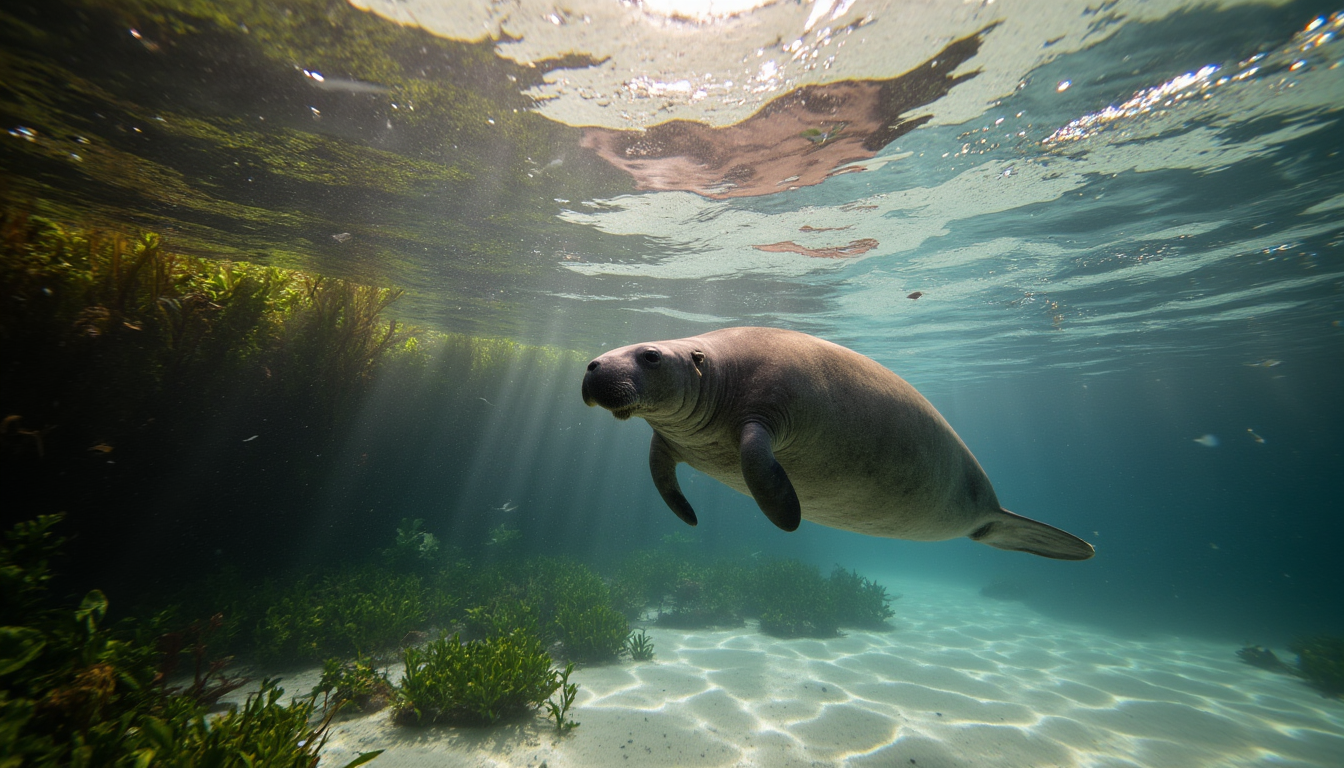
“Florida manatees gather in warm springs each winter, returning to the same waters year after year.”
A True Florida Story
Florida manatees do not rush.
They do not panic.
They do not read warning signs, but somehow they obey them anyway.
They drift through our rivers and springs like floating punctuation marks, gently reminding everyone else to slow down or at least stop yelling at the boat ramp.
For generations of Floridians, manatees have been part wildlife, part neighbor, part local legend. You do not “spot” a manatee the way you spot a dolphin. You notice one. Usually after it exhales next to your kayak like a sigh from the earth itself.
This is a true story about Florida manatees. Not the cartoon versions. Not the tourist brochures. The real ones. The ones with scars, habits, favorite springs, and very strong opinions about warm water.
Who Florida Manatees Really Are
Florida manatees, a subspecies of the West Indian manatee, are massive, slow-moving marine mammals that spend their lives navigating rivers, estuaries, coastal waters, and freshwater springs. They can weigh over 1,000 pounds, yet move with the grace of a drifting cloud.
They are not lazy.
They are energy-efficient.
Manatees spend most of their time doing three things:
Eating
Resting
Surfacing to breathe with a sound that resembles a contented snorkel
They eat up to 10 percent of their body weight daily, grazing on seagrass, algae, and freshwater plants. This makes them accidental landscapers, quietly maintaining Florida’s aquatic ecosystems without asking for credit.
The Springs: Manatee Headquarters
If Florida had an underground map of social gatherings, winter springs would be highlighted like coffee shops.
Manatees cannot tolerate cold water for long periods. When temperatures drop, they migrate inland to warm-water refuges. Natural springs like Crystal River, Blue Spring, and Homosassa become seasonal manatee cities.
In winter:
Springs fill with manatees stacked like floating boulders
Personal space becomes optional
Humans stand ankle-deep nearby, pretending they planned this encounter
These warm-water congregations are not random. Manatees remember locations. They return year after year, sometimes to the exact same spring run, like snowbirds with better navigation skills.
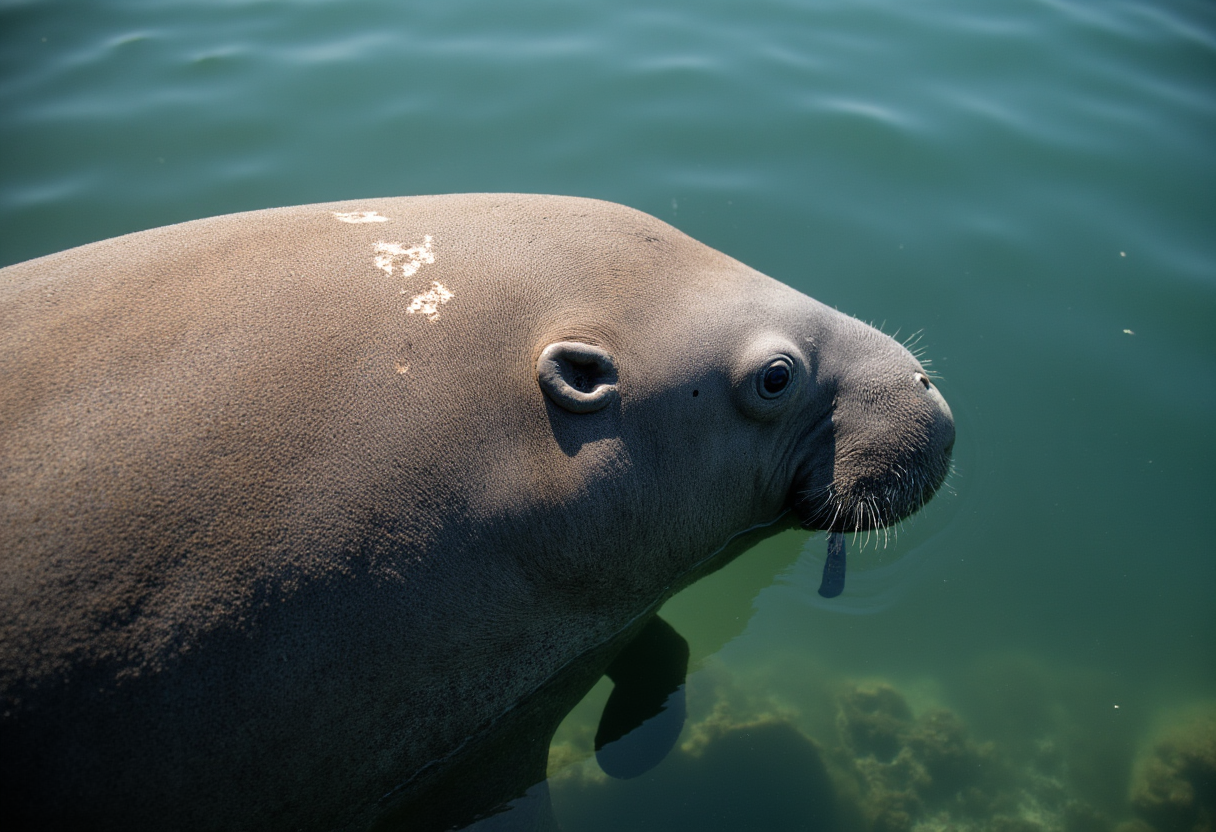
“Scars tell the real story of sharing Florida’s waterways.”
Scars Tell Stories
If you ever get close enough to see a manatee clearly, you’ll notice something sobering.
Scars.
Many Florida manatees carry propeller scars across their backs. These marks are not rare. They are common enough to be identifiers. Researchers often recognize individual manatees by their scar patterns alone.
Each scar is a chapter:
A boat that never slowed
A channel cut too close to shore
A moment where a gentle animal could not move fast enough
Manatees do not fight back. They adapt. They survive. And they carry the evidence quietly.
Why “Slow Speed” Signs Exist
Florida waterways are littered with manatee speed zones, and locals know which ones people ignore.
Manatees often rest just below the surface, especially in shallow water. Boats moving fast do not give them time to react. Even idle-speed propellers can cause serious injury.
This is why:
Speed zones change seasonally
Enforcement increases in winter
Locals glare from docks when engines don’t slow
Protecting manatees is not about rules. It’s about awareness. These animals have survived ice ages, sea-level changes, and natural predators. Boats are the variable they never evolved for.
Manatee Personalities Are Real
Spend enough time around manatees and patterns emerge.
Some are curious and drift toward kayaks.
Some avoid people entirely.
Some seem mildly offended by snorkelers.
Some will gently bump a paddle like they are checking its legitimacy.
They are not interactive performers. They are individuals. And Florida residents who live near manatee waters can often recognize “their” manatees year after year.
True story:
Ask any long-time spring volunteer, and they will describe manatees the way others describe neighbors.
The Myth of the “Clumsy Sea Cow”
Manatees are often portrayed as slow, clueless creatures.
In reality:
They have excellent hearing
They are agile when they need to be
They navigate complex waterways with ease
They are slow by choice, not by limitation. When startled, a manatee can move fast enough to disappear before you realize what happened.
Their calm demeanor is not ignorance. It is confidence.
Why Florida Without Manatees Would Feel Wrong
Manatees are woven into Florida’s identity in subtle ways.
They appear on:
Local murals
Road signs
Souvenirs that somehow always look confused
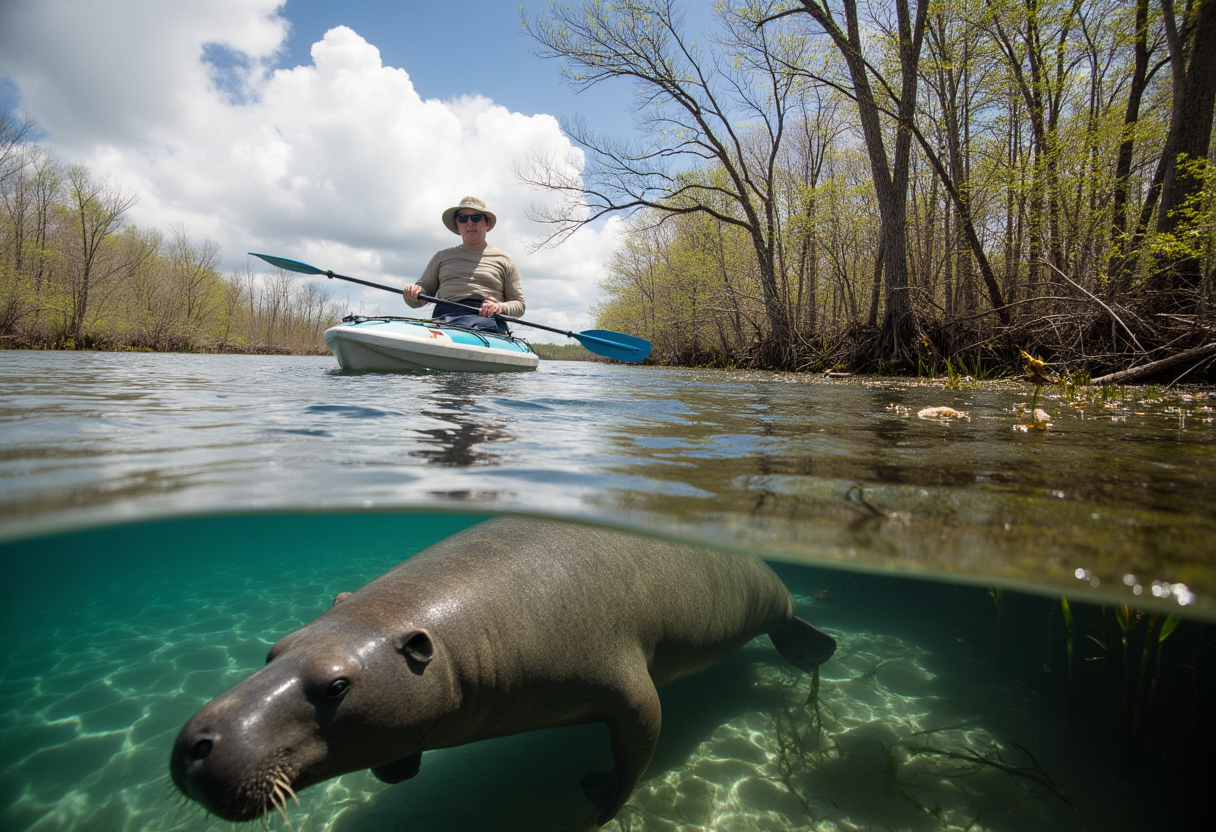
“Observation, not interaction, keeps manatees safe.”
But more importantly, they shape how Floridians think about water. They remind us that rivers are not just recreation zones. They are living corridors.
When manatee numbers decline, it signals deeper problems:
Water quality issues
Loss of seagrass
Cold stress events
Habitat disruption
Protecting manatees protects Florida itself.
What You Can Do (Without Becoming a Hero)
You do not need to “save” a manatee. You need to respect one.
Simple actions matter:
Obey slow-speed zones
Avoid shallow seagrass beds
Never touch or chase a manatee
Report injured manatees to wildlife authorities
Manatees thrive best when humans stop trying to manage them and simply give them space.
A Quiet Florida Success Story
Despite challenges, manatee conservation has worked. Population numbers have rebounded thanks to protections, public awareness, and habitat restoration.
This is rare.
This is hopeful.
It proves Florida can protect something without overbuilding it, branding it, or selling tickets to it.
Why Manatees Still Matter
Manatees are not loud.
They do not demand attention.
They do not perform.
They exist. And Florida is better because of it.
They are living reminders that gentleness survives here. Even among traffic, development, storms, and noise.
Further Reading (True Stories Only)
Florida Caverns State Park: Florida’s Underground Playground
Hurricanes Helene & Milton: When the Water Rose Twice
Until next tide,
Earl Lee, Florida Unwritten — thanks for reading, please share.
