The Everglades
Florida’s Swamp That Refused to Be Improved
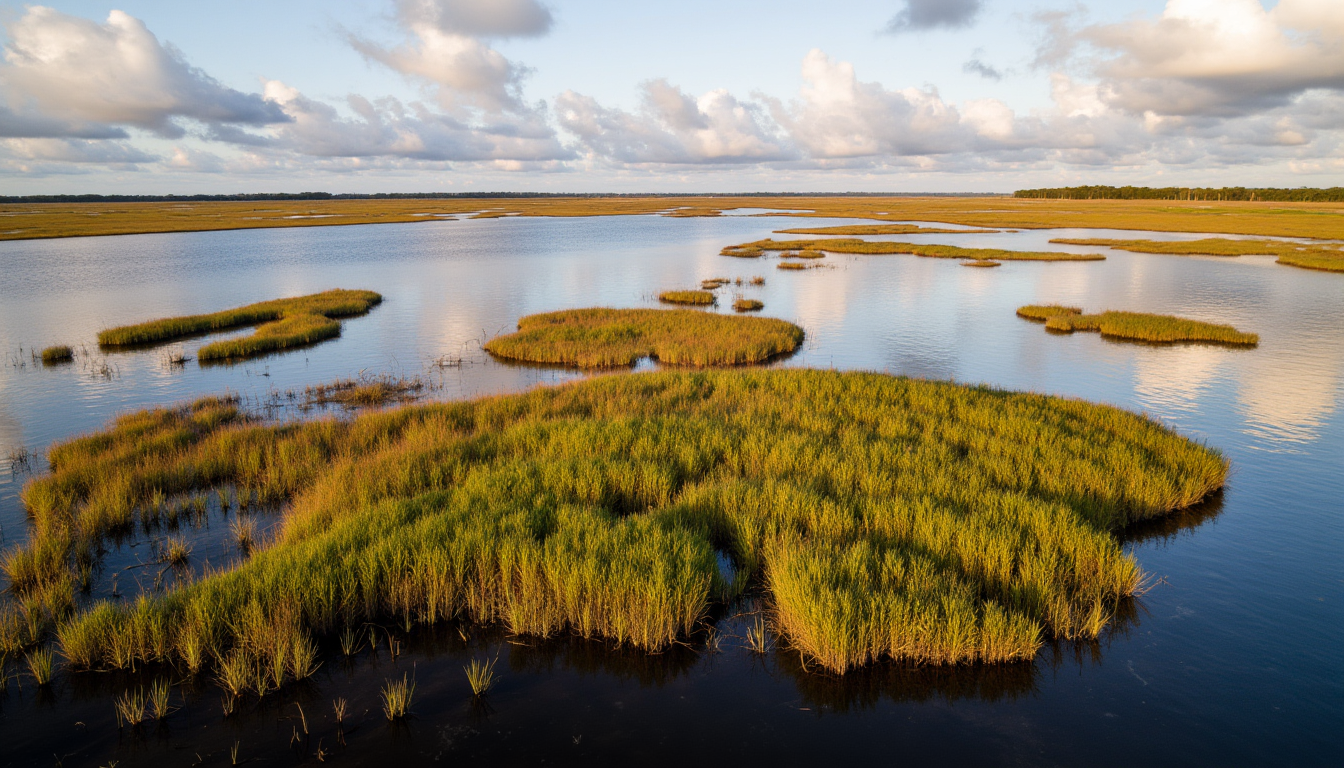
Aerial view of Everglades sawgrass prairie and shallow water
Florida has a habit of looking simple from far away. A peninsula. A familiar shape. Easy to draw from memory, even if you’re doing it on a foggy diner napkin at 2 a.m.
The Everglades is where that illusion quietly dissolves.
From the air, it looks like a patchwork of green. From the ground, it feels like standing inside a slow-motion thought. Water inches along. Grass whispers. Something with too many teeth watches you reconsider your life choices.
This is Everglades National Park, also known as Florida’s most misunderstood ecosystem, America’s largest subtropical wilderness, and proof that nature does not care about your schedule.
A River That Forgot How to Be a River
The Everglades is not a swamp. This distinction matters deeply to scientists and only moderately to everyone else.
It is a river of grass.
A shallow, slow-moving sheet of freshwater flowing south from Lake Okeechobee to Florida Bay at roughly the speed of a wandering thought.
No rapids. No banks. Just inches of water drifting across sawgrass so sharp it once doubled as frontier dental floss.
Early settlers looked at this and said, “We can fix this.”
The Everglades responded by waiting patiently.
Humans Arrive With Shovels and Confidence
In the late 1800s and early 1900s, Florida decided the Everglades was “wasted space.”
Developers brought canals. Engineers brought blueprints. Politicians brought speeches filled with words like progress and drainage.
The Everglades brought mosquitoes.
Miles of canals diverted water. Sugar fields rose. Cities expanded. The ecosystem began to cough politely, then loudly, then with the unmistakable wheeze of something deeply unhappy.
By the time the United States realized what was happening, much of the Everglades had already been sliced, rerouted, and reimagined into something it was never meant to be.
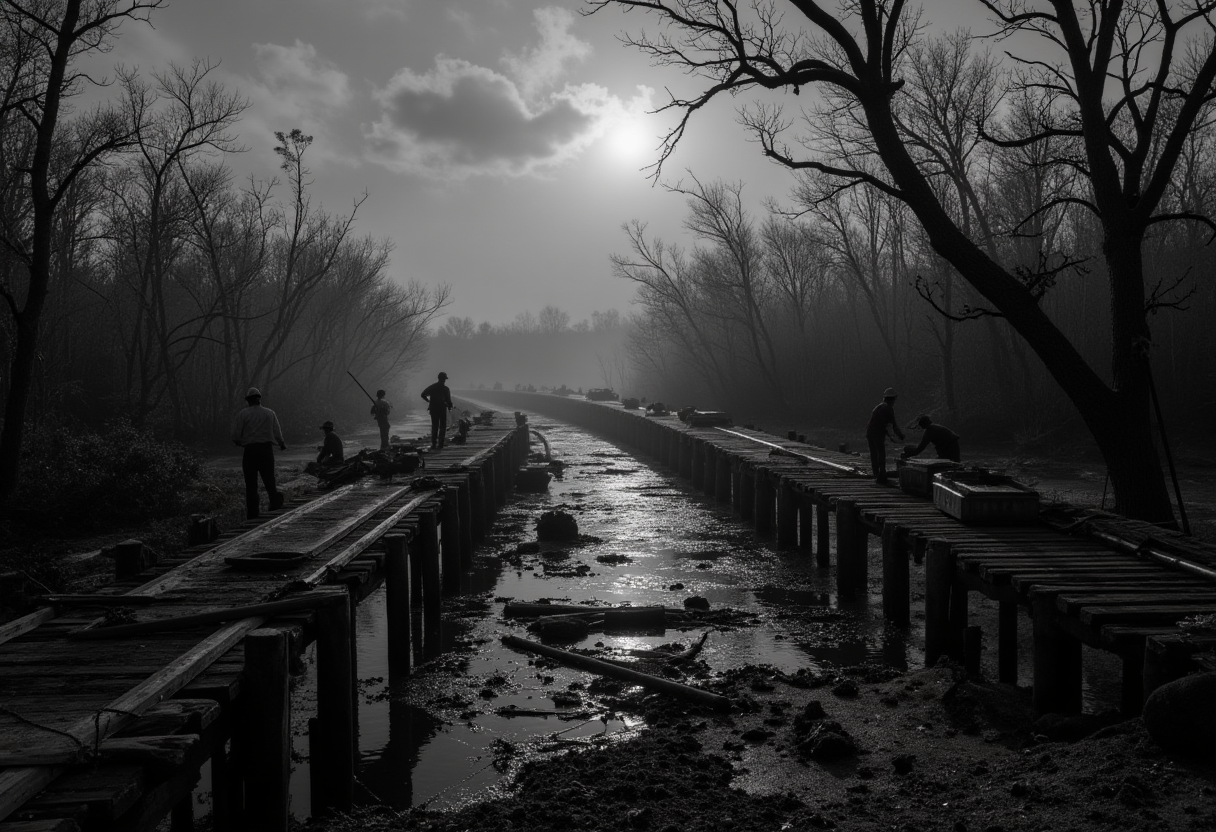
Historic black and white photo of early Everglades drainage canals under construction
A National Park Is Born Slightly Too Late
Everglades National Park was established in 1947, not to protect mountains or vistas, but to preserve ecology itself.
This was a radical idea at the time.
Protect the system, not just the scenery.
The park spans over 1.5 million acres, making it one of the largest national parks in the continental United States. It is also one of the most endangered.
It’s a park without postcards. No dramatic peaks. No geysers on cue.
Instead, it offers patience.
The Wildlife Is Watching You Back
The Everglades hosts an impressive cast of residents, many of whom appear to have been designed during Earth’s experimental phase.
Alligators
Not crocodiles. That’s a different meeting entirely.
Alligators build “gator holes” that retain water during dry seasons, creating life-saving oases for fish, birds, and absolutely no swimmers.
Birds
Roseate spoonbills look like they were painted during a distracted lunch break.
Anhingas dry their wings like goth pelicans.
Egrets practice stillness with professional dedication.
Panthers
Yes, Florida has panthers.
No, you probably won’t see one.
They prefer privacy and have strong opinions about humans.
The Wet Season and the Dry Season Are Not Suggestions
The Everglades operates on two moods.
Wet Season
May through October.
Everything floods.
Mosquitoes form committees.
Water levels rise, fish scatter, and wildlife spreads out.
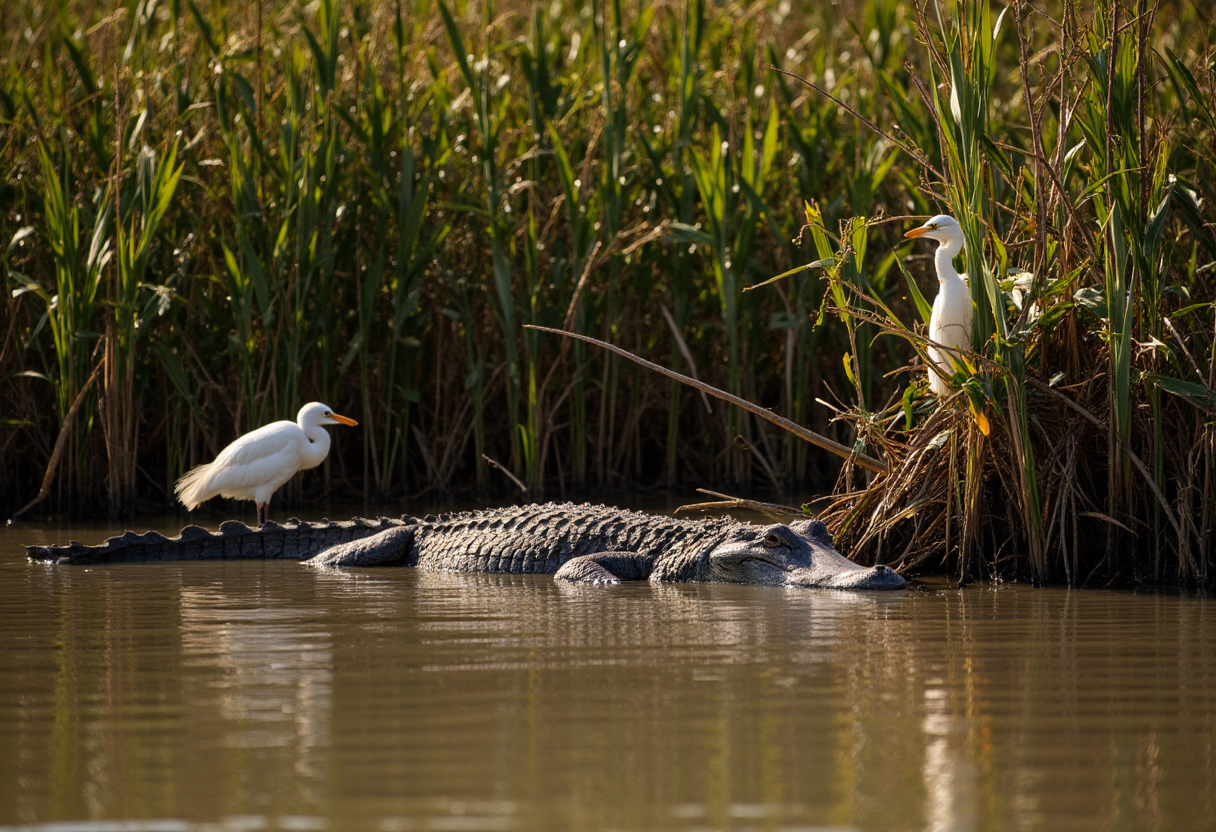
American alligator resting near sawgrass with birds perched nearby in Everglades National Park
Dry Season
November through April.
Water recedes.
Animals concentrate.
Predators thrive.
Visitors suddenly understand why binoculars exist.
Neither season is better. They are simply different personalities of the same place.
Airboats: The Loudest Way to Learn Respect
Airboats are controversial. Loud. Windy. Smelling faintly of gasoline and adventure.
They also reveal something crucial: this place does not bend easily.
Once the engine cuts, silence returns instantly.
The Everglades does not echo. It absorbs.
You realize then that the noise was never the park’s problem.
Everglades State Park vs National Park
A Gentle Clarification
People often say “Everglades State Park” when they mean Everglades National Park.
Florida does have state parks near and connected to the Everglades ecosystem, but the crown jewel, the UNESCO World Heritage Site, the globally significant wetland, is the National Park.
The confusion is understandable. The Everglades is not one thing.
It’s a system that refuses neat borders.
Restoration: The Longest Apology Letter Ever Written
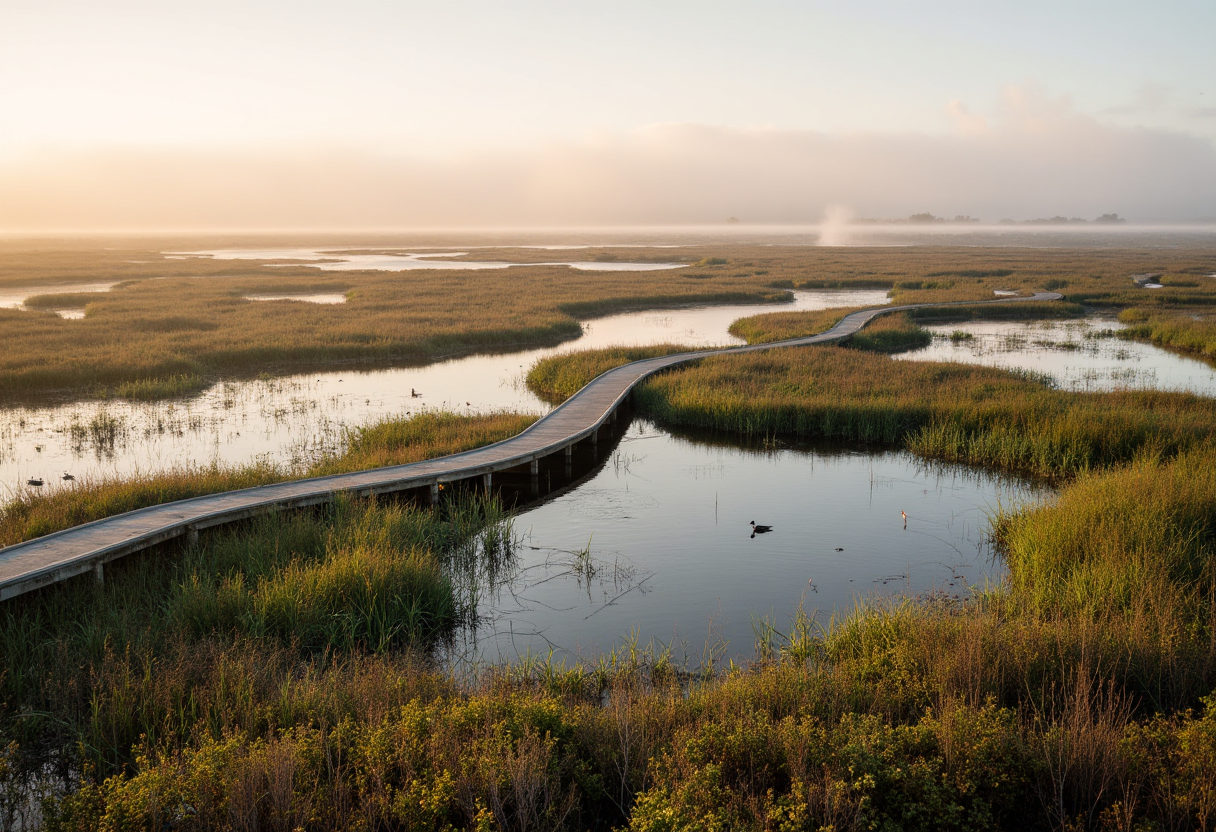
Restoration project in the Everglades showing water flow structures and marshland
The Comprehensive Everglades Restoration Plan is one of the largest environmental restoration projects on Earth.
Its goal is simple and wildly complex:
Put the water back where it belongs.
This involves removing canals, redesigning water flow, negotiating with agriculture, cities, wildlife, and gravity itself.
Progress is slow. Appropriately so.
The Everglades took thousands of years to form.
It will not be rushed into healing.
Visiting the Everglades Without Offending It
Tips for first-timers:
• Bring water. More than you think.
• Wear sun protection. Shade is optional here.
• Move slowly. The park notices hurry.
• Listen more than you talk.
You don’t conquer the Everglades.
You are briefly tolerated.
Why the Everglades Still Matters
The Everglades filters water for South Florida.
It buffers storms.
It supports fisheries.
It shelters species found nowhere else.
It is not scenery.
It is infrastructure disguised as wilderness.
Lose it, and Florida becomes something harsher, louder, and less forgiving.
Final Thought: The Everglades Is Still Here
Despite canals.
Despite roads.
Despite optimism wielded like a bulldozer.
The Everglades persists.
Quietly.
Slowly.
Relentlessly.
A reminder that some landscapes do not ask to be understood.
They simply wait for us to stop interrupting.
Until next tide,
Earl Lee, Florida Unwritten — thanks for reading, please share.
