The Coral Oasis: Diving Into the Secret History of Florida’s Venetian Pool
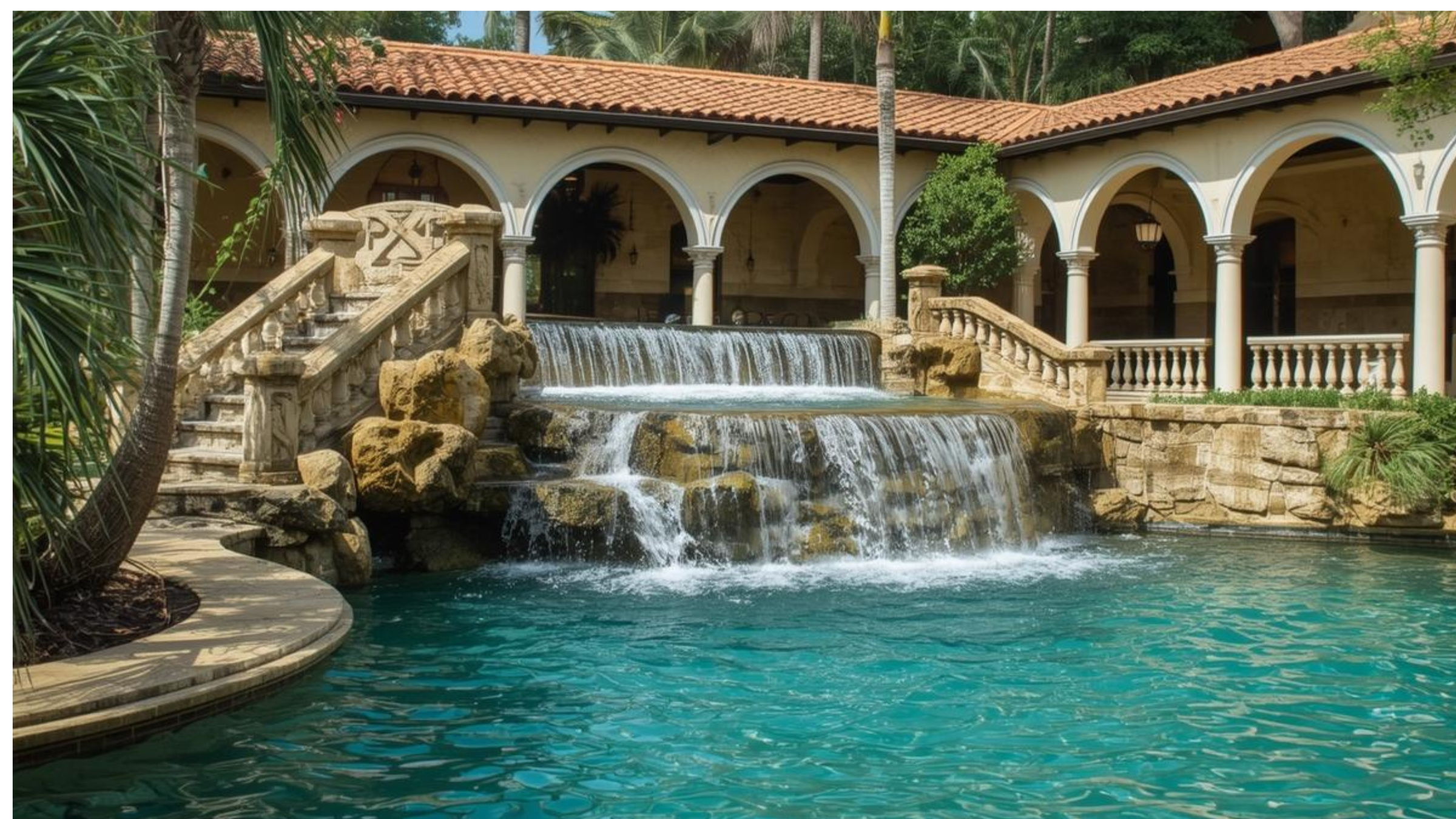
The Venetian Pool in Coral Gables
While the world flocks to the high-rising condos and famous theme parks, there is a quieter version of the Sunshine State waiting in the shadows of the banyan trees.
Perhaps no site embodies this "Old Florida" spirit better than the Venetian Pool in Coral Gables,
a landmark that is less of a swimming hole and more of a subterranean masterpiece carved from the very bones of the earth.
A City Beautiful Born from Stone
In the early 1920s, Florida was a frontier of imagination.
In Tampa, the Floridan Hotel—then a 19-story Beaux Arts skyscraper—reigned as the state's tallest building,
while in Sarasota, the grand Ca' d'Zan was being built as a Mediterranean monument for the Ringling family.
In Miami, George Merrick was envisioning "The City Beautiful," a planned community defined by lush landscapes and Spanish-inspired elegance.
To build the homes and plazas of Coral Gables, workers excavated massive amounts of oolitic limestone,
leaving behind a jagged, empty pit. Where others saw a scar on the land, Merrick saw a sanctuary.
In 1924, this coral rock quarry was transformed into the Venetian Pool, a unique public oasis designed to evoke the romanticism of Italy within the Florida tropics. Today,
It remains a scenic treasure framed by palm trees, Mediterranean-style porticos, and signature waterfalls.
What makes the Venetian Pool truly remarkable isn't just its architecture, but its lifeblood.
It is one of the largest freshwater pools in the United States, but unlike standard pools, it is fed entirely by an underground water table
This connection to the subterranean world places it in the same lineage as Florida’s legendary natural springs.
To the north, Rainbow Springs State Park in Dunnellon has drawn visitors for thousands of years,
with relics from the Indigenous Timucua people proving its ancient appeal. In Levy County, Devil’s Den Spring offers a look into a prehistoric world where Pleistocene Age fossils were discovered within its 72-degree waters.
The Venetian Pool honors this natural heritage; during the summer months, the pool is emptied, filtered, and refilled daily from the aquifer to ensure the water remains as crisp and clear as a hidden river.
When you swim through its mysterious gravens, you are literally wading through the pulse of Florida.
Historic Landmarks
The Venetian Pool is a singular jewel, but it belongs to a broader landscape of historic preservation.
Florida is dotted with sites that refuse to let time move forward. Consider Cedar Key, the state's second-oldest town,
which offers a "salt-crusted charm" and a population of fewer than 1,000 residents seeking solitude.
Or Apalachicola, once a massive cotton port, now known for its Greek Revival buildings and for producing 90% of the state’s oysters.
Across the state, architectural gems tell the story of Florida's evolution:
• Bok Tower Gardens: Located in Lake Wales, this National Historic Treasure features the Singing Tower, an eight-story carillon designed by Frederick Law Olmsted, Jr..
• Pelican Island National Wildlife Refuge: In 1903, this site near Vero Beach became the first federal area set aside specifically to protect wildlife.
• Edison and Ford Winter Estates: In Fort Myers, the laboratories and homes of Thomas Edison and Henry Ford are meticulously preserved, offering a glimpse into the minds that shaped the 20th century.
• The Kampong: Tucked away in Coconut Grove, this 11-acre secret garden was the private home of renowned botanist Dr. David Fairchild and remains a sanctuary of rare, exotic plants.
The Unwritten Magic of the Gables
The Venetian Pool captures the "City Beautiful" movement’s goal of integrating nature with civic life.
It shares a spirit with the Hacienda Hotel in New Port Richey and the Lake of the Hills Community Club, both landmarks of 1920s community ambition.
For the modern traveler, visiting the pool is a sensory experience.
You can walk across the stone bridge, explore the waterfalls, and find shade under the loggias.
It feels like a "secret spot," much like the Ann Norton Sculpture Gardens in West Palm Beach or the No Name Pub in Big Pine Key—places where the locals go to escape the humidity and the crowds.
“We specialize in the Florida you won't find on a postcard. Keeping these stories 'unwritten'—but not forgotten—takes plenty of caffeine and even more bug spray.
If you loved today's tale, you can buy me a brewto help keep the lights on. I'm glad you're here for the ride.”
Planning Your Pilgrimage
If you’re ready to experience this piece of Florida history for yourself, there are a few things you should know.
Because it relies on the aquifer and natural cycles, the Venetian Pool is closed in December and January. During the summer, it is a popular destination,
and because it is a protected historic site, it often reaches capacity quickly.
Like the crystal-clear waters of Wacissa River Springs or the silent trails of the Ocala National Forest, the Venetian Pool requires you to slow down and respect the environment.
It is a reminder that while the rest of the world builds upward in glass and steel, Florida’s most enduring stories are often found carved into the rock and fed by the springs below.
--------------------------------------------------------------------------------
Florida Unwritten Tip: After your dip in the pool, head over to the Coconut Grove neighborhood to find The Kampong.
It’s guarded by a red gate and camouflaged by rare plants—a perfect follow-up for those seeking the quiet, historic side of Miami.
Earl Lee
Florida Unwritten
