The Moon Over Manatee Bay
Fiction In Flip-Flops
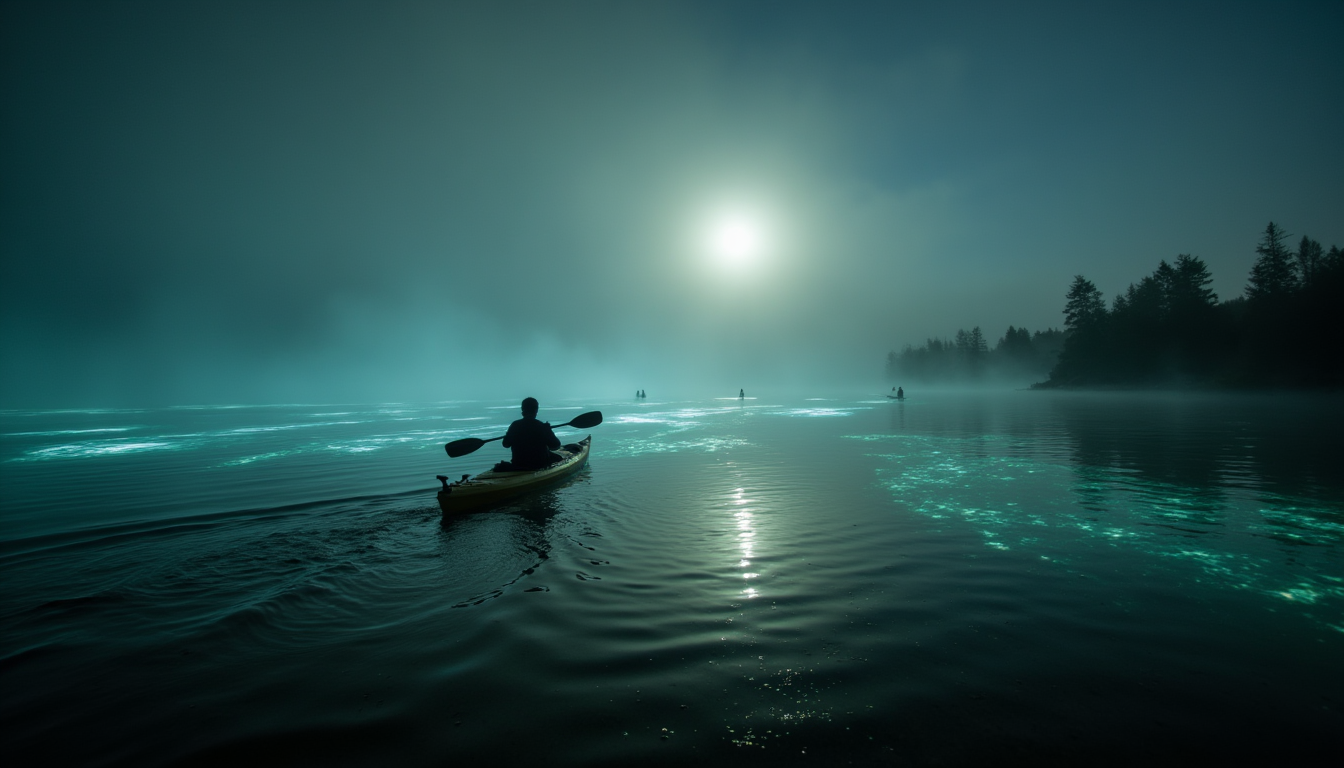
Kayaker in glowing water
The Moon Over Manatee Bay
Fiction Flip-Flops
Every full moon, the water glows.
Visitors call it bioluminescence, say it like a solved equation. Tiny organisms disturbed by movement, light produced by chemistry, mystery reduced to a paragraph in a guidebook. They take photos, whisper in awe, and leave believing they’ve seen something rare but explainable.
The people who stay know better.
In Manatee Bay, the glow doesn’t behave as it should. It waits. It gathers. It spreads in slow pulses, as if the water itself is breathing. Old-timers say the bay has learned the moon’s schedule and prepares itself accordingly.
A Bay That Watches the Sky
Manatee Bay is shallow and wide, cupped by mangroves that lean inward like eavesdroppers. During the day, it looks harmless. Brown water. Quiet birds. The soft slap of the tide against roots and dock pilings.
But when the moon rises full and clean, the bay changes its posture.
The water begins to glow from the inside out. Not sparked by motion, not stirred by oars or fish, but blooming on its own. Blue spreads across the surface in sheets, brighter near the center, dimmer along the edges where land still tries to claim authority.
The first time you see it, you don’t speak. Sound feels rude.
The Dock That Knows the Moon
There’s an old dock on the north side of the bay, gray and bowed, held together by nails that have long since forgotten their original shape. It creaks on full-moon nights, even when the water is still.
Locals avoid standing at its edge when the glow is strongest. They sit farther back, feet planted on dry boards, watching the water as if it might look back.
Some swear the dock was built on an older foundation. Others say the bay simply remembers where people once gathered and keeps the habit alive.
Either way, the dock always creaks just before the glow reaches its brightest blue.
What the Old-Timers Say
Old Joe ran the bait shop until the bay outlived his knees. He never liked talking to tourists on full-moon days. Said it stirred things unnecessarily.
“They come wanting a show,” he’d mutter. “The bay doesn’t like being treated like a trick.”
Joe claimed the glow used to be brighter decades ago. Not louder, not flashier. Deeper. As if it came from farther down than the water should allow.
He told stories of figures walking across the bay during full moons long past. Not floating. Not swimming. Walking, slow and deliberate, leaving no wake behind them.
“They weren’t ghosts,” he insisted. “Ghosts don’t have weight. These did.”
Rules Nobody Writes Down
No signs warn you what not to do in Manatee Bay. There are no pamphlets. No official folklore trail.
The rules are passed quietly, like recipes that only work if you don’t ask too many questions.
Never whistle after dark.
Never take shells from the center of the bay.
Never follow the glow if it seems to pull toward you.
And above all, never mock what you don’t understand. The bay has patience, but it also has memory.
When Science Comes Calling
Researchers have visited Manatee Bay more than once. They bring equipment, notebooks, and a confidence that sounds like protection. They collect samples, measure light levels, and publish explanations that satisfy everyone who doesn’t live here.
Bioluminescent plankton. Nutrient-rich waters. Tidal conditions.
All true. And all incomplete.
No report explains why the glow sometimes begins before the moon clears the horizon. Or why certain boats refuse to start on full-moon nights. Or why people standing knee-deep in glowing water swear they feel hands brushing past their ankles.
Science answers how.
The bay keeps hold of why.
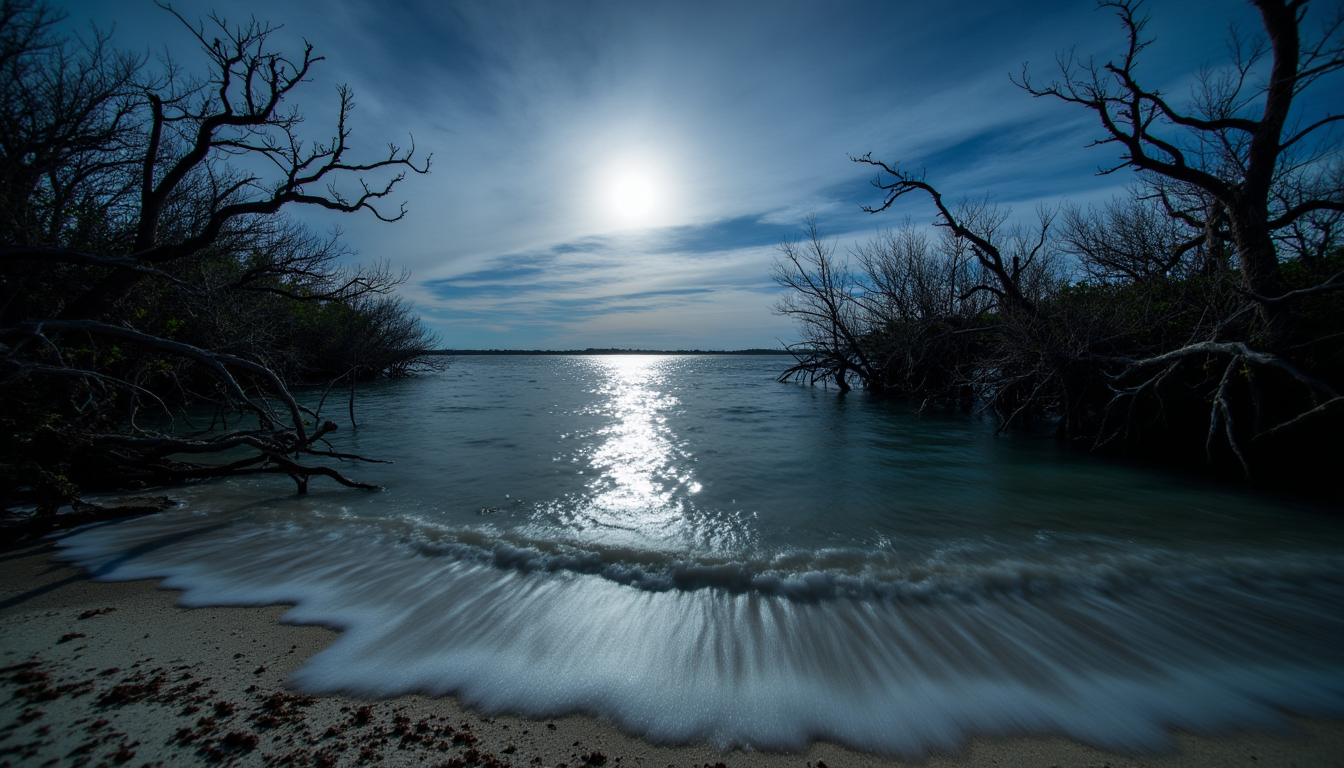
Full moon over Manatee Bay
The Pull Toward the Center
Kayakers talk about it in low voices, usually after a drink or two, usually with a laugh that doesn’t quite stick.
The center of Manatee Bay feels different under a full moon. The water brightens there first. The glow thickens, turns almost solid. Paddles leave trails that linger longer than they should.
Some feel a gentle pull, not strong enough to panic, just enough to suggest direction. Others describe a pressure behind the eyes, as if the bay is asking a question and waiting for an answer.
Those who paddle away early sleep fine.
Those who linger dream of blue light for weeks.
A Story the Bay Tells Back
There’s a belief, rarely spoken aloud, that the glow isn’t meant for the living at all. That’s a signal. A memory. A wayfinding light for something older than roads, older than names.
Manatees once gathered here in numbers that bent the water. Indigenous camps lined the shores. Lives passed quietly, folded back into the bay when they were done.
Some say the glow is the bay remembering all of it at once.
Others say it’s an invitation.
The Morning After
By dawn, Manatee Bay looks ordinary again. The glow is gone. The dock sits silent. The water returns to its usual brown-green humility.
Visitors leave disappointed, checking photos to prove what they saw was real.
Locals clean fish, mend nets, and go about their day with the calm of people who know the moon will return.
Because it always does.
Closing
Some places are meant to be understood.
Manatee Bay is meant to be witnessed.
The full moon will rise.
The water will glow.
And the bay will remember who watched with respect, and who watched too closely.
“Florida Unwritten runs on stories, sunburn, and caffeine.
If you enjoyed this, you can buy me a coffee. No pressure.”
Earl Lee
