Why Florida Is the Lightning Capital of the U.S. (A Local Explanation)
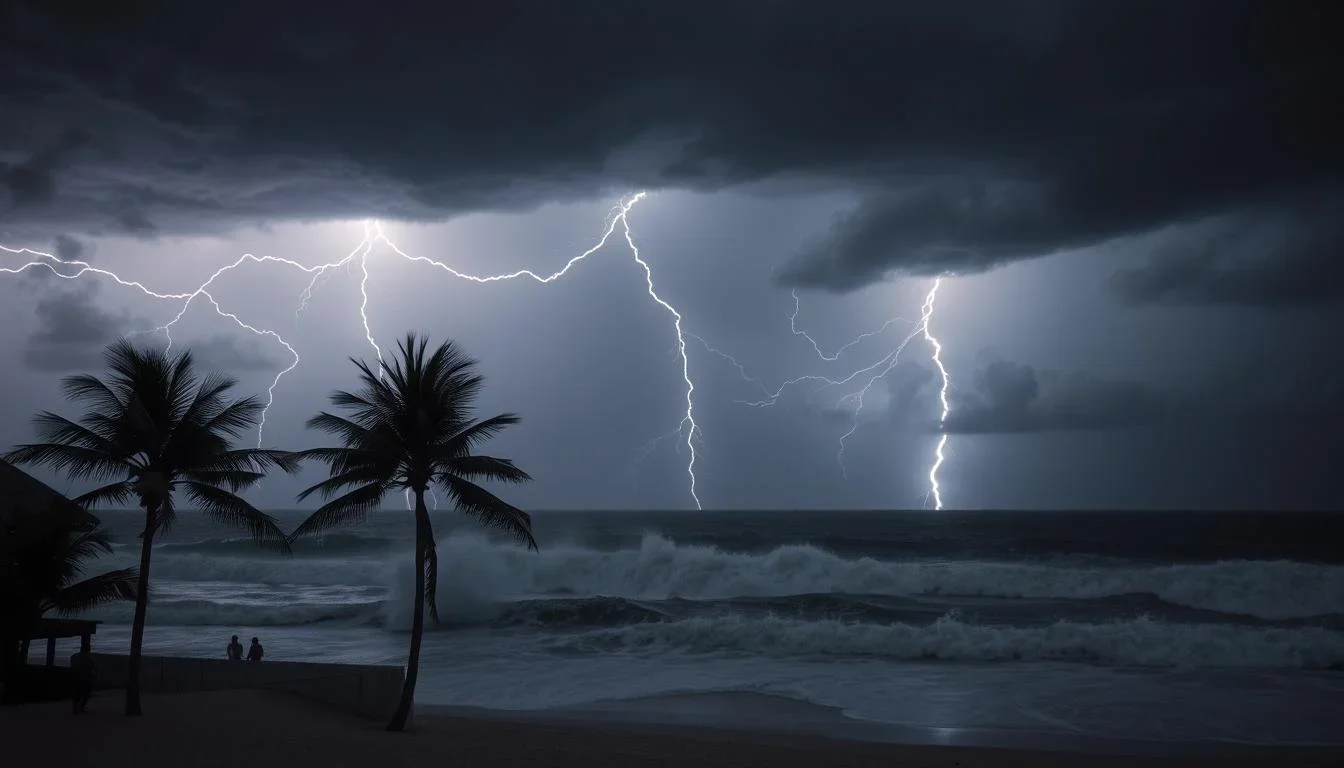
Florida Is the Lightning Capital of the U.S.
If you live in Florida long enough, you learn the sound of distance.
Not miles. Seconds.
One Mississippi. Two Mississippi. Three. By four, you’re already thinking about moving inside. By five, you’re deciding whether the afternoon plans were ever serious to begin with.
This is how lightning announces itself here. Not as a surprise, but as a routine.
Florida doesn’t just hold the title of Lightning Capital of the United States. It earns it, again and again, almost daily during the long stretch of summer. And while the science is impressive, the lived reality is what makes the reputation stick.
Florida Doesn’t Have More Storms by Accident
Lightning in Florida isn’t random. It’s architectural.
The state’s shape, climate, and surrounding water work together like a system designed to manufacture afternoon thunderstorms. Warm air rises. Sea breezes collide. Clouds stack high and heavy. By mid-to-late afternoon, the sky has usually decided it has something to say.
What surprises newcomers is not that storms happen, but how predictably they arrive. Florida lightning is punctual.
The Peninsula Problem (and Why Water Matters)
Florida sticks out into warm water like an invitation.
Surrounded by the Atlantic Ocean on one side and the Gulf of Mexico on the other, the state spends most summer days pulling moisture out of the sea. As land heats faster than water, air rises over the peninsula, drawing in breezes from both coasts.
Those breezes don’t politely pass each other.
They collide.
When they do, the air has nowhere to go but up. Rising air cools. Moisture condenses. Thunderheads build tall enough to scrape the upper atmosphere. Lightning follows.
This daily collision is one of the quiet engines behind Florida’s lightning dominance.
Flat Land, Tall Storms
Florida’s lack of mountains turns out to be an advantage for storms.
With little elevation change to disrupt airflow, thunderstorms can grow wide and tall without interruption. Winds travel freely. Storm systems linger. Energy builds.
In places with hills or mountains, storms often break apart. In Florida, they organize.
That’s why lightning here can feel relentless rather than dramatic. It isn’t one strike. It’s a sequence.
Lightning Alley and the Places That Get Hit the Most
Lightning doesn’t strike Florida evenly.
Central Florida, especially the corridor stretching through Orlando and into the interior, sees some of the highest strike densities in the country. This region earned the nickname Lightning Alley for good reason.
The Tampa Bay area follows closely behind. Surrounded by warm water and fed by converging breezes, it has become so associated with lightning that the name escaped weather reports and landed on a professional hockey team.
Other hotspots dot the state, from the southwest coast near Fort Myers to parts of northeast Florida. The common thread is geography meeting routine weather patterns, day after day.
How Lightning Actually Forms (Without the Textbook)
Inside Florida’s towering summer clouds, chaos is doing quiet math.
Ice particles and water droplets collide as air churns upward. These collisions separate electrical charges, sending positive charges toward the top of the cloud and negative charges toward the bottom.
Eventually, the imbalance becomes unsustainable.
Lightning is the atmosphere correcting itself.
Some flashes stay inside the cloud. Others leap between clouds. The most dangerous reach for the ground, following invisible paths of least resistance until they find trees, buildings, open fields, or water.
It’s violent, precise, and completely indifferent to human schedules.
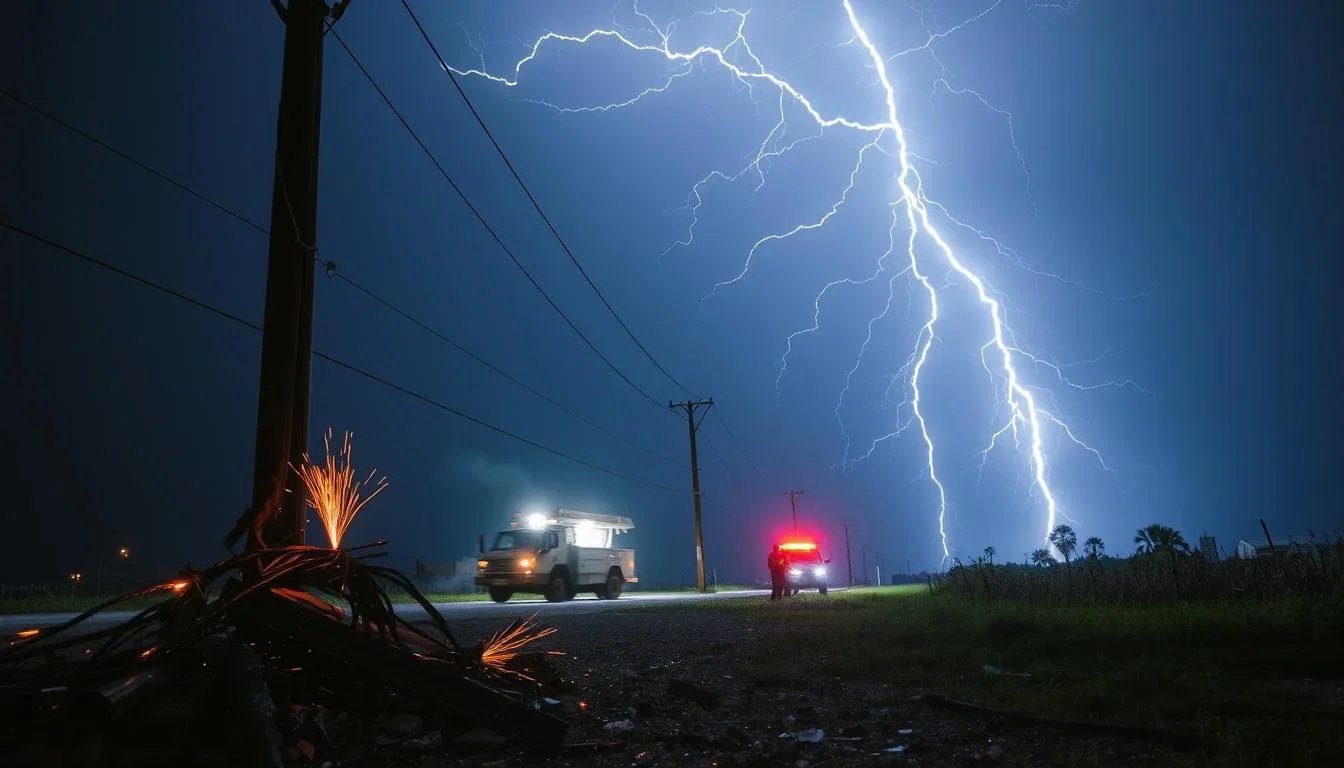
The Thunder Delay Every Floridian Knows
We all count.
The gap between lightning and thunder becomes second nature here, a built-in radar passed down without instruction. The math doesn’t need to be exact. It only needs to answer one question.
Is it close enough to matter?
In Florida, the answer is often yes.
Why Summer Belongs to Lightning
Most of Florida’s lightning happens between June and September, when heat and humidity peak.
Afternoon storms rise fast, fueled by moisture-heavy air and relentless sun. By evening, they often fade just as quickly, leaving behind wet pavement, dripping trees, and a sky that looks briefly scrubbed clean.
It’s a rhythm locals recognize.
Morning optimism. Afternoon storms. Evening calm.
What Lightning Means for Daily Life
Lightning shapes behavior here.
Construction pauses. Theme parks clear rides. Beaches empty with practiced efficiency. Power flickers are met with resigned patience instead of panic.
Homes are built with grounding in mind. Surge protectors are standard. Weather apps are checked more often than social media during storm season.
This isn’t fear. It’s familiarity.
Safety Is Not Optional in the Lightning Capital
Florida leads the nation in lightning strikes, and for many years, it also led in lightning-related injuries and deaths.
The reason is simple. People live outside here.
The rule locals repeat is blunt but effective: If you can hear thunder, you’re close enough to be struck.
Shelter matters. Waiting matters. Outdoor plans are always provisional.
Lightning doesn’t negotiate.
The Cultural Side of the Storm
Lightning has worked its way into Florida’s identity.
It names teams. It fills photography galleries. It shows up in folklore, warnings, and summer memories told years later.
Visitors photograph it. Locals glance, assess, and keep moving.
Familiarity doesn’t erase awe. It just changes how you carry it.
How Florida Compares to the Rest of the World
Other places see more dramatic lightning displays. Parts of South America, Africa, and Southeast Asia experience intense, near-constant storms.
What makes Florida different is consistency.
Here, lightning isn’t rare or seasonal in the abstract. It’s routine. Predictable. Built into the calendar.
For its size, few places on Earth produce lightning with the same regularity.
Living With the Light
Florida’s lightning is not something to conquer.
It’s something to understand.
The storms arrive. The thunder follows. The ground steams. Life resumes. Over and over again.
If Florida summer teaches patience, lightning teaches respect.
And once you learn to read the sky, you stop being surprised when it speaks.
Part of the Florida Unwritten True Stories series. Lived experiences, not guidebook gloss.
Share if you smiled. Until next time, watch the tide.
Earl Lee
