The Florida School for Boys in Marianna:
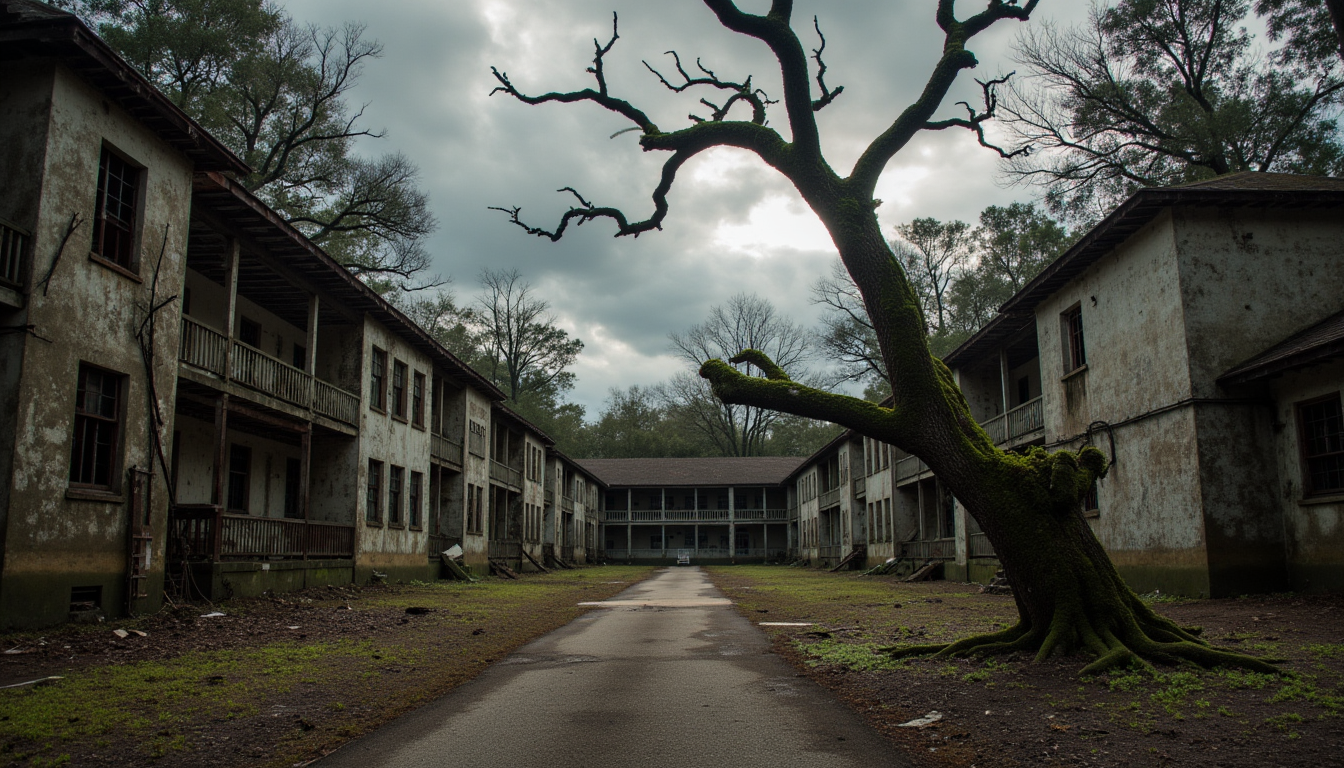
“Historic grounds of the Florida School for Boys in Marianna, Florida”
A True Story | Florida Unwritten
This story covers real historical abuse and loss.
For much of the twentieth century, a quiet stretch of land outside Marianna, Florida, held a secret heavy enough to bend the soil.
The Florida School for Boys opened in 1900 as a reform school. Its purpose, on paper, was simple: discipline troubled youth and set them on a better path. In practice, it became something else entirely. Generations of boys passed through its gates, many of them poor, many Black, many sent there for reasons that would barely earn a warning today. Some never came home.
Locals called it the White House. Not because it housed leaders, but because it housed punishment.
A School Built on Control
Marianna in the early 1900s was rural, segregated, and deeply hierarchical. The Florida School for Boys reflected that world. White boys and Black boys were housed separately, treated differently, and punished on different scales. Discipline was absolute. Silence was expected. Questioning authority was dangerous.
Official records described infractions like running away, fighting, or “incorrigibility.” Former students later explained what those words meant in practice: hunger, fear, forced labor, and beatings administered with leather straps.
Punishment often took place in the White House, a small concrete building on campus. Boys were taken inside, beaten out of sight, and sent back without explanation. Staff kept no meaningful records of these punishments. The pain stayed undocumented. The memory did not.
Disappearances Without Answers
Over the decades, boys began to vanish.
Some were said to have escaped. Others were labeled as having died from illness or accidents. Families were rarely given details. Many were never notified at all.
Former students spoke quietly for years about graves on the property. Unmarked. Unacknowledged. Easy to dismiss if you didn’t want to listen.
Florida, like many places, became practiced at not listening.
The school continued operating under different names for nearly a century. Oversight improved slightly over time. Public scrutiny waxed and waned. But the ground remained undisturbed.
The Ground Finally Speaks
In 2012, researchers from the University of South Florida began a formal investigation using ground-penetrating radar. What they found changed the conversation.
Dozens of potential burial sites were identified. Not a handful. Not a rumor. Physical evidence beneath the earth.
By 2014, confirmed graves were uncovered. Many were unmarked. Some contained remains of children far younger than official records suggested. The stories survivors had carried for decades were no longer deniable.
The school closed in 2011. The land did not forget.
The Weight of Silence
What makes the story of the Florida School for Boys especially painful is not just what happened, but how long it took to acknowledge it.
Survivors spoke. Families asked questions. Journalists wrote pieces that faded from attention. The truth lingered in a limbo created by discomfort. Florida has many beautiful myths. This was not one anyone wanted to inherit.
In 2017, the state officially apologized. Memorials began to take shape. Names were slowly recovered from records that had been incomplete by design.
But apologies arrive late to graves.
The Nickel Boys and Public Memory
Colson Whitehead’s novel The Nickel Boys brought national attention to Marianna’s history. Though fictionalized, the story drew directly from the lived experiences of former students. It forced readers to sit with the reality that cruelty does not require monsters. It only requires systems left unchecked.
The novel did not create the truth. It made it unavoidable.
For many Floridians, this was the first time they heard the name Marianna spoken with something other than geographic neutrality. For others, it was confirmation of what had always been known and never believed.
Why This Story Matters Here
Florida Unwritten exists to tell stories that linger beneath the surface. Some are strange. Some are funny. Some, like this one, are heavy.
The Florida School for Boys is not folklore. It is not a ghost story. It is a record of what happens when power is protected more fiercely than people. When silence becomes policy. When children are treated as disposable.
Remembering this place is not about assigning guilt to the present. It is about refusing to erase the past simply because it is uncomfortable.
The land in Marianna is quieter now. Trees grow where buildings once stood. But the ground remembers. And so should we.
Not as a spectacle. Not as entertainment.
As truth.
“Florida Unwritten runs on stories, sunburn, and caffeine.
If you enjoyed this, you can buy me a coffee. No pressure.”
Earl Lee
Florida Unwritten
